
How Does a Biogas Plant Work? A Complete Guide to Anaerobic Digestion and Renewable Energy
Biogas plants have moved from the margins of rural energy experiments to the center of the circular bioeconomy. They transform organic waste-manure, food scraps, crop residues, sewage sludge-into a renewable gas that can generate electricity, heat homes, and even fuel vehicles. But despite their growing presence, the internal mechanics remain a mystery to many. Understanding how a biogas plant works is the first step toward evaluating whether this technology fits a farm, a municipality, or an industrial waste stream.
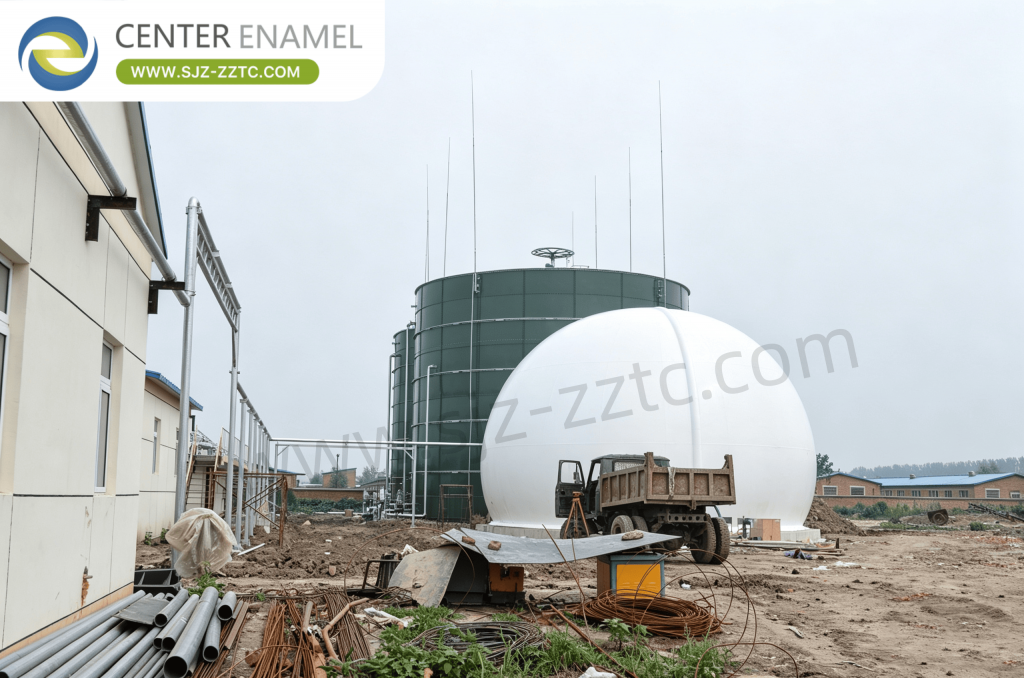
The core principle is straightforward: in the absence of oxygen, microorganisms break down organic matter and release methane-rich gas. Yet the engineering required to make that process reliable, safe, and efficient is what separates a backyard digester from a commercial biogas plant. This article walks through the entire pathway, from the moment feedstock enters the system to the moment gas and fertilizer leave it.
The Core Principle: Anaerobic Digestion in the Absence of Oxygen
At the heart of every biogas plant is a biological process called anaerobic digestion. It occurs in a sealed, air-tight vessel where oxygen is deliberately excluded . In this oxygen-free environment, distinct communities of bacteria work in sequence to decompose organic material. First, hydrolytic bacteria break down complex polymers like carbohydrates, proteins, and fats into simpler soluble compounds. Acidogenic bacteria then convert those compounds into volatile fatty acids. Finally, methanogenic archaea-the methane-producing microorganisms-transform the acids into biogas, primarily methane and carbon dioxide .
This strict anaerobic condition is non-negotiable. If oxygen enters the digester, the microbial community shifts, methane production collapses, and the system effectively fails. That is why digester construction emphasizes gas-tight seals and why operators monitor pressure and gas composition closely . The process also requires a stable temperature range. Most digesters operate in either the mesophilic range (around 35–38°C) or the thermophilic range (around 47–55°C), with the higher temperatures accelerating digestion but demanding more energy input for heating . Maintaining consistent temperature is one of the most important operational tasks in any biogas plant.
From Feedstock to Gas: The Step-by-Step Flow
A biogas plant is not a single tank but a system of interconnected components. The typical digester includes a fermentation chamber, a gas storage area, an inlet for feedstock, an outlet chamber for digested material, a sealed cover, and a gas pipeline . Feedstock-which can range from cattle slurry and poultry manure to food processing waste, silage, and sewage sludge-enters the fermentation chamber through the inlet . The material is mixed and heated to the target temperature, and bacteria begin the decomposition process.
As biogas forms, it rises and collects in the gas storage area at the top of the tank. The accumulating gas increases pressure within the system, which in turn pushes the liquid slurry toward the outlet chamber. When gas is drawn off for use, the pressure drops and the slurry level adjusts accordingly . This passive pressure regulation is a hallmark of many household and farm-scale designs. The digested material, now called digestate, exits through the outlet chamber. Crucially, the design allows effluent removal without breaking the gas seal, preserving the anaerobic environment . In continuous-flow systems, feedstock is added and digestate is removed on a regular schedule, while batch systems load the digester once and let it run until gas production declines.
Key Operating Conditions That Determine Success
A biogas plant will only perform well if the microbial community receives the conditions it needs. Four parameters stand out as decisive. First, the carbon-to-nitrogen ratio of the feedstock should be in the range of roughly 25–30:1 for rural digesters, providing both energy (carbon) and cell-building nutrients (nitrogen) . Second, the dry matter concentration in the slurry typically needs to be around 7–9%; too dilute and the reaction is slow, too thick and mixing becomes difficult . Third, pH must remain near neutral to slightly alkaline; acidification is a common failure mode when acidogenic bacteria outpace methanogens. Fourth, temperature must be held steady, because fluctuations disturb the delicate balance between microbial groups .
Table 1: Key Operating Parameters for Biogas Digesters
| Parameter | Typical Target Range | Why It Matters |
| Carbon-to-nitrogen ratio | 25–30:1 | Supports microbial growth and energy balance |
| Dry matter concentration | 7–9% | Ensures pumpable slurry and adequate contact |
| pH | Near neutral (6.8–7.5) | Prevents acidification and process failure |
| Temperature (mesophilic) | 35–38°C | Balances reaction speed and heating cost |
| Temperature (thermophilic) | 47–55°C | Faster digestion but higher energy input |
What Comes Out: Biogas Composition and Digestate
Raw biogas is not pure methane. It typically contains 50–75% methane, 25–45% carbon dioxide, and smaller amounts of water vapor, hydrogen sulfide, and trace gases . The methane content determines the energy value of the gas. For direct combustion in a boiler or engine, raw biogas can often be used with minimal treatment, though hydrogen sulfide must be managed to avoid corrosion. For injection into natural gas grids or use as vehicle fuel, the gas must be upgraded to biomethane, with methane concentrations raised to 95% or higher by removing carbon dioxide and other impurities .
The solid and liquid byproduct, digestate, is equally important. Anaerobic digestion converts organic nitrogen into more plant-available forms, making digestate an effective biofertilizer. Farms using digestate have reported reduced reliance on synthetic fertilizers and improved soil organic matter . The digestion process also reduces pathogen loads and weed seed viability, depending on retention time and temperature . In this sense, a biogas plant is not just an energy system; it is a nutrient-recovery system that closes loops between livestock, crops, and waste management.
How Biogas Is Used: Electricity, Heat, and Upgrading
The most common utilization pathway for biogas is combined heat and power (CHP). A gas engine drives a generator to produce electricity, while the waste heat from the engine is recovered to warm the digester and supply buildings or greenhouses . This configuration is attractive because it uses both the electrical and thermal energy streams, achieving overall efficiencies that simple electricity generation cannot match. On-farm systems can provide baseload power around the clock, reducing exposure to volatile grid prices .
For applications requiring higher gas quality, upgrading technologies remove carbon dioxide, hydrogen sulfide, and moisture. Common upgrading methods include water scrubbing, chemical absorption, membrane separation, and cryogenic separation . The resulting biomethane can be injected into the gas grid or compressed for transport fuel. While upgrading adds capital and operating costs, it opens access to markets beyond the immediate vicinity of the plant, making larger centralized facilities economically viable.
Table 2: Common Biogas Utilization Pathways
| Pathway | Required Treatment | Typical Application |
| Direct combustion | Minimal (H₂S removal advisable) | Boilers, cookstoves, space heating |
| Combined heat and power | H₂S removal, moisture control | On-site electricity and heat |
| Biomethane upgrading | CO₂ removal, H₂S removal, drying | Grid injection, vehicle fuel |
| Digestate use | Solid-liquid separation (optional) | Biofertilizer, soil amendment |
Scale and Design Variations: From Household to Industrial
Biogas plants range from tiny household digesters serving a single family to sprawling industrial facilities processing hundreds of thousands of tons of waste per year. Household systems are often built underground to stabilize temperature and are designed for simplicity, using manure and kitchen waste as primary inputs . Farm-scale plants typically process livestock slurry and energy crops, with capacities matched to the farm‘s waste output and energy demand. A well-designed on-farm plant can cover nearly all of a farm’s electricity needs while producing a nutrient-rich fertilizer for fields .
Centralized anaerobic digestion facilities accept feedstock from multiple sources-municipal food waste, food processing residues, sewage sludge-and benefit from economies of scale in gas upgrading and grid connection. The trade-off is logistical: transporting wet, low-energy-density feedstock over long distances can erode the net energy gain. For this reason, the most efficient biogas systems tend to be those where feedstock is generated close to the digester and where both gas and digestate can be used locally.
Why Biogas Plants Matter Beyond Energy
The value proposition of biogas extends well beyond kilowatt-hours. By capturing methane that would otherwise escape from manure storage or landfills, biogas plants deliver immediate greenhouse gas reductions. Methane has a far higher short-term warming potential than carbon dioxide, so preventing its release yields rapid climate benefits . At the same time, the digestate displaces synthetic fertilizers, whose production is energy-intensive and dependent on fossil fuels. Studies of farm-scale systems have documented significant reductions in both methane and nitrous oxide emissions when anaerobic digestion is integrated with manure management .
Biogas also contributes to waste treatment and sanitation. Food waste, sewage sludge, and industrial byproducts that might otherwise require landfilling or incineration find a productive use. The controlled environment of the digester reduces odors compared to raw manure storage and destroys many pathogens that pose risks to human and animal health . In rural contexts, household digesters can provide clean cooking fuel, reducing indoor air pollution and relieving pressure on local wood resources. These co-benefits-climate mitigation, nutrient recycling, waste treatment, and energy security-are increasingly recognized in policy frameworks that seek holistic solutions rather than single-purpose technologies .
FAQ
What feedstock can a biogas plant accept?
Most organic materials are suitable, including livestock manure, food waste, crop residues, silage, sewage sludge, and industrial food-processing byproducts. The key is avoiding contaminants like plastics, heavy metals, and excessive lignin that slow digestion .
How long does it take for a biogas plant to produce gas?
In a continuous-flow digester, gas production begins within days to weeks after startup as the microbial community establishes. The hydraulic retention time-how long feedstock remains in the digester-typically ranges from 20 to 40 days for mesophilic systems, depending on feedstock and temperature.
Is biogas the same as natural gas?
No. Raw biogas contains roughly 50–75% methane along with significant carbon dioxide, while natural gas is predominantly methane. After upgrading to biomethane (over 95% methane), biogas can meet natural gas specifications and be injected into grids or used as vehicle fuel .
If you are evaluating a biogas project for your farm, municipality, or business, the right design depends on your feedstock, energy needs, and site conditions. Our team can help you assess feasibility and select the configuration that delivers the strongest return. Contact us to discuss your project and take the first step toward turning waste into value.