
How Does a Paddy Straw Biogas Plant Work? A Step-by-Step Engineering Guide
Each year, global rice harvesting leaves behind millions of tons of agricultural stubble. Traditionally managed through open-field burning, this rice residue creates severe regional smog and fugitive carbon emissions.
A paddy straw biogas plant solves this environmental challenge by transforming agricultural waste into clean, renewable energy. But how does a paddy straw biogas plant work? Unlike conventional livestock manure facilities, these advanced industrial installations utilize specialized mechanical pre-treatment, biochemical co-digestion, and anaerobic digestion to convert tough, lignocellulosic crop residues into pipeline-grade biomethane and organic fertilizer.
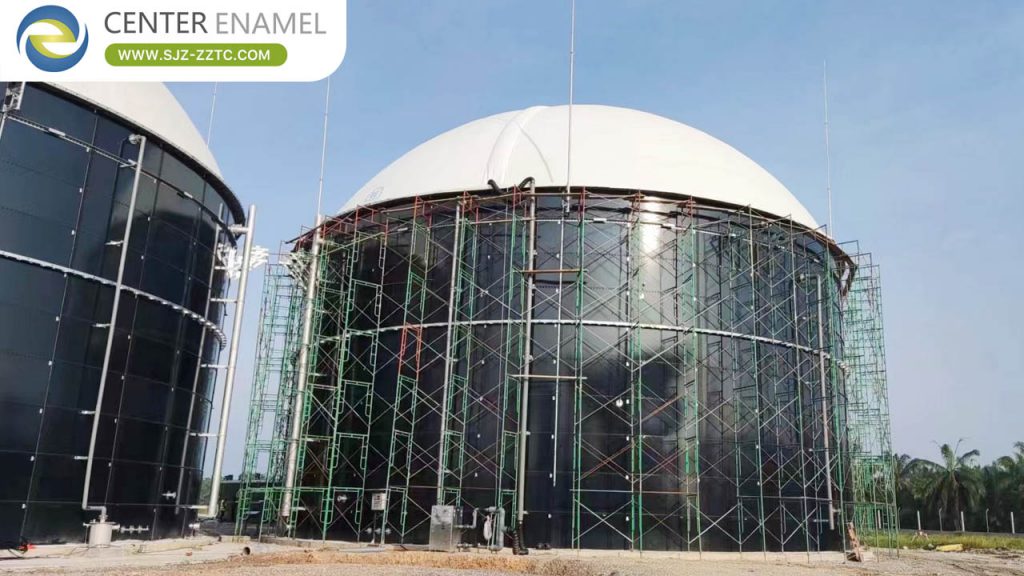
Step 1: Collection, Transport, and Mechanical Size Reduction
The process begins right after harvest, where paddy straw is collected and transported to the processing facility.
- Shredding and Milling: Raw rice straw has a tough tubular structure and high buoyancy that can cause it to float and form surface crusts in digester tanks.
- Particle Size Optimization: Industrial machinery, such as hammer mills and heavy-duty shredders, breaks the straw down into smaller segments (typically 5 mm to 30 mm) to dramatically increase its surface area.
Step 2: Pre-Treatment (Breaking Lignin and Silica Barriers)
Unlike food waste, rice straw contains a tough outer layer of lignin, cellulose, and silica that microorganisms cannot easily penetrate.
- Hydrolysis Acceleration: The chopped straw undergoes physical, thermal, or mild chemical pre-treatment (such as hot water soaking or steam explosion).
- Unlocking Biomass: This step disrupts the lignocellulosic bond, reduces cellulose crystallinity, and softens the material so that bacterial enzymes can easily access internal sugars.
Step 3: Co-Digestion and Slurry Blending
Raw paddy straw has an extremely high Carbon-to-Nitrogen (C:N) ratio (often exceeding 70:1), which causes nitrogen starvation for standard anaerobic microbes.
- Balancing Nutrients: To establish a stable biological environment, the pre-treated straw is blended with nitrogen-rich co-substrates—such as livestock manure (cattle or poultry slurry) or food waste—to achieve an optimal C:N ratio of 20:1 to 30:1.
- Slurry Preparation: Water or recycled liquid digestate is added to adjust total solids (TS) to pumpable levels, forming a uniform organic slurry.
Step 4: Anaerobic Digestion (The Four Biological Phases)
The conditioned slurry is pumped into sealed, heated Continuous Stirred-Tank Reactors (CSTR) operating under mesophilic (35°C to 38°C) or thermophilic conditions. Inside the oxygen-free environment, specialized microorganisms execute four sequential stages:
- Hydrolysis: Extracellular enzymes break down complex carbohydrates into simple soluble sugars.
- Acidogenesis: Acid-forming bacteria convert sugars into volatile fatty acids (VFAs) and alcohols.
- Acetogenesis: Acetogenic bacteria transform VFAs into acetic acid, hydrogen, and carbon dioxide.
- Methanogenesis: Strict anaerobic archaea consume these intermediates to synthesize combustible methane (CH4) and carbon dioxide (CO2).
Step 5: Biogas Upgrading, Purification, and Utilization
The raw biogas generated during digestion is captured in double-membrane tank roofs and sent through an industrial upgrading pipeline:
- Desulfurization and Dehydration: Biological towers and moisture traps remove corrosive hydrogen sulfide (H2S) and water vapor.
- Decarbonization: Membrane separation or water scrubbing removes carbon dioxide (CO2), yielding high-purity biomethane (Compressed Bio Gas - CBG).
- Energy Output: The clean gas can be burned in Combined Heat and Power (CHP) engines for electricity or injected into natural gas grids as vehicle fuel. Meanwhile, solid-liquid separators process the leftover digestate into pathogen-free organic bio-fertilizer.
Comparative Data Table: Paddy Straw Biogas Plant Workflow
| Processing Stage | Primary Equipment & Machinery | Core Function & Engineering Objective |
| 1. Preparation | Hammer mills, shredders, collection trucks | Reduces particle size (5–30 mm) and prevents floating crusts |
| 2. Pre-Treatment | Thermal tanks, soaking units, alkali injectors | Breaks down tough lignin, silica, and cellulose crystallinity |
| 3. Co-Digestion | Mixing hoppers, slurry pumps | Balances high straw C:N ratio with nitrogen-rich manure or food waste |
| 4. Anaerobic Digestion | GFS tanks, CSTR reactors, heating exchangers | Microbial conversion of organic slurry into biogas under strict anaerobic conditions |
| 5. Upgrading & Output | Desulfurization towers, membrane skids, screw presses | Purifies biomethane (CBG) and separates solid/liquid organic fertilizer |
Frequently Asked Questions (FAQ)
Q1: Why does paddy straw require pre-treatment before anaerobic digestion?
A: Raw paddy straw contains a tough matrix of lignin, cellulose, and silica that resists quick bacterial breakdown. Pre-treatment methods—such as chopping, thermal soaking, or steam explosion—disrupt these structural barriers, allowing microorganisms to rapidly access internal sugars and maximize gas yield.
Q2: Can a biogas plant run exclusively on raw rice straw without other inputs?
A: Generally no. Paddy straw has an excessively high Carbon-to-Nitrogen ratio (>70:1) and lacks sufficient nitrogen to sustain an active anaerobic microbial population. Successful industrial plants use co-digestion, mixing paddy straw with nitrogen-rich materials like livestock manure or food waste to stabilize the biological process.
Q3: What final products are created by a paddy straw biogas plant?
A: A paddy straw biogas plant yields two primary product streams: 1) Clean renewable energy in the form of electricity, heat, or upgraded compressed biomethane (CBG); and 2) Nutrient-rich, pathogen-free organic digestate used as a high-grade agricultural bio-fertilizer.