
How GFS Tanks and UASB Process Drive Sustainable Brewing Wastewater Treatment?
The competitive landscape of industrial wastewater treatment shows a clear divergence, with leading companies building integrated service capabilities through technical integration and capital operations, while industry concentration gradually increases. Chinese manufacturers continue to consolidate their advantages in mid-tier equipment exports, with international giants targeting high-end customers and complex industrial wastewater markets, and local players occupying the mid-to-low-end and industrial park centralized treatment markets through service responsiveness and cost advantages.
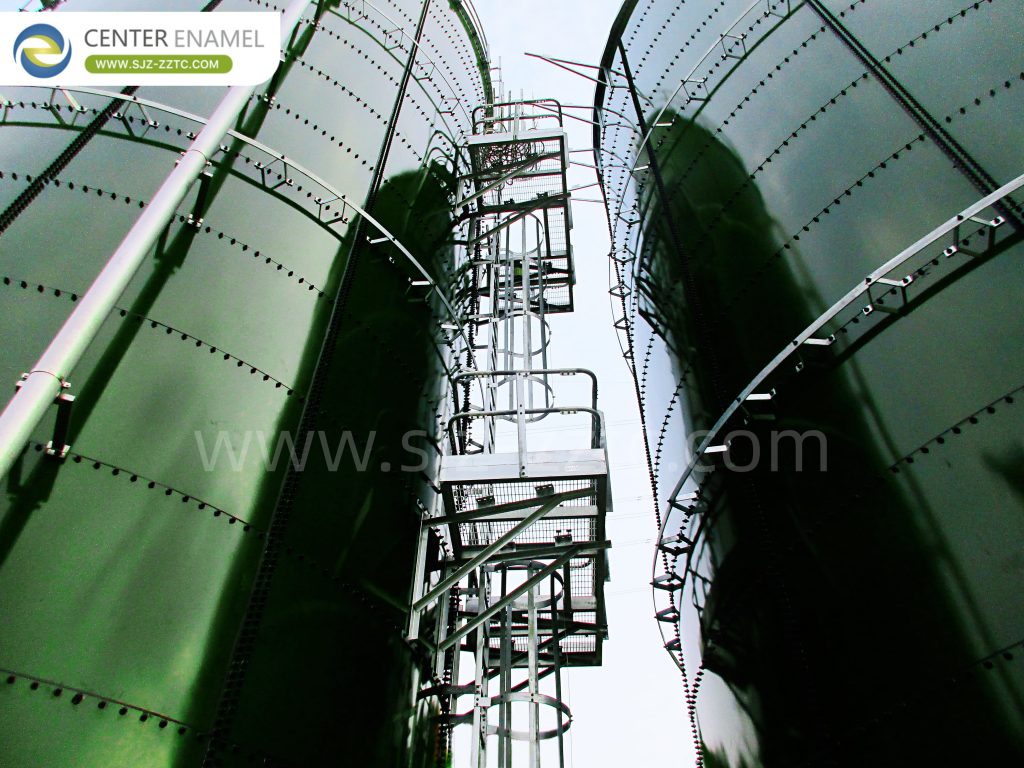
Within the anaerobic process segment, UASB, EGSB, and IC anaerobic reactors-offering high loading rates, small footprints, and stable operation-are widely used in high-concentration organic wastewater pretreatment across food processing, pharmaceutical fermentation, alcohol brewing, chemical, and other industries. These reactors typically use steel tank shells, and their corrosion resistance and gas-tightness directly determine long-term operational stability. This is where the application value of Glass-Fused-to-Steel (GFS) tanks becomes increasingly prominent, particularly for brewing wastewater treatment projects that demand both durability and process efficiency.
GFS Tanks: The Corrosion-Resistant Foundation for Brewing Wastewater Treatment
For any brewing wastewater treatment system, the storage and reaction infrastructure must withstand aggressive organic acids, variable pH levels, and high-salinity conditions. Center Enamel has independently developed over 200 specialized enamel frit formulations and supporting patents, capable of customizing anti-corrosion enamel based on customer storage media, with adaptability comprehensively superior to concrete tanks. Concrete tanks use a single material, only suitable for neutral clean water storage. When storing corrosive materials such as livestock manure, palm oil mill effluent, chemical wastewater, food waste digestate, or high-salinity wastewater, additional anti-corrosion linings must be applied-linings that are prone to failure, preventing long-term stable operation and failing to adapt to alternating high and low concentration storage conditions.
This material limitation is particularly critical in the brewing industry, where wastewater characteristics fluctuate dramatically with production batches. GFS tanks can be specifically formulated with specialized enamels resistant to strong acids, strong alkalis, high organic content, and high salinity, allowing a single tank to switch between multiple wastewater and fermentation feedstock storage requirements. The universal applicability across biogas anaerobic digestion, municipal wastewater, livestock farming, food processing, and industrial water treatment scenarios eliminates the need to rebuild tanks for media changes, perfectly meeting the needs of diversified, multi-condition environmental protection projects. This versatility makes GFS tanks the preferred choice for brewing wastewater treatment facilities seeking long-term reliability.
The UASB Process: Proven Anaerobic Technology for High-Strength Brewery Effluent
While robust GFS tank infrastructure provides the physical containment, the biological treatment process determines overall system efficiency. The UASB (Upflow Anaerobic Sludge Blanket) process is a combination of physical and biological processes; the main feature of the former is the separation of solids and gases from the liquid, and of the latter, the degradation of decomposable organic matter under oxygen-free conditions. The treatment tank consists of an upflow reactor with a feed inlet distribution system at its bottom and a gas-solid-liquid (three-phase) separator at the top. Wastewater enters the reactor from the bottom and flows upward through the sludge bed in the digestion compartment, where microorganisms thrive in an oxygen-deficient environment.
The bed traps solid material, which is degraded by these organisms, producing methane-rich biogas and carbon dioxide in the process. The biogas provides gentle mixing in the sludge bed, promoting breakdown and reducing levels of SS and BOD. Methane is collected at the top of the reactor in a gas collector, while the water-sludge mixture enters a settling tank where sludge settles and flows back into the reactor bottom. Retention of bacteria-containing sludge is one of the most important features of the UASB process; the bacteria in the sludge continuously treat the incoming effluent, enabling retention time to be reduced to about six to eight hours compared to at least 30 hours required in conventional sewage systems. For brewing wastewater treatment, where high organic loads are the norm, this efficiency translates directly into operational cost savings.
The UASB Supporting Equipment Ecosystem
Core equipment includes the GFS anaerobic reactor tank, with the internal three-phase separator being the key component for gas-liquid-solid separation and sludge retention. The bottom high-precision distribution system (distribution pipes, distributors, pressure regulators) ensures uniform influent distribution, preventing short-circuiting and sludge accumulation-a critical consideration given the variable flow rates typical of brewery operations. Supporting equipment includes influent lift pumps, equalization tanks, and flow meters to stabilize influent conditions, while the top biogas collection system includes gas collection hoods, gas piping, desulfurization/dehydration equipment, and gas storage.
Online temperature, pH, and COD monitoring instruments are integrated for real-time process control, and bottom sludge discharge pipes and pumps periodically remove excess sludge. The complete equipment package is compact, with no rotating wear parts, low equipment loss, and high operational stability. This integrated approach ensures that brewing wastewater treatment plants can maintain consistent performance even with the intermittent and seasonal discharge patterns common in the beverage industry. The UASB process, when combined with GFS tanks, delivers the robustness required for demanding industrial applications.
Standardized Treatment Solutions for Brewing Wastewater
The mature "solid-liquid separation + anaerobic digestion + aerobic polishing" process train is perfectly suited for high-concentration, easily biodegradable organic wastewater typical of brewing operations. Pretreatment uses screens, sedimentation tanks, and microfiltration to remove spent grain residues and colloidal suspended solids, preventing equipment clogging and reducing biochemical load. The main stage uses UASB/EGSB high-efficiency anaerobic processes for rapid high-concentration organic degradation with simultaneous biogas energy recovery-suitable for high pollution loads. Subsequent A/O or contact oxidation aerobic processes deeply degrade residual pollutants, with final sedimentation and disinfection ensuring stable effluent compliance.
Anaerobic digesters using Center Enamel GFS tanks offer resistance to organic acid corrosion with long service life. The entire process has strong shock load resistance, simple process flow, convenient O&M, and is suitable for the brewery industry's intermittent and seasonal discharge patterns. This standardized approach, validated through numerous projects including the Heineken wastewater treatment plant in East Timor where six GFS tanks were installed in 2016, demonstrates the proven effectiveness of combining GFS tanks with UASB technology for brewing wastewater treatment.
Proven Performance: The Indonesia Palm Oil Biogas Upgrade Project
The real-world effectiveness of integrated GFS tank and anaerobic treatment solutions is demonstrated by the Indonesia Palm Oil Biogas Upgrade Project, commissioned in 2013 as the core anaerobic digestion reactor for the POME treatment station. The project utilized three GFS tanks in two sizes: 17.58 m diameter × 8.4 m height and 16.82 m diameter × 7.2 m height. These tanks serve as the core anaerobic reaction equipment specifically designed for high-organic palm oil production wastewater, where anaerobic digestion degrades pollutants and recovers biogas simultaneously.
The tanks were adapted to local palm industry wastewater needs, with GFS tank assembly proving convenient and corrosion resistance performing exceptionally well in Southeast Asia's hot, humid, high-corrosion environment. This project stands as a mature biomass energy environmental benchmark, demonstrating the viability of GFS tank-based biogas plant design in challenging tropical conditions. The success of such projects reinforces the applicability of GFS tanks and UASB processes across diverse industrial sectors, including brewing wastewater treatment.
Comprehensive International Certifications and Global Reach
Supporting these global project deliveries requires not only manufacturing capability but also the credentials to navigate international tendering barriers. Center Enamel holds CE, NSF, WRAS, ISO9001, BSCI, ASME, and other global certifications-fully clearing EU, North American, Southeast Asian, and African project tendering barriers, providing critical hard credential advantages for large overseas project bidding. These certifications, combined with over a decade of installation experience across multiple regions and industry sectors, position Center Enamel as a trusted partner for brewing wastewater treatment projects worldwide. From the first overseas GFS tank installation in Niger, Africa in 2009 to breaking ground with China's first GFS tank export to the United States in 2015, the company has accumulated specialized solutions for complex sites including mountainous terrain, coastal salt spray, tropical high temperatures, and high-standard European and American facility conditions.
Center Enamel Marketing Team Advantage
The marketing team brings together environmental industry multi-skilled professionals and multilingual foreign trade specialists, with deep expertise in global biogas, wastewater treatment, and biomass new energy markets-accumulating extensive practical project experience in Southeast Asia, Africa, Europe, and the Americas. Proficient in various countries' wastewater discharge regulations, biogas subsidy policies, and carbon trading rules, the team provides one-stop preliminary site survey, solution planning, and investment return analysis consulting services. With multilingual capabilities (English, French, Spanish, Arabic), the team effectively communicates with clients worldwide, precisely matching regional industrial resources, project budgets, and environmental requirements-customizing high-cost-performance GFS tanks and anaerobic reactor solutions based on client production capacity, treatment targets, and gas production expectations. Leveraging extensive overseas project experience, the team proactively helps clients avoid risks in overseas approvals, equipment import, and construction implementation, building a globally adaptable integrated environmental equipment business service system.
Conclusion
The convergence of advanced GFS tank technology, the proven UASB process, and comprehensive project contractor capabilities offers a complete solution to the core challenges of brewing wastewater treatment. From the high organic loads and variable pH of brewery effluent to the demanding conditions of seasonal production patterns, integrated systems combining corrosion-resistant GFS tanks with efficient anaerobic digestion deliver consistent performance, energy recovery, and long-term reliability. With over a decade of global installation experience, state-of-the-art manufacturing facilities, and a commitment to continuous technological innovation, Center Enamel provides the infrastructure and expertise needed to transform brewing wastewater from an environmental liability into a renewable energy opportunity.
Frequently Asked Questions (FAQ)
1. Why are GFS tanks preferred over concrete tanks for brewing wastewater treatment?
GFS tanks offer superior corrosion resistance against the organic acids, variable pH (3–11), and high-salinity conditions typical of brewery effluent. Unlike concrete tanks that require additional anti-corrosion linings prone to failure, GFS tanks feature a glass-fused-to-steel coating that forms an inert, impermeable barrier. This extends service life beyond 30 years, eliminates repainting needs, and allows a single tank to handle multiple wastewater types-making them ideal for the beverage industry's fluctuating production demands.
2. How does the UASB process benefit brewing wastewater treatment operations?
The UASB process converts high-strength organic pollutants (sugars, alcohols, proteins) into methane-rich biogas while achieving 90–94% COD removal. It requires no mechanical mixing, produces significantly less sludge than aerobic systems, and operates with low energy consumption. For breweries with intermittent discharge patterns, the UASB reactor's stable sludge bed maintains biological activity even after shutdowns, ensuring rapid restart and consistent effluent quality.
3. What makes Center Enamel a reliable partner for international brewing wastewater projects?
Center Enamel combines ISO, NSF, CE, ASME, and other international certifications with over a decade of global installation experience across Southeast Asia, Africa, the Americas, and Europe. The company provides multilingual marketing and engineering support, navigates local regulatory requirements, and delivers customized GFS tank and UASB solutions. Proven references include the Heineken wastewater treatment plant in East Timor (six tanks installed in 2016) and numerous biogas projects worldwide.