
Advanced Wastewater Treatment Solutions: How IC Process Technology Treats High-Strength Organic Wastewater
Industrial wastewater treatment has become increasingly challenging as manufacturing industries expand and environmental requirements become more demanding. Food processing, dairy production, pharmaceutical fermentation, chemical manufacturing, and beverage industries generate wastewater containing high concentrations of organic pollutants, suspended solids, oils, and other contaminants. These complex wastewater characteristics require treatment systems that combine efficient biological processes with reliable equipment and customized engineering.
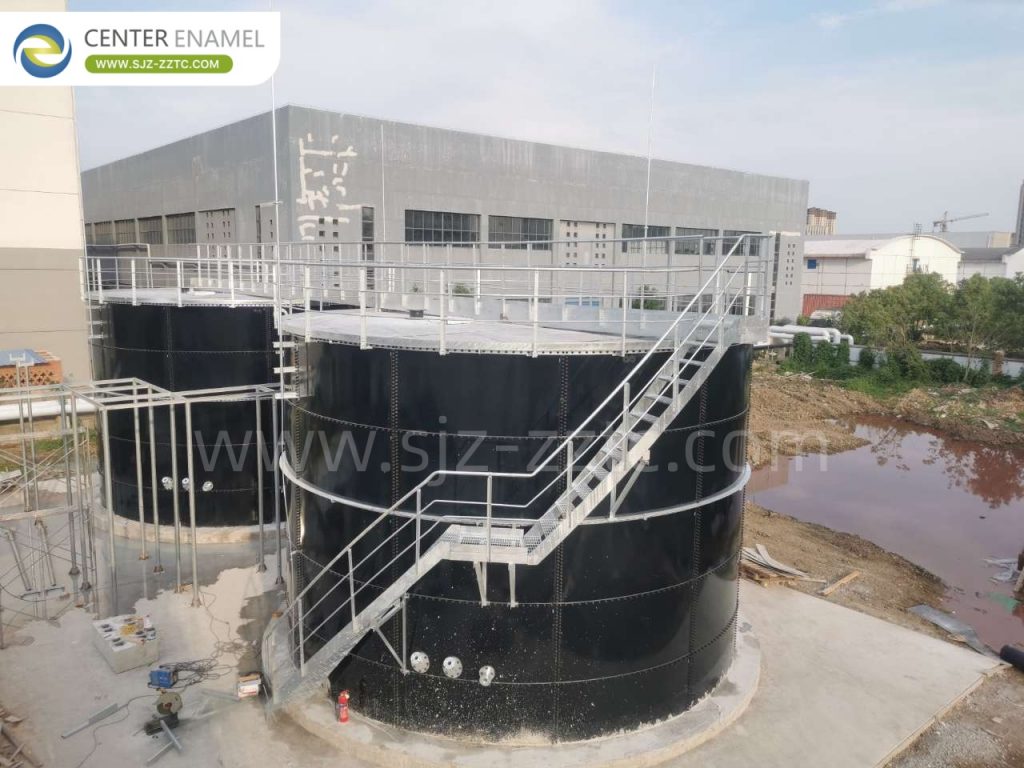
Among various anaerobic treatment technologies, the Internal Circulation (IC) Process has become an important option for treating high-strength organic wastewater. By utilizing biogas-driven internal circulation, IC reactors enhance wastewater and sludge contact, improve mass transfer, and support high-rate anaerobic treatment within a compact reactor structure.
However, effective wastewater treatment depends on more than the selection of a single biological process. It requires coordinated pretreatment, anaerobic digestion, aerobic treatment, advanced treatment, and appropriate equipment integration.
Center Enamel provides comprehensive Wastewater Treatment Solutions integrating proprietary Glass-Fused-to-Steel (GFS) tanks, anaerobic process technologies, supporting equipment, and environmental EPC services. Through customized engineering and integrated manufacturing capabilities, Center Enamel helps industrial customers develop treatment systems suited to their wastewater characteristics, treatment objectives, and site conditions.
Industrial Wastewater Treatment Trends and Technology Requirements
The industrial wastewater treatment market is evolving toward integrated engineering services, advanced biological processes, and more efficient resource recovery.
Competition within the industry is increasingly differentiated. Leading environmental companies are expanding their capabilities through technology integration, equipment manufacturing, and comprehensive project services. Meanwhile, international engineering companies focus on complex industrial wastewater applications, while regional manufacturers compete through equipment pricing, local responsiveness, and project delivery efficiency.
Among different treatment technologies, anaerobic processes such as UASB, EGSB, and IC reactors are widely applied in the pretreatment of high-concentration organic wastewater.
These technologies are commonly used in:
Food and beverage processing wastewater treatment.
Pharmaceutical fermentation wastewater treatment.
Alcohol and brewery wastewater treatment.
Chemical manufacturing wastewater treatment.
Other industrial applications with high biodegradable organic loads.
Their advantages include high volumetric loading capacity, relatively compact installation footprints, and effective organic matter degradation when properly designed and operated.
Nevertheless, the performance of an anaerobic reactor is closely related to its structural materials, corrosion resistance, sealing performance, and supporting equipment. Since anaerobic treatment produces biogas and may involve corrosive compounds such as hydrogen sulfide, selecting suitable reactor construction materials is essential for long-term system reliability.
This is where GFS tank technology provides an important equipment advantage for integrated anaerobic wastewater treatment systems.
IC Process: An Advanced Solution for High-Strength Organic Wastewater
The IC Process, or Internal Circulation Process, is a high-rate anaerobic treatment technology developed from the UASB reactor concept.
Its defining feature is an internal gas-lift circulation system that uses biogas generated during anaerobic digestion to drive wastewater and sludge recirculation.
Unlike conventional anaerobic reactors that may rely on external pumping systems for recirculation, the IC reactor uses the energy of biogas production to establish internal hydraulic circulation.
This mechanism enhances contact between wastewater and anaerobic microorganisms, improves mass transfer, and supports efficient organic pollutant degradation.
The IC reactor generally incorporates two main anaerobic reaction stages, together with gas-liquid separation and sludge-water separation functions.
Primary Anaerobic Reaction
Pretreated high-strength organic wastewater enters the reactor from the bottom and mixes with the returning sludge-water mixture.
As the wastewater flows upward through the concentrated anaerobic sludge bed, microorganisms degrade biodegradable organic substances and generate biogas.
Biogas-Driven Internal Circulation
The generated biogas carries the sludge-water mixture upward through the internal circulation system.
At the upper gas-liquid separation section, biogas is collected, while the degassed sludge-water mixture returns toward the reactor bottom through internal downcomers.
This continuous circulation improves hydraulic mixing and repeatedly brings organic pollutants into contact with active anaerobic sludge.
Secondary Reaction and Effluent Separation
After passing through the primary reaction zone, wastewater enters the upper polishing zone for further biological degradation.
Remaining biodegradable organic substances continue to be treated, while sludge settles and returns toward the lower reaction section.
The treated wastewater then overflows from the reactor, and excess sludge is discharged periodically according to operating requirements.
Through this integrated mechanism, the IC Process supports continuous treatment of high-strength organic wastewater while reducing the need for separate external recirculation equipment.
Key Advantages of IC Anaerobic Treatment
The IC Process offers several advantages for industrial facilities that require high-capacity organic wastewater treatment.
High Organic Loading Capacity
The internal circulation mechanism promotes intensive contact between anaerobic sludge and wastewater, supporting the treatment of high-concentration biodegradable organic pollutants.
Improved Mass Transfer Efficiency
Gas-lift circulation increases hydraulic movement within the reactor, helping improve substrate distribution and contact between microorganisms and organic matter.
Compact Installation Footprint
The vertically integrated reactor configuration allows substantial treatment capacity within a relatively limited land area, making it attractive for industrial facilities with space constraints.
Biogas Recovery Potential
During anaerobic digestion, biodegradable organic substances are converted into biogas containing methane and carbon dioxide. The collected biogas can be treated and utilized as a renewable energy resource when suitable gas handling and utilization facilities are provided.
Reduced External Recirculation Equipment
The internal gas-lift system reduces the need for external sludge-water return pumps dedicated to reactor circulation, simplifying the system configuration.
Continuous and Automated Operation
With appropriate feed control, online monitoring, and supporting equipment, IC reactors can operate continuously under controlled biological conditions.
Actual treatment performance depends on influent composition, organic loading, temperature, pH, hydraulic conditions, and reactor design. Pretreatment and stable operating conditions remain essential for achieving reliable results.
IC Reactor Supporting Equipment and System Integration
A successful IC wastewater treatment system requires more than the reactor tank itself. Supporting equipment plays an essential role in maintaining stable influent conditions, facilitating internal circulation, collecting biogas, and monitoring biological treatment performance.
Center Enamel integrates GFS tanks with process-specific equipment to develop coordinated anaerobic treatment systems.
The major equipment components include:
| Equipment | Main Function | Engineering Value |
| GFS Reactor Tank | Provides the main anaerobic reaction structure | Corrosion-resistant and modular reactor infrastructure |
| Gas-Lift Internal Circulation System | Drives internal sludge-water circulation | Enhances hydraulic circulation without dedicated external return pumps |
| Upper and Lower Three-Phase Separators | Separate gas, liquid, and sludge | Support biogas collection and sludge retention |
| Bottom Distribution System | Distributes influent wastewater | Promotes uniform feeding |
| Influent Lift Pumps and Flow Meters | Control wastewater feeding | Maintain stable influent flow |
| Equalization Tank | Balances wastewater flow and quality | Reduces hydraulic and organic loading fluctuations |
| Biogas Collection Equipment | Collects generated biogas | Supports subsequent gas treatment and utilization |
| Desulfurization and Dehydration Equipment | Removes hydrogen sulfide and moisture | Improves biogas quality |
| Online Monitoring Instruments | Monitor temperature, pH, COD, and liquid level | Supports process control and operational management |
| Sludge Discharge and Control Devices | Manage excess sludge | Maintain reactor sludge conditions |
The integrated equipment configuration allows the IC system to coordinate wastewater feeding, anaerobic reactions, internal circulation, gas collection, and sludge management.
Online monitoring equipment provides important operational information, allowing operators to observe key reaction parameters and make adjustments when wastewater conditions change.
By integrating the main reactor structure with supporting equipment, Center Enamel helps simplify system coordination and improve the practicality of industrial wastewater treatment installations.
Standardized Dairy Wastewater Treatment Solutions
Dairy wastewater is a typical high-strength organic effluent generated by milk processing, cheese production, yogurt manufacturing, and other dairy operations.
It contains considerable quantities of lactose, milk proteins, fats, and suspended solids. Although these pollutants are highly biodegradable, excessive oil and grease, fluctuating discharge patterns, and concentrated Clean-in-Place (CIP) wastewater can create challenges for biological treatment systems.
To address these characteristics, a comprehensive treatment train can combine:
Oil Separation Pretreatment + Anaerobic Digestion + Aerobic Treatment + Advanced Treatment
This configuration integrates different treatment stages to progressively reduce organic pollutants and improve final effluent quality.
| Treatment Stage | Main Equipment and Process | Treatment Objective |
| Pretreatment | Screens and equalization tanks | Remove large debris and balance wastewater flow |
| Oil Separation | Oil separation tanks and Dissolved Air Flotation (DAF) | Remove free and emulsified oils and fats |
| Anaerobic Treatment | UASB or IC anaerobic reactors | Reduce high organic loads and recover biogas |
| Aerobic Treatment | A/O or contact oxidation systems | Further remove residual organics and support nitrogen and phosphorus removal |
| Advanced Treatment | Sedimentation, filtration, and disinfection | Improve final effluent quality to meet applicable requirements |
Pretreatment and Equalization
Wastewater first passes through screening equipment to remove packaging materials and large suspended debris.
Equalization tanks balance flow and wastewater quality, helping reduce sudden hydraulic and organic loading changes.
Oil separation tanks and DAF systems remove free and emulsified fats before wastewater enters biological treatment. This helps reduce grease accumulation and potential fouling of downstream equipment.
High-concentration CIP wastewater can also be collected separately and introduced in controlled batches to reduce shock loading.
Anaerobic Digestion with IC or UASB Technology
After pretreatment, high-strength organic wastewater enters the anaerobic treatment stage.
IC and UASB processes can be selected according to influent characteristics, suspended solids, organic loading, and available installation space.
Lactose and milk proteins are readily biodegradable under suitable anaerobic conditions. Their degradation reduces organic loading and generates biogas that may be recovered for energy utilization.
Center Enamel GFS tanks can serve as the main anaerobic reactor structures, providing corrosion-resistant containment for demanding biological treatment environments.
Aerobic Treatment and Nutrient Removal
Although anaerobic treatment removes a substantial proportion of biodegradable organic matter, residual pollutants may remain in the effluent.
A/O or contact oxidation processes can provide further biological treatment, reducing remaining organic compounds and supporting nitrogen and phosphorus removal where required.
Advanced Treatment and Final Disinfection
The final treatment stage may incorporate sedimentation, filtration, and disinfection to improve effluent quality and meet applicable discharge or reuse requirements.
This multi-stage configuration provides a flexible approach to dairy wastewater treatment, particularly for facilities with intermittent discharge patterns and variable organic loading.
Center Enamel's Integrated Product and Engineering Portfolio
The reliability of wastewater treatment infrastructure depends on the compatibility of tanks, covers, pressure vessels, biological processes, and supporting equipment.
Center Enamel has developed an integrated product portfolio covering core storage tanks, supporting roof systems, specialized pressure vessels, and environmental engineering services.
Its capabilities combine equipment manufacturing with process integration and project engineering, allowing customers to source multiple components and services through one supplier.
Glass-Fused-to-Steel Tanks: Core Corrosion-Resistant Equipment
GFS tanks are Center Enamel's core products for wastewater treatment and anaerobic digestion applications.
The company uses proprietary double-sided, double-layer enameling technology to provide a protective coating against demanding operating environments, including acidic and alkaline wastewater, high-salinity conditions, and microbial corrosion.
Their modular bolted construction supports flexible tank dimensions, convenient transportation, and on-site assembly.
Fusion Bonded Epoxy Tanks: Supporting Storage Applications
Fusion Bonded Epoxy (FBE) tanks are manufactured using an intelligent standardized production line.
They are primarily designed for applications such as drinking water storage, firewater reserves, and neutral-medium storage.
Aluminum Dome Covers: Tank Sealing and Biogas Collection
Aluminum dome covers feature a self-supporting structural configuration and are designed for tank covering, weather protection, and suitable gas collection applications when properly engineered.
Other Specialized Equipment
Center Enamel's product portfolio also includes:
Carbon steel tanks.
Stainless steel tanks.
Composting tanks.
Non-standard pressure vessels.
Other customized environmental storage equipment.
Environmental EPC and Anaerobic Process Services
Beyond equipment manufacturing, Center Enamel provides environmental EPC contracting and anaerobic process section subcontracting.
Its engineering applications cover food waste, landfill leachate, municipal wastewater, livestock biogas, petrochemical and metallurgical wastewater, and seawater desalination.
Tank capacity, corrosion protection requirements, process configuration, and supporting equipment can be customized according to individual project needs.
This integrated model helps coordinate equipment selection, process requirements, and engineering implementation within a unified project framework.
Global Project Support and Standardized Service System
International wastewater treatment projects involve multiple stages, including preliminary investigation, engineering coordination, equipment manufacturing, transportation, installation, commissioning, and long-term maintenance.
For overseas customers, coordinating different suppliers and contractors can increase project complexity and communication costs.
To address these challenges, Center Enamel has established a global service network supported by regional sales centers and overseas local agent networks.
Its service system focuses on four main areas:
24/7 Rapid Response
A rapid response mechanism supports customer communication and coordination across different markets and time zones.
Domestic and International Installation Services
On-site installation support helps coordinate equipment assembly and construction activities according to project requirements.
Full-Project-Cycle Technical Support
Technical support extends from preliminary site surveys and engineering coordination to construction management and after-sales service.
Long-Term Warranty and Maintenance Support
Long-term service arrangements and equipment maintenance support help customers manage their infrastructure throughout its operating life.
By integrating these service functions, Center Enamel aims to improve project coordination, reduce multi-party communication costs, and support more efficient international project delivery.
Professional Marketing and Overseas Project Consultation
Successful international wastewater treatment projects require an understanding of both technical requirements and local market conditions.
Center Enamel's international marketing team brings together environmental industry professionals and multilingual foreign trade specialists with experience in global biogas, wastewater treatment, and biomass energy markets.
The team has experience supporting projects in Southeast Asia, Africa, Europe, and the Americas.
Its service capabilities include preliminary project consultation, site investigation coordination, solution planning, and investment-related technical discussions.
The team also provides communication support in multiple languages, including English, French, Spanish, and Arabic.
By considering local environmental requirements, project budgets, industrial characteristics, and customer treatment objectives, Center Enamel can help customers evaluate suitable GFS tank configurations and anaerobic treatment solutions.
For overseas projects, the team can also assist with preliminary coordination involving equipment import requirements, local approvals, and construction implementation considerations.
This combination of technical understanding and international communication helps establish a more coordinated approach to wastewater treatment project development.
International Certifications and Quality Assurance
International projects often require equipment manufacturers to demonstrate compliance with recognized quality, safety, and industry standards.
Center Enamel holds multiple international certifications, including CE, NSF, WRAS, ISO 9001, BSCI, and ASME-related qualifications.
These certifications and qualifications support its participation in different international markets and provide customers with important documentation for project evaluation and procurement.
For each project, applicable standards and certification requirements should be confirmed according to the specific product, equipment category, destination market, and project tender specifications.
By combining manufacturing capabilities, engineering experience, and international certification credentials, Center Enamel aims to provide reliable equipment and technical support for global environmental infrastructure projects.
Customized Wastewater Treatment Solutions by Center Enamel
Every industrial wastewater treatment project has different technical requirements. Wastewater composition, organic concentration, flow fluctuations, treatment targets, installation space, and local environmental conditions all influence the selection of an appropriate treatment configuration.
The IC Process offers an effective option for selected high-strength organic wastewater applications through gas-driven internal circulation, enhanced biological contact, and biogas recovery potential.
When integrated with suitable pretreatment, aerobic polishing, advanced treatment, and corrosion-resistant GFS tank infrastructure, it can form an important part of a comprehensive wastewater treatment system.
Center Enamel combines proprietary tank manufacturing, anaerobic process technologies, supporting equipment, customized engineering, and global project services to provide integrated Wastewater Treatment Solutions for industrial customers.
From individual GFS reactor supply to anaerobic process integration and environmental EPC contracting, the company supports customers in developing wastewater treatment facilities tailored to their operational requirements.
Looking for advanced Wastewater Treatment Solutions for high-strength industrial effluent? Contact us to discuss your wastewater characteristics and receive professional recommendations for an appropriate IC Process configuration.
Frequently Asked Questions
What types of wastewater are suitable for the IC Process?
The IC Process is primarily suitable for high-strength organic wastewater with good biodegradability. Common applications include food processing, dairy production, pharmaceutical fermentation, and brewery wastewater. Pretreatment may be necessary to remove excessive fats, suspended solids, and other substances that could affect reactor performance.
How does the IC Process improve wastewater treatment efficiency?
The IC reactor uses biogas-driven internal circulation to move wastewater and sludge through its reaction zones. This enhances contact between microorganisms and organic pollutants, improves mass transfer, and supports high-rate anaerobic treatment within a compact structure.
What equipment is required for a complete IC wastewater treatment system?
A typical system includes a GFS reactor tank, gas-lift circulation components, three-phase separators, influent pumps, flow meters, equalization tanks, biogas collection and treatment equipment, online monitoring instruments, and sludge discharge devices. The final configuration depends on wastewater characteristics and project requirements.