
How Is a Municipal WWTP Different?
A municipal WWTP treats mixed domestic sewage, so it sees a steadier but more variable-in-composition flow than an industrial plant, runs continuously at larger scale under public discharge limits, and must remove a broad mix of organics and nutrients rather than one specific pollutant. Industrial plants, by contrast, are tuned to a single stream with known, constant characteristics and a site-specific permit.
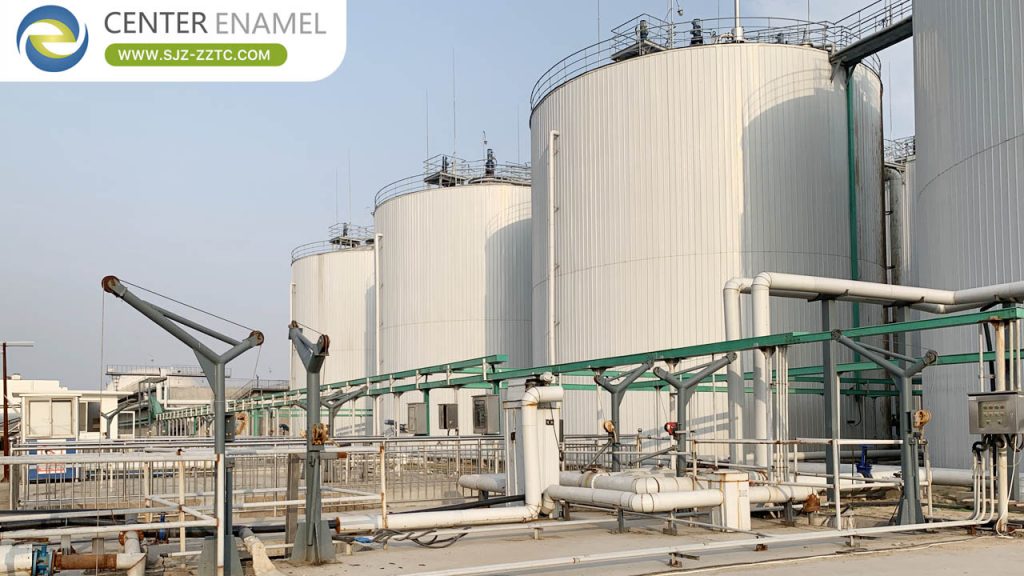
What Sets Municipal Apart
Municipal influent is a blend of household and commercial waste, dilute and fairly predictable in volume but varied in strength. Industrial influent is concentrated, sometimes toxic, and tied to a production schedule. That difference drives every design choice, from equalization size to biological configuration.
Design Parameter Table
| Aspect | Municipal WWTP | Industrial WWTP |
| Influent | Mixed domestic, dilute | Single stream, concentrated |
| COD range | 200-1,000 mg/L | Often 1,000-60,000 mg/L |
| Flow pattern | Steady diurnal | Tied to production |
| Scale | Larger, central | Site-sized |
| Limit | Public discharge standard | Site permit |
Why the Difference Matters for Design
| Design need | Municipal response | Why |
| Equalization | Moderate | Diurnal peaks only |
| Biological | Robust, general | Mixed pollutants |
| Nutrient removal | Often required | Public water bodies |
| Operation | 24/7 staffed | Public service |
Project Case Study
Domestic Sewage Treatment Project, Ghana. As a municipal plant, it treats 1,800 m³/day of mixed domestic sewage under a public discharge limit, using a UBF anaerobic stage and two A²/O tanks to reach COD 1,000→100 mg/L, BOD 500→25, ammonia 30→10, and total phosphorus 10→2 mg/L, the kind of nutrient-bearing limit typical of municipal service.
| Project | Domestic Sewage Treatment Project, Ghana |
| Location | Ghana |
| Industry | Municipal / Domestic Sewage |
| Application | UBF + A²/O biological treatment |
| Product | UBF Ø11.46 × 9.6 m, A²/O 2 × Ø20.64 × 6.6 m |
| Result | COD 1,000→100, BOD 500→25, NH₃ 30→10, TP 10→2 mg/L |
| Status | Delivered 2021 |
About Shijiazhuang Zhengzhong Technology Co., Ltd (Center Enamel)
Shijiazhuang Zhengzhong Technology Co., Ltd (Center Enamel) supports installation and project delivery of municipal plants worldwide: bolted GFS tanks are engineered for the continuous, public-service duty of municipal sewage, with enamel fused at 820-930°C for an inert barrier, built to ISO 28765 / AWWA D103 and CE-EN 1090. Tanks are prefabricated and shipped so a municipal expansion is a repeatable, fast build.
Municipal WWTPs are built for steady, mixed, large-scale domestic flow under public limits, while industrial plants are tuned to one stream. Send your municipal flow and local standard and we will propose a GFS train.
Frequently Asked Questions (FAQ)
Q1: How does municipal differ from industrial WWTP?
A: Municipal treats mixed domestic sewage at steady flow and scale; industrial treats one concentrated, production-tied stream.
Q2: Why is municipal flow steadier?
A: Household use follows a predictable diurnal pattern, unlike batch or shift-based industrial discharge.
Q3: What limits apply to municipal plants?
A: Public discharge standards that usually cap COD, BOD, nitrogen, phosphorus, and pathogens.
Q4: Is municipal scale larger?
A: Generally yes, because a municipality collects from a wide area, so plants are centralized and large.
Q5: Do municipal plants need nutrient removal?
A: Often, because discharge goes to public water bodies where nitrogen and phosphorus cause eutrophication.
Q6: Can the same tank serve municipal and industrial?
A: The GFS tank platform is the same; only the internals and coatings change with the stream.
Suggested CTA
Send your municipal flow and discharge limit. We will design a GFS train sized for continuous public-service duty.