
How Is Biogas Compressed to CBG?
Biogas is compressed to CBG by first drying it to a low dew point, then raising pressure with a multi-stage reciprocating compressor and intercooling to roughly 200–250 bar, buffering the high-pressure gas in cascades and dispensing to vehicles. Drying before compression protects the compressor from water and acid formation.
Step 1 — Biogas Conditioning and Drying
Before compression the gas must be upgraded to biomethane (CO₂/H₂S/siloxanes removed) and dried. Free water and condensables would erode valves and form acid at high pressure, so a dryer sets the dew point below the coldest service temperature. This preconditioning is as critical as the compressor itself.
Step 2 — Multi-Stage Compression
A reciprocating (piston) compressor is standard for CBG because it reaches 200–250 bar efficiently in stages; intercoolers between stages shed the heat of compression, protecting seals and lowering power. The low-pressure digestate gas is drawn from a buffer holder, not directly from the digester.
| Compression step | Pressure | Purpose |
| Buffer / low-pressure | 4–10 bar | Steady feed to compressor |
| Stage 1–2 | to ~50–100 bar | Intermediate rise |
| Final stage | 200–250 bar | Vehicle / CNG grade |
| Cascade storage | 200–250 bar | Buffer for dispensing |
Step 3 — Cascade Storage and Dispensing
High-pressure gas fills cascade banks in pressure order, then a dispenser transfers it to vehicles or a grid connection. Cascading avoids over-pressurizing the compressor and smooths demand peaks. Dispensers mirror CNG stations.
Why a Buffer Holder Matters
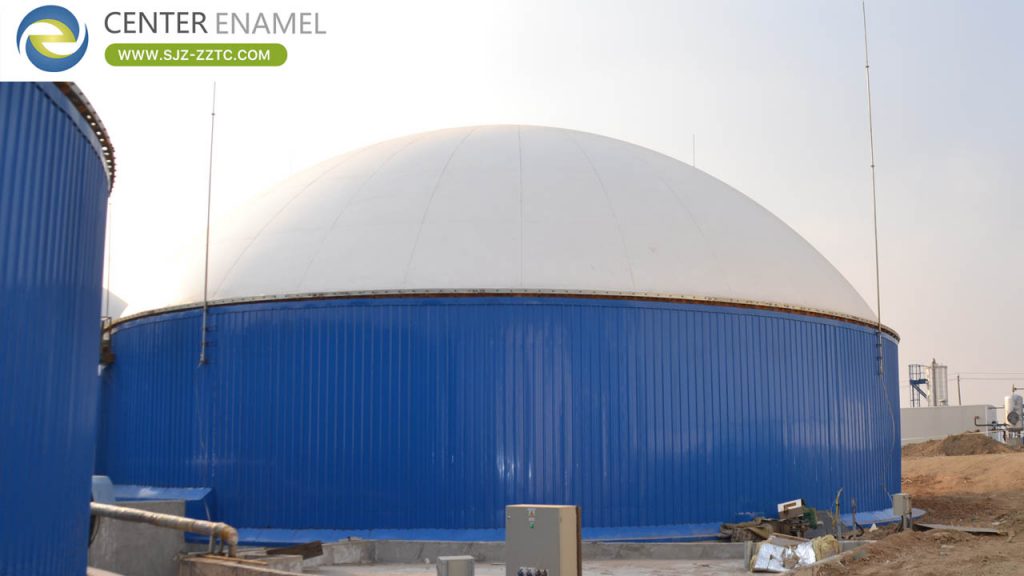
Digestate gas pressure and flow vary; a low-pressure buffer (GFS or steel) decouples the digester from the compressor, letting the compressor run at steady load and extending service life. It is a small but essential interface piece.
Technical Considerations
Compressor skids must be rated for the gas, with ASME-coded pressure vessels for storage. Corrosion control upstream (H₂S removal) protects both compressor and vessels. Venting, relief, and gas-detection are mandatory safety features.
Installation and Commissioning
The compression skid, dryer, cascade banks, and dispenser are installed on prepared foundations, leak-tested, and commissioned with instrumented start-up. Proper commissioning — not just delivery — determines uptime and guarantee compliance.
Project Case Study
Zhenyuan Group Biogas Project in Henan. A vehicle-grade methane plant where 650 T/D of manure/washing wastewater is digested in CSTR reactors (3 Ø15.29 × 15 m + 1 Ø5.22 × 6 m) to yield 3,000,000 m³ CH₄/year for vehicle fuel — the production side that a CBG compression train draws from.
| Project | Zhenyuan Group Biogas Project in Henan |
| Location | Xinzheng, Henan, China |
| Industry | Renewable Vehicle Fuel |
| Application | Vehicle-grade methane production |
| Product | CSTR digester tanks (GFS) + compression scope |
| Output | 3,000,000 m³ CH₄/year |
| Status | Delivered 2013 |
About Center Enamel
Center Enamel supports CBG projects with installation and technical support: the bolted GFS digester and low-pressure buffer tanks are delivered flat-pack with erection guidance and on-site technical support, integrating cleanly with the client’s compression skid. The company’s tank systems are built to interface with standardized compression and upgrading equipment.
Advantages and Limitations
Multi-stage compression with intercooling is efficient and proven for CBG. Limits: the compressor and dryer are capital-heavy and need skilled maintenance; and drying must be right or the compressor suffers. A buffer holder and correct commissioning protect reliability.
Comparison: Reciprocating vs Other Compressors
| Type | Pressure reach | Note |
| Reciprocating | 200–250 bar | Standard for CBG/CNG |
| Screw | moderate | Continuous, lower pressure |
| Diaphragm | very high | Specialty, lower flow |
Biogas becomes CBG by conditioning/drying, then multi-stage reciprocating compression with intercooling to 200–250 bar, buffered in cascades and dispensed. Dry first, buffer the feed, and commission properly. Send your daily gas volume and we will scope the buffer and digester tankage upstream of your compression train.
Frequently Asked Questions (FAQ)
Q1: How is biogas compressed to CBG?
A: Dry the biomethane, then compress in stages with intercooling to 200–250 bar, buffer in cascades, and dispense.
Q2: Why dry biogas before compression?
A: Water and condensables erode valves and form acid at high pressure; drying protects the compressor.
Q3: What compressor is used?
A: A multi-stage reciprocating (piston) compressor, standard for CBG/CNG duties.
Q4: What pressure is CBG?
A: Typically 200–250 bar for vehicle/CNG-grade fuel.
Q5: Why a buffer holder?
A: It decouples variable digester gas from the compressor, steadying load and extending life.
Q6: What support does Center Enamel provide?
A: Flat-pack GFS tank delivery with erection guidance and on-site technical support for digester and buffer tanks.
Send your daily biomethane volume and target pressure. We will scope the upstream digester and low-pressure buffer tankage and coordinate with your compression skid.