
How Is Biogas Produced from Agricultural Waste?
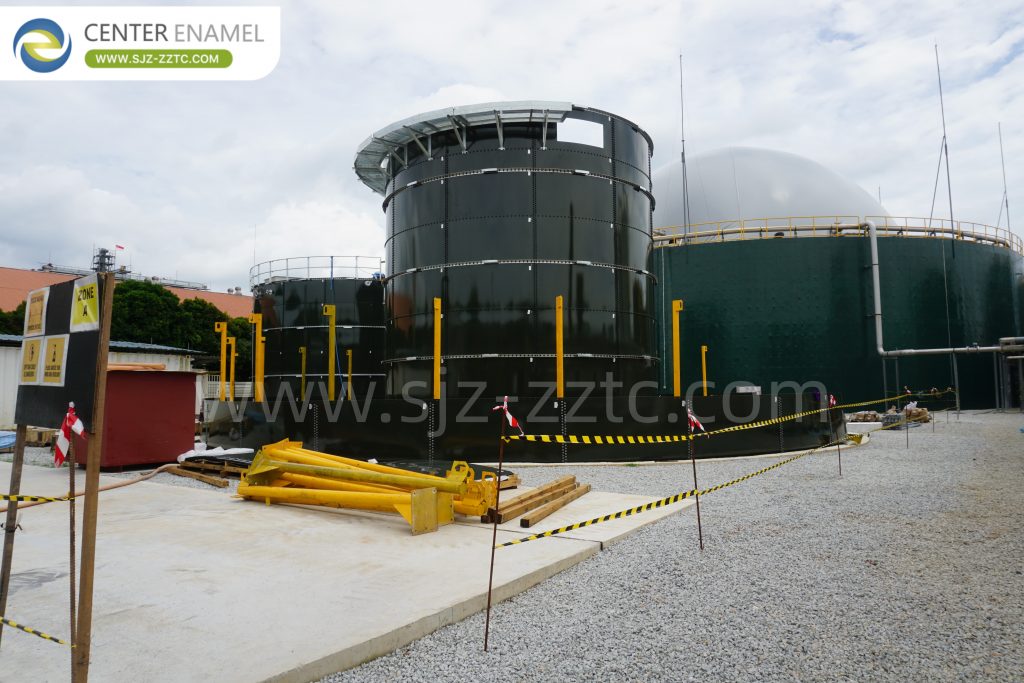
Agricultural waste is an enormous, underutilized renewable resource generated from crop cultivation, livestock breeding, fruit & vegetable processing and farmland harvesting worldwide. Massive volumes of crop straw, livestock manure, fruit pomace, vegetable trimmings and grain byproducts end up in open dumping or random incineration annually, triggering methane leakage, soil contamination and air pollution. Fortunately, mature anaerobic digestion technology can convert these organic agricultural residues into clean biogas, a versatile renewable fuel for power generation, factory heating and domestic cooking.
This article comprehensively answers “How is biogas produced from agricultural waste”, breaks down the four-step biochemical conversion mechanism, introduces mainstream anaerobic reactor options, highlights core equipment GFS Tanks, and analyzes Center Enamel’s leading professional biogas EPC solutions for agricultural waste recycling globally.
Common Types of Raw Agricultural Waste for Biogas Production
Before starting biogas fermentation, eligible agricultural feedstock requires proper sorting and pre-treatment. Three primary waste categories are widely adopted for industrial biogas projects.
First, crop residues including rice straw, corn stalk, wheat bran, cassava peel and sugarcane bagasse left after seasonal harvesting, featuring abundant cellulose and biodegradable organics.
Second, livestock manure from cattle, pig, chicken and duck farms, high in protein and nitrogen to balance the carbon-nitrogen ratio for stable microbial reproduction.
Third, agro-processing waste like fruit peels, vegetable scraps, distillers grains and fruit pomace from juice, canned food and grain alcohol factories, characterized by high moisture and easy degradation, becoming ideal raw material for medium and small-scale biogas stations.
After crushing, impurity removal and moisture adjustment, these raw materials are fed into sealed anaerobic reactors to start biogas fermentation inside GFS Tanks.
Four Core Biochemical Stages: How Agricultural Waste Turns into Biogas
Biogas generation from agricultural waste relies strictly on oxygen-free closed anaerobic digestion inside airtight reactors and GFS Tanks, completed via four interdependent biochemical processes carried out by different specialized microbial communities; methane accounts for 55%–70% of final crude biogas while CO₂ makes up most remaining volume.
- Hydrolysis Stage: Complex macromolecular organics such as cellulose, starch and protein in agricultural waste are decomposed into soluble small molecules by enzymes secreted from hydrolytic microbes; large crop fiber splits into monosaccharides, proteins turn into amino acids, laying the foundation for subsequent acid production. This is often the rate-limiting step of full digestion.
- Acidogenesis (Acidification): Acid-forming bacteria convert soluble small organics into volatile fatty acids (VFAs), ethanol and minor alcohols. Proper acid concentration maintains a stable living environment for follow-up acetogenic microorganisms, avoiding over-acidification that inhibits methanogen activity.
- Acetogenesis: Specific acetogenic bacteria transform leftover fatty acids and intermediate alcohols into acetic acid, hydrogen and carbon dioxide, the core precursors for final methane synthesis.
- Methanation: Strictly anaerobic methanogenic archaea convert acetic acid plus H₂/CO₂ mixtures into methane-rich raw biogas, the target clean fuel of the whole digestion process.
After fermentation, crude biogas goes through desulfurization, dehydration and compression to remove hydrogen sulfide and moisture; purified high-purity biogas can be used for on-site power generation, industrial boiler heating or compressed Bio-CNG for vehicle fuel. Meanwhile, leftover fermented digestate is processed into premium organic fertilizer for farmland circulation, forming a closed-loop circular agriculture chain.
Four Advanced Anaerobic Technologies from Center Enamel for Agricultural Waste Biogas Projects
As a top global biogas EPC contractor, Center Enamel customizes four mature anaerobic reactor solutions matching different agricultural waste features, solid content and project scales, all perfectly compatible with self-produced GFS Tanks:
1. CSTR (Continuous Stirred-Tank Reactor)
Equipped with built-in mechanical stirring devices inside matched GFS Tanks, CSTR realizes full uniform mixing between high-solid agricultural residues (straw, thick livestock manure) and anaerobic sludge, preventing raw material crusting and sediment stratification. It boasts strong anti-shock load capacity and steady daily biogas output, the preferred option for large centralized farm biogas plants with high-solid mixed agricultural waste input.
2. UASB (Upflow Anaerobic Sludge Blanket)
UASB relies on dense high-activity granular sludge bed; pre-treated liquid agricultural leachate flows upward from reactor bottom to contact sludge for full organic degradation. It features small floor space and low power consumption, ideal for liquid manure and pre-filtered fruit/vegetable waste wastewater from agro-processing factories.
3. USR (Upflow Solid Reactor)
Specially designed for unprocessed high-solid agricultural waste like fresh vegetable trimmings and undried livestock manure, USR has simple structure and low initial investment without complicated pre-crushing pretreatment. No internal stirring equipment cuts daily running cost, perfectly suited for scattered small rural farm biogas stations across agricultural regions.
4. IC (Internal Circulation Reactor)
Third-generation high-efficiency anaerobic equipment; biogas buoyancy drives automatic internal gas-liquid-solid circulation, boosting organic treatment efficiency to 3–5 times of conventional reactors. Compact layout fits super-large centralized industrial agricultural waste disposal hubs with massive daily waste volume.
Outstanding Advantages of Center Enamel’s GFS Tanks in Agricultural Waste Biogas Plants
GFS Tanks (Glass-Fused-to-Steel Tanks) serve as core containment equipment for all four anaerobic processes, tailor-made to adapt to diverse global climates including tropical rainy, subtropical humid and temperate cold conditions, with six prominent competitive strengths vs concrete and ordinary carbon steel tanks:
- Superior Corrosion Resistance: High-temperature sintered enamel coating (820–930℃ fusion) resists erosion from organic acid, hydrogen sulfide and ammonia generated during agricultural waste fermentation, effectively avoiding tank rust and leakage under long-term corrosive medium immersion.
- Excellent Airtight Performance: Professional customized rubber sealing accessories plus seamless enamel coating block biogas escape completely, maximizing methane collection rate and eliminating flammable gas safety hazards on-site.
- Modular Bolted Prefabrication: All steel panels are factory pre-produced and bolt-assembled on construction sites without field hot welding, shortening construction period drastically and avoiding quality defects from rainy/humid construction environments.
- Ultra-Long Service Life: Qualified standard GFS Tanks achieve over 30-year stable service life; smooth inner enamel surface prevents organic straw and pomace scaling, greatly reducing regular tank cleaning and maintenance expenses.
- Flexible Capacity Expansion: Extra enamel steel panels can be added to expand tank volume as annual agricultural waste yield rises with harvest seasons, supporting long-term project capacity upgrade.
- Multi-Scenario Compatibility: Single tank can switch between anaerobic digester, raw waste storage tank and digestate storage tank, matching all four Center Enamel anaerobic process configurations flexibly.
Comprehensive EPC Advantages of Center Enamel for Agricultural Waste Biogas Projects
Center Enamel delivers full turnkey one-stop EPC service covering the whole lifecycle of agricultural waste biogas construction, standing out among global biogas engineering suppliers with multiple core strengths:
- Rich independent intellectual property with more than 200 enamel and anaerobic technology patents; all GFS Tanks and reactor accessories are manufactured strictly following ISO and AWWA international quality standards for global cross-border project compliance.
- Full-cycle turnkey service including preliminary project design, equipment production, cross-border logistics, on-site installation, system commissioning, operator technical training and lifelong after-sale maintenance, saving clients multi-party coordination cost and shortening project implementation cycle.
- Localized customized design: adjust anaerobic process matching (CSTR/UASB/USR/IC) and tank dimension based on local agricultural waste composition, regional climate and farm site terrain to optimize fermentation parameters and maximize unit biogas yield.
- Decades of global overseas project experience across over 100 countries, proficient in local environmental regulations and construction specifications of Southeast Asia, Europe and North America to guarantee smooth project delivery.
- Optimized overall system layout lowers equipment failure rate and daily operational consumption, securing stable long-term economic returns for farm and industrial investors from biogas power sales and organic fertilizer revenue.
- Worldwide after-sales service network provides timely remote technical guidance and on-site overhaul for ongoing agricultural waste biogas plants anytime.
Converting agricultural waste into biogas via professional anaerobic digestion is a win-win solution for global environmental protection and renewable energy development. The four-stage microbial degradation process turns useless farm residues into high-value clean fuel, while Center Enamel’s diversified anaerobic technologies and high-performance GFS Tanks provide reliable hardware and technical guarantee for stable biogas output.
As a trusted full-chain EPC provider, Center Enamel’s customized turnkey biogas solutions help farms and agro-industries worldwide eliminate agricultural waste pollution, cut fossil fuel reliance and build sustainable circular agriculture systems, continuously promoting global low-carbon green development.