
How Is Biogas Produced? A Complete Guide to Anaerobic Digestion and Renewable Energy
Biogas is a renewable energy source generated when microorganisms break down organic matter in the absence of oxygen-a process known as anaerobic digestion (AD) . This natural biological process transforms waste materials into a valuable mixture of methane (CH₄) and carbon dioxide (CO₂), providing a sustainable alternative to fossil fuels while simultaneously managing organic waste streams . Understanding how biogas is produced is essential for industries seeking to reduce disposal costs, generate on-site energy, and lower their carbon footprint.
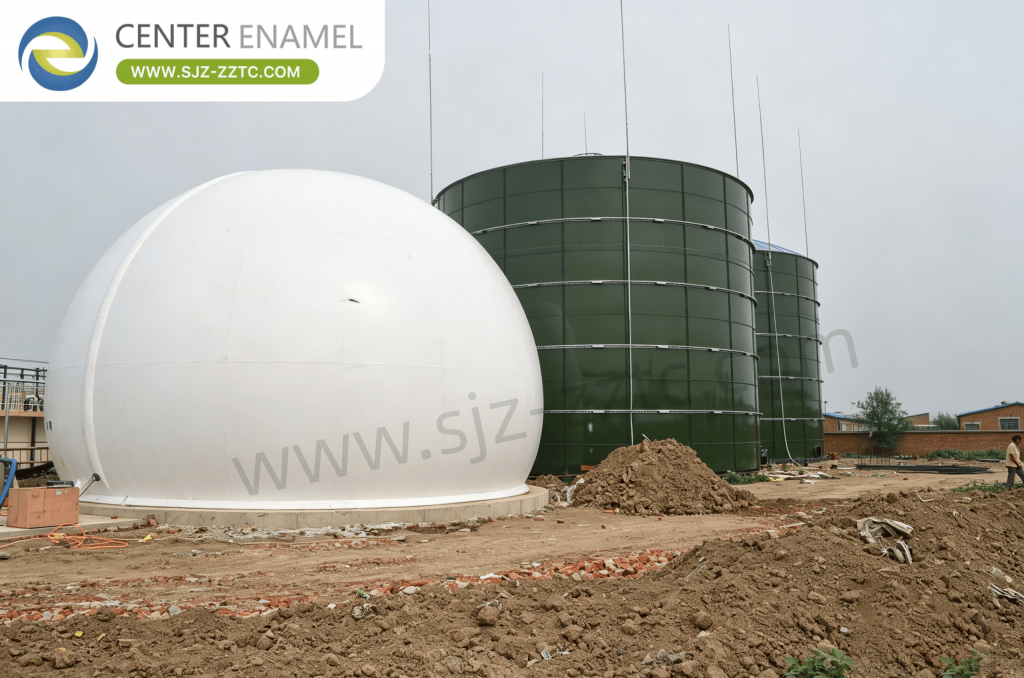
What Is Biogas and Why Does It Matter?
Biogas is primarily composed of methane (typically 50–70%) and carbon dioxide (30–50%), with trace amounts of hydrogen sulfide, ammonia, and water vapor depending on the feedstock used . The energy content of biogas derives almost entirely from its methane concentration, which determines its suitability for heating, electricity generation, or upgrading to biomethane for grid injection or vehicle fuel .
The significance of biogas production extends beyond energy generation. Anaerobic digestion offers a dual benefit: it captures methane that would otherwise escape into the atmosphere from decomposing organic waste (methane is a potent greenhouse gas), and it produces a nutrient-rich digestate that can be used as organic fertilizer . This makes biogas technology a cornerstone of circular economy strategies in agriculture, wastewater treatment, and municipal waste management.
The Four Biological Stages of Anaerobic Digestion
How is biogas actually produced at the microbial level? The process unfolds through four sequential stages, each mediated by distinct groups of microorganisms . Understanding these stages is critical for optimizing digester performance and troubleshooting process failures.
Stage 1: Hydrolysis
Hydrolysis is the first and often rate-limiting step of anaerobic digestion. Complex organic polymers-carbohydrates, proteins, and lipids-cannot be directly absorbed by microorganisms. During hydrolysis, extracellular enzymes secreted by fermentative bacteria break these large molecules into soluble monomers such as sugars, amino acids, and long-chain fatty acids . The reaction for cellulose hydrolysis, for example, converts polysaccharides into glucose units . Because hydrolysis is relatively slow, it frequently determines the overall digestion rate, particularly when feedstocks contain high levels of lignocellulosic material .
Stage 2: Acidogenesis
In acidogenesis (also called fermentation), the soluble monomers produced during hydrolysis are taken up by acidogenic bacteria and converted into volatile fatty acids (VFAs), alcohols, hydrogen, and carbon dioxide . This stage proceeds rapidly and generates the intermediates that subsequent microbial communities will use. The products of acidogenesis include short-chain fatty acids such as acetic, propionic, and butyric acid, which accumulate and lower the pH of the digester environment .
Stage 3: Acetogenesis
Acetogenesis serves as a bridge between acidogenesis and methanogenesis. The VFAs and alcohols from the previous stage are further oxidized by acetogenic bacteria to produce acetate, hydrogen (H₂), and carbon dioxide (CO₂) . This stage is thermodynamically challenging because the oxidation of fatty acids becomes unfavorable unless the hydrogen produced is continuously removed by hydrogen-consuming organisms. This syntrophic relationship-where acetogens depend on methanogens to consume hydrogen-is essential for maintaining process stability .
Stage 4: Methanogenesis
Methanogenesis is the final and most sensitive stage, where methane is actually formed. Methanogenic archaea-strictly anaerobic microorganisms-convert acetate and hydrogen/CO₂ into methane through two primary pathways: aceticlastic methanogenesis (acetate → CH₄ + CO₂) and hydrogenotrophic methanogenesis (CO₂ + 4H₂ → CH₄ + 2H₂O) . Methanogens are slow-growing and highly sensitive to pH changes, temperature fluctuations, and toxic compounds, making this stage the most vulnerable to process upset .
Table 1: The Four Stages of Anaerobic Digestion
| Stage | Key Microorganisms | Primary Substrates | Main Products |
| Hydrolysis | Fermentative bacteria | Carbohydrates, proteins, lipids | Sugars, amino acids, fatty acids |
| Acidogenesis | Acidogenic bacteria | Monomers from hydrolysis | VFAs, alcohols, H₂, CO₂ |
| Acetogenesis | Acetogenic bacteria | VFAs, alcohols | Acetate, H₂, CO₂ |
| Methanogenesis | Methanogenic archaea | Acetate, H₂, CO₂ | CH₄, CO₂ |
Suitable Feedstocks for Biogas Production
Anaerobic digestion is remarkably versatile regarding feedstock selection. Almost any biodegradable organic material can be processed, though yield and process stability vary significantly depending on composition . Common feedstocks fall into several categories:
Agricultural residues and manures represent the most widely used substrate class globally. Livestock manure-from cattle, pigs, and poultry-is particularly suitable because it already contains the microbial communities needed for digestion and provides buffering capacity against pH changes . Crop residues such as corn stover and straw are abundant but require pretreatment due to their recalcitrant lignocellulosic structure .
Food waste and municipal organic waste offer high methane potential due to their easily degradable content. However, these feedstocks often require careful management to prevent acidification and may contain contaminants such as plastics or metals that must be removed before digestion .
Sewage sludge from wastewater treatment plants is a consistent and well-established feedstock. Wastewater treatment facilities frequently incorporate anaerobic digestion to stabilize sludge while recovering energy to offset operational costs .
Industrial organic waste streams-including food processing residues, brewery waste, and fats, oils, and greases (FOG)-can significantly boost methane yields when co-digested with other substrates. FOG, in particular, has very high methane potential but must be introduced gradually to avoid inhibiting methanogens .
Table 2: Feedstock Characteristics and Biogas Potential
| Feedstock Type | Typical Methane Yield | Key Considerations |
| Cattle manure | Moderate | Stable process, good buffering |
| Food waste | High | Rapid acidification risk, requires balancing |
| Sewage sludge | Moderate | Consistent supply, well-established infrastructure |
| Crop residues | Low–Moderate | Requires pretreatment for lignocellulose breakdown |
| FOG (fats/oils/greases) | Very High | Inhibitory at high concentrations, introduce gradually |
Operational Parameters That Determine Biogas Yield
Producing biogas reliably requires maintaining optimal conditions for the microbial consortium. Several parameters interact to influence both the rate of digestion and the final methane yield.
Temperature is perhaps the most critical variable. Anaerobic digestion can operate in mesophilic (30–40°C) or thermophilic (50–60°C) ranges. Mesophilic digestion is more stable and requires less energy input, while thermophilic systems achieve faster reaction rates and greater pathogen destruction but are more sensitive to fluctuations . Research indicates that mesophilic conditions (35–38°C) can yield 180–220 mL CH₄ per gram of volatile solids for certain feedstocks, often outperforming thermophilic conditions in stability .
pH and alkalinity directly affect methanogen activity. The optimal pH range for anaerobic digestion is approximately 6.8–7.4. Acidogenesis can rapidly lower pH if volatile fatty acids accumulate faster than methanogens can consume them, leading to process failure . Maintaining adequate alkalinity-often through co-digestion with manure or addition of buffering agents-is essential for preventing acidification.
Organic loading rate (OLR) describes how much organic matter is fed to the digester per unit volume per day. Excessive OLR can cause VFA accumulation and disrupt the microbial balance, while insufficient loading reduces biogas output relative to digester capacity . Finding the optimal OLR requires balancing feedstock availability with the digester's microbial capacity to process it.
Carbon-to-nitrogen (C/N) ratio influences nutrient availability and process stability. An optimal C/N ratio of approximately 20–30:1 supports healthy microbial growth. Feedstocks with high carbon content (crop residues) can be co-digested with nitrogen-rich materials (manure, food waste) to achieve balance .
Pretreatment can significantly enhance biogas yield from recalcitrant feedstocks. Mechanical, thermal, chemical, and biological pretreatment methods break down lignocellulosic structures, increasing the accessibility of organic matter to hydrolytic enzymes . For example, dilute acid pretreatment of lignocellulosic biomass has been shown to increase subsequent biohydrogen and methane yields by up to 40% .
Digester Technologies and System Configurations
Biogas production systems range from simple household-scale digesters to sophisticated industrial bioreactors. The choice of technology depends on feedstock type, scale, and intended use of the biogas.
Wet anaerobic digestion operates with total solids content below approximately 15% and is the most common configuration for liquid feedstocks such as manure slurries and sewage sludge. Continuous stirred-tank reactors (CSTRs) are standard in wet AD, providing uniform mixing and consistent contact between microorganisms and substrate .
Dry anaerobic digestion handles feedstocks with higher solids content (20–40%), such as the organic fraction of municipal solid waste and stacked manure. Dry systems reduce water requirements and can simplify digestate handling, though mixing and mass transfer are more challenging .
High-rate reactors such as upflow anaerobic sludge blanket (UASB) reactors are used primarily for wastewater treatment. These systems retain dense microbial granules that enable high organic loading rates and short hydraulic retention times, making them suitable for industrial wastewater applications .
Two-stage systems separate hydrolysis/acidogenesis from acetogenesis/methanogenesis, allowing each microbial community to operate under its optimal conditions. While more complex and costly than single-stage systems, two-stage configurations can improve stability and methane yield for challenging feedstocks .
Biogas Upgrading and End Uses
Raw biogas contains corrosive hydrogen sulfide and diluting carbon dioxide that limit its direct applications. Upgrading removes these impurities to produce biomethane with methane content exceeding 95%, suitable for injection into natural gas grids or use as vehicle fuel .
Common upgrading technologies include water scrubbing, amine washing, pressure swing adsorption (PSA), and membrane separation. The choice depends on scale, desired methane purity, and capital/operating cost considerations . For on-site energy generation, however, raw biogas can be used directly in modified boilers or combined heat and power (CHP) units without extensive upgrading, provided that hydrogen sulfide levels are controlled to prevent corrosion .
The digestate remaining after digestion is not a waste but a valuable co-product. It contains plant-available nutrients-nitrogen, phosphorus, and potassium-along with organic matter that improves soil structure. Using digestate as fertilizer closes the nutrient loop and reduces dependence on synthetic fertilizers .
Frequently Asked Questions
How long does it take to produce biogas?
The retention time for biogas production varies with feedstock, temperature, and digester design. Mesophilic digesters typically require 15–30 days of hydraulic retention time for complete digestion, while thermophilic systems can achieve comparable results in 10–20 days. Simpler batch systems may require 30–60 days for full gas production .
Can biogas be produced at home or on a small farm?
Yes. Small-scale anaerobic digesters are widely used in rural areas, particularly in developing countries, to convert animal manure and kitchen waste into cooking fuel and fertilizer. These systems typically range from 1 to 10 cubic meters in capacity and require consistent feedstock input, proper sealing, and regular maintenance to function effectively .
What happens to the digestate after biogas production?
Digestate is a nutrient-rich slurry or solid that can be applied to agricultural land as an organic fertilizer. It contains nitrogen, phosphorus, potassium, and micronutrients in forms more readily available to plants than raw manure. Properly managed digestate application improves soil fertility, reduces odor compared to raw manure, and diverts waste from landfills .
Ready to explore how biogas production can reduce your waste management costs and generate renewable energy for your operation? Contact our team today to discuss a customized anaerobic digestion solution tailored to your feedstock and energy needs.