
How Is CO₂ Removed from Biogas? Technologies, Targets, and Selection Explained
Raw biogas is typically 50–70% methane and 30–50% carbon dioxide. That CO₂ is not just dead weight-it lowers heating value, prevents grid injection, and corrodes equipment when moisture is present. CO₂ removal from biogas is the core step in upgrading raw gas into biomethane that can be sold, injected into pipelines, or used as vehicle fuel. This guide covers the major commercial technologies, their trade-offs, and the practical factors that determine which one fits a given project.
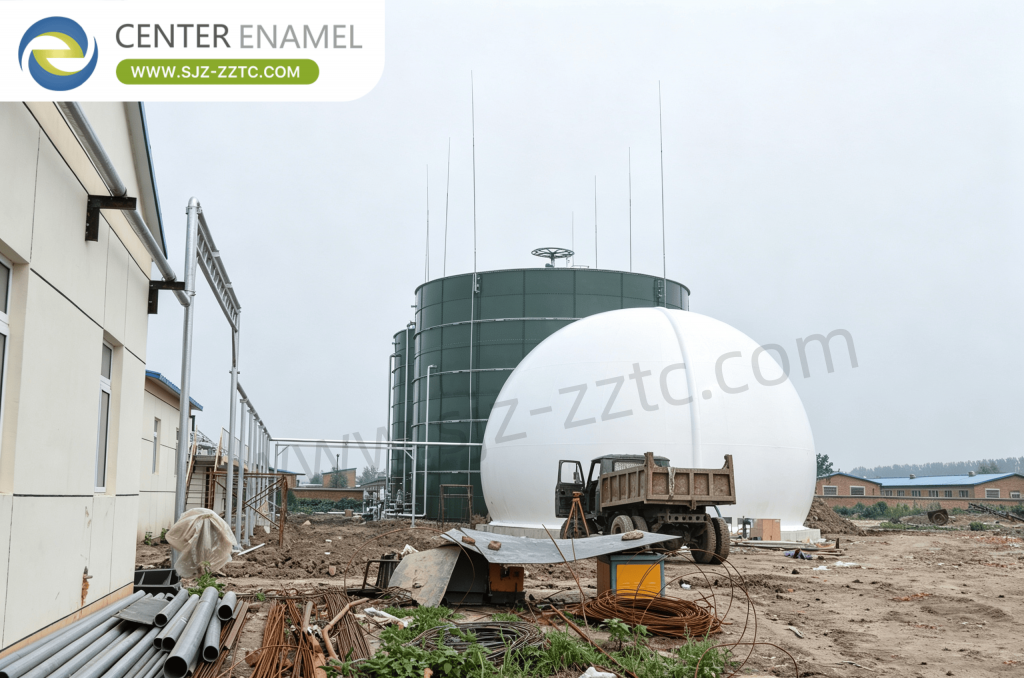
Why CO₂ Must Be Removed: Purity Targets and Consequences
The driving force behind CO₂ removal is the specification that the final gas must meet. Pipeline injection standards in Europe and North America generally require methane content above 95–97%, with CO₂ limited to 2–6% depending on the grid operator. Vehicle fuel standards are similarly strict. Without CO₂ removal, raw biogas cannot meet these thresholds.
Beyond specifications, CO₂ affects the gas economically and operationally. It dilutes energy density, meaning more volume must be compressed and transported for the same energy content. In engine applications, high CO₂ can cause unstable combustion. And when combined with moisture, CO₂ forms carbonic acid that attacks steel piping and compressors.
A less obvious but increasingly important consideration is methane slip. Any CO₂ removal process that also loses methane-through imperfect separation or regeneration off-gas-undermines the climate benefit of biomethane. Modern technologies aim for methane slip below 1–2%, with the best achieving under 0.1%. This metric has become a key selection criterion, especially for projects pursuing carbon credit revenues.
Water Scrubbing: The Simple, Proven Baseline
Pressurized water scrubbing exploits a straightforward principle: CO₂ is significantly more soluble in water than methane, and its solubility increases with pressure. Raw biogas is compressed to 4–8 bar and fed into an absorption column where water flows countercurrent, dissolving CO₂ and some H₂S while methane passes through as a gas.
Water scrubbing is the most widely deployed upgrading technology globally, and for good reason. It requires no chemical additives, tolerates H₂S to some degree, and has a simple, robust design. Reported methane purity exceeds 95% with methane recovery above 96%. The drawbacks are equally clear: large water consumption, wastewater that may require treatment before discharge, and a relatively large physical footprint.
Recent research has explored enhancements such as microchannel mixers and micro-nano bubbles to improve gas-water mass transfer efficiency, potentially reducing the water-to-gas ratio and equipment size. These developments are promising but have not yet displaced conventional packed-column designs in commercial installations.
Pressure Swing Adsorption: Dry, Modular, and Selective
Pressure swing adsorption (PSA) uses adsorbent materials-typically carbon molecular sieves or zeolites-to selectively capture CO₂ at high pressure. When the bed is saturated, pressure is reduced and the CO₂ is desorbed, regenerating the adsorbent for the next cycle. Multiple beds operate in sequence to provide continuous gas flow.
PSA offers several practical advantages. The process is water-free, eliminating the wastewater handling burden of scrubbing. Modular construction makes PSA systems relatively easy to install and expand. Methane purity above 96% is achievable, with recovery in the 85–90% range for conventional configurations. However, PSA has higher energy requirements than water scrubbing and involves periodic adsorbent replacement.
Vacuum pressure swing adsorption (VPSA) variants use a vacuum pump rather than simple pressure reduction for regeneration, improving methane recovery. Recent experimental work on four-column VPSA systems has demonstrated methane purity above 96% and explored co-production of high-purity biogenic CO₂ as a secondary product, a potential revenue stream that could improve project economics.
Amine Scrubbing: High Purity, Higher Complexity
Chemical absorption using amine solutions-most commonly monoethanolamine (MEA) or activated MDEA-achieves the highest methane purity among commercial upgrading technologies. CO₂ reacts chemically with the amine in an absorber column, and the rich solution is then heated in a stripper to release the CO₂ and regenerate the solvent.
Amine scrubbing can deliver methane purity of 99% or higher with very low methane slip, because the chemical reaction is highly selective for CO₂ over methane. This makes it attractive for projects requiring the highest gas quality or those where minimizing methane emissions is paramount. A hot potassium carbonate variant has been shown to achieve methane slip below 0.1%, eliminating the need for off-gas post-treatment.
The costs are significant. Amine systems have high operating expenses due to the energy required for solvent regeneration, and they face challenges including solvent degradation, foaming, and corrosion. Amine scrubbing is best suited to larger plants where the efficiency gains justify the capital and operational complexity.
Membrane Separation and Emerging Alternatives
Membrane systems separate CO₂ from methane based on differential permeability through polymeric or inorganic membranes. CO₂ passes through the membrane selectively while methane is retained on the high-pressure side. Membranes offer compact footprint, low maintenance, and modular scalability. Methane purity approaching 97% has been reported with recovery above 97% under optimized conditions. The main limitations are membrane fouling and the high initial investment for membrane modules.
Cryogenic separation takes a different approach entirely. Biogas is chilled to around −110°C, where CO₂ condenses or solidifies while methane remains gaseous, allowing high-purity methane recovery. The technology produces very high purity gas and yields a pure CO₂ byproduct suitable for commercial use, but its energy consumption and capital cost are the highest among commercial options. It is best reserved for large-scale facilities with access to low-cost electricity.
Biological upgrading-using hydrogenotrophic methanogens to convert CO₂ and H₂ into additional methane-offers a fundamentally different value proposition. Instead of removing CO₂ as waste, it converts it into more product. Reported CO₂ removal rates reach 80–100%, with methane purities of 88–100%. However, the process requires a reliable hydrogen supply and is slower than physical/chemical methods, keeping it largely in the demonstration and early-commercial stage.
| Technology | Typical CH₄ Purity | Methane Slip / Recovery | Key Advantage | Key Limitation |
| Water Scrubbing | >95% | Recovery >96% | Simple, no chemicals | Water use, wastewater |
| PSA / VPSA | 96–98% | Recovery 85–90% | Dry, modular | Energy, adsorbent cost |
| Amine Scrubbing | 99%+ | Slip <0.1% (K₂CO₃ variant) | Highest purity, low slip | Energy for regeneration, chemical handling |
| Membrane | ~97% | Recovery >97% | Compact, low maintenance | Fouling, module cost |
| Cryogenic | >97% | Recovery >95% | High purity, CO₂ byproduct | Very high energy and cost |
The Methane Slip Problem: Why It Matters More Than You Think
Methane slip is the fraction of methane that exits with the CO₂ off-gas rather than the product stream. For a biogas plant processing 1,000 Nm³/h of raw gas at 60% methane, a 2% slip rate means roughly 12 Nm³/h of methane is vented to atmosphere-enough to significantly erode the greenhouse gas benefits of the entire project.
Regulatory frameworks are beginning to reflect this. Carbon credit methodologies and sustainability certification schemes increasingly scrutinize methane slip as a key performance indicator. Technologies that achieve slip below 1% are favored, and the best-in-class (amine and hot potassium carbonate systems) approach 0.1%.
Membrane and PSA systems, which rely on physical separation, inherently lose more methane than chemical absorption. However, off-gas treatment-such as recycling the CO₂ stream back through the upgrading unit or sending it to a flare or thermal oxidizer-can mitigate these losses at additional cost. The trade-off between capital expenditure on slip mitigation and the value of recovered methane (or carbon credits) must be evaluated case by case.
How to Choose the Right CO₂ Removal Technology
There is no universal “best” technology for CO₂ removal from biogas. The right choice depends on a specific set of project conditions.
Scale is the first filter. Water scrubbing and PSA are competitive at medium scale (100–500 Nm³/h). Amine scrubbing becomes more attractive at larger scales where its higher efficiency and lower slip justify the complexity. Cryogenic separation requires very large scale to be economically viable.
Gas quality requirements come next. If grid injection is the goal and the local operator allows 2–4% CO₂, water scrubbing or PSA may suffice. If vehicle fuel or liquefied biomethane is the product, amine scrubbing or a PSA-membrane hybrid may be necessary to reach the required purity and dew point.
Water availability and wastewater costs can tip the balance against water scrubbing in water-scarce regions. Conversely, PSA’s dry operation may be preferred where discharge permits are difficult to obtain.
Methane slip constraints matter for projects seeking carbon credits or operating under strict emissions regulations. Amine scrubbing or hot potassium carbonate systems offer the lowest slip, at the cost of higher energy consumption.
Integration with existing infrastructure often decides the outcome. A plant that already has compression for grid injection may find PSA or membrane systems easier to integrate. A facility with waste heat available may favor amine regeneration.
Finally, CO₂ valorization is an emerging factor. If a market exists for food-grade or industrial CO₂, cryogenic separation or VPSA configurations that produce a pure CO₂ stream can generate additional revenue that changes the entire economic calculation.
Frequently Asked Questions
What is the most common method for CO₂ removal from biogas?
Water scrubbing is the most widely deployed technology globally, valued for its simplicity, lack of chemical additives, and proven performance. PSA and membrane systems are also common, particularly where water availability is limited or modular installation is preferred.
What happens to the CO₂ removed from biogas?
In most upgrading plants, the CO₂ off-gas is vented to atmosphere after treatment to minimize methane slip. However, growing interest in carbon capture and utilization means some facilities now purify and sell the CO₂ for industrial or food-grade applications, or send it for geological storage as part of bio-CCS projects.
How much methane is lost during CO₂ removal?
Methane slip varies by technology. Conventional PSA and membrane systems may lose 1–3% of the methane in the feed. Water scrubbing typically loses 1–2%. Amine scrubbing and hot potassium carbonate systems can achieve slip below 0.1%, making them the preferred choice where methane emissions are tightly regulated or carbon credit revenues depend on minimizing losses.