
How is Dairy Wastewater Treated? A Complete Guide to Technologies and Sustainable Solutions
Dairy wastewater treatment is a critical environmental challenge due to the industry's high organic load, fats, and nutrient content. This comprehensive guide explores the key contaminants in dairy effluent, primary biological treatment methods including activated sludge and constructed wetlands, and the energy-recovering benefits of anaerobic digestion. It also highlights the significant advantages of Glass-Fused-to-Steel (GFS) tanks in treatment infrastructure, along with emerging technologies and resource recovery strategies. Whether you're an industry professional or environmental student, this article provides essential insights into sustainable dairy wastewater management.
What is Dairy Wastewater and Why is Treatment Essential?
Dairy wastewater is the liquid effluent generated during milk processing, equipment cleaning, and facility maintenance operations in the dairy industry. It is considered one of the most polluting industrial waste streams due to its high concentration of organic matter, fats, oils, and nutrients.
The primary environmental concern is its high Chemical Oxygen Demand (COD) and Biological Oxygen Demand (BOD5), which can deplete oxygen levels in receiving water bodies and severely damage aquatic ecosystems. Additionally, dairy effluents contain significant nitrogen and phosphorus concentrations, which can cause eutrophication-a process that triggers harmful algal blooms and further compromises water quality.
The European Union and other regulatory bodies have recommended biological processes for dairy wastewater treatment, recognizing the need for effective management of this challenging effluent.
Key Contaminants in Dairy Wastewater
Understanding the composition of dairy wastewater is essential for selecting the appropriate treatment approach. Typical contaminants include:
High Organic Load (COD/BOD): Derived from milk components such as proteins, fats, and lactose. Excess COD may require longer hydraulic retention times or pretreatment steps, increasing treatment costs.
Nutrients: Elevated concentrations of nitrogen and phosphorus that contribute to eutrophication.
Fats, Oils, and Grease (FOG): These can cause fouling in treatment systems and require specialized removal methods.
Suspended and Dissolved Solids: Including milk solids and cleaning agents that increase turbidity and treatment complexity.
The variable nature of dairy wastewater-depending on production cycles, cleaning schedules, and seasonal factors-adds to the treatment challenge.
Biological Treatment Methods for Dairy Wastewater
Biological processes are the cornerstone of dairy wastewater treatment, leveraging microorganisms to break down organic pollutants. A meta-analysis of treatment studies revealed that biological methods demonstrate substantial effectiveness in COD removal, with an overall effect size of 6.96 (95% CI: 5.91–8.00).
Activated Sludge (AS) Systems
Activated sludge technology is a conventional biological treatment widely adopted for its reliability and scalability. The meta-analysis showed AS systems achieving a pooled effect size of 7.88 (95% CI: 6.54–9.21) for COD removal. However, performance is highly dependent on operational parameters such as sludge age, aeration intensity, and organic loading rate.
Constructed Wetlands (CW)
Constructed wetlands offer an ecologically sustainable treatment approach, integrating sedimentation, plant uptake, microbial degradation, and adsorption. They exhibited a relatively high pooled effect size of 9.43 (95% CI: 8.53–10.32). While robust, CW performance varies based on design, plant species, and hydraulic retention time.
Algae-Based Treatment Systems
Algae-based systems utilize microalgae to capture nutrients and organics from wastewater. While effective-with a pooled effect size of 4.39 (95% CI: 3.93–4.86)-they face limitations such as light dependency and biomass harvesting challenges.
Combined AS + Algae Systems
The combination of activated sludge and algae exhibited the highest pooled effect size of 15.47 (95% CI: 8.16–22.78), demonstrating synergistic benefits where algae provide oxygen through photosynthesis while bacteria enhance organic matter degradation. This combined approach also achieved lower hydraulic retention times (9.40 days), making it an attractive option.
Anaerobic Digestion: The Foundation of Energy-Efficient Treatment
Anaerobic digestion (AD) is particularly well-suited for high-strength dairy wastewater because it achieves two primary goals: high COD removal and high energy recovery.
How Anaerobic Digestion Works
Specialized microbial communities break down complex organic molecules in the absence of oxygen. The final stage of this process converts up to 90% of the biodegradable COD into biogas-a mixture of methane (the valuable energy carrier) and carbon dioxide.
Biogas Energy Recovery
The recovered biogas can be used directly in boilers for heating or, more commonly, fed into Combined Heat and Power (CHP) engines. These units simultaneously generate electricity for dairy operations and heat for maintaining optimal digester temperatures, creating an efficient closed-loop energy solution.
Greenhouse Gas Reduction
Capturing methane-a potent greenhouse gas that would otherwise be released from lagoons or manure piles-and converting it into usable energy offers substantial environmental benefits and contributes to sustainability goals.
High-Rate Reactors: The EGSB Advantage
For high-strength dairy effluent, high-rate reactors like the Expanded Granular Sludge Bed Reactor (EGSB) are crucial for minimizing footprint and maximizing processing speed:
High Organic Loading: The EGSB processes massive COD loads in a compact vertical structure.
Sludge Integrity: Dense, resilient granular sludge withstands high flow rates and solids content.
Flow Stability: High internal recirculation maintains stability against rapid changes in flow and concentration typical of dairy wash cycles.
The Advantages of GFS Tanks in Dairy Wastewater Treatment
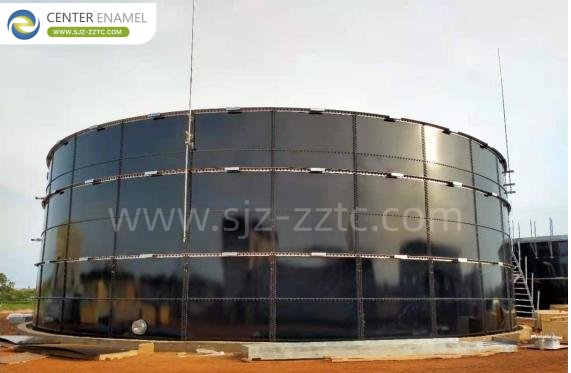
Glass-Fused-to-Steel (GFS) tanks have become the preferred infrastructure for dairy wastewater treatment projects globally. The technology fuses steel's structural integrity with glass's corrosion resistance, creating a durable, chemically inert storage solution.
Unmatched Corrosion Resistance
Anaerobic digestion of dairy wastewater produces hydrogen sulfide and corrosive organic acids. The GFS coating-a molecular fusion of inert glass to high-strength steel-creates a non-porous barrier that resists chemical attack, guaranteeing decades of service life without internal recoating. The coating is applied through a high-temperature process (820°–930°C) that fuses glass enamel with the steel surface.
Superior Durability and Structural Integrity
For large dairy operations, immense digester volumes are often necessary. GFS tanks, built from precision-engineered, high-strength steel panels, provide the structural integrity to safely contain large volumes and hydrostatic pressure. The glass surface is smooth, glossy, and inert, preventing deposit buildup and minimizing maintenance.
Gas-Tight Sealing
Efficient and safe capture of methane-rich biogas requires superior gas-tight seals. The modular, bolted GFS design, combined with specialized sealants, maximizes methane recovery, prevents hazardous leaks, and provides essential odor control.
Rapid Installation and Flexibility
Dairy farms are often located in remote areas with limited access for heavy concrete construction equipment. Modular GFS components are factory-finished and bolted together on-site, significantly reducing construction timelines-often completing in 2–4 weeks compared to months for concrete tanks. The installation process is less affected by weather conditions.
Lower Lifetime Cost
The durable glass surface requires minimal maintenance over its multi-decade lifespan compared to concrete or carbon steel welded tanks. Combined with lower initial CAPEX and reduced leakage risk, this results in a substantially lower total cost of ownership.
Expandability
Unlike concrete or welded steel tanks, GFS tanks offer unmatched expandability. If operational needs grow, the modular design allows for capacity expansion without complete replacement.
Industry Certifications
GFS tanks meet rigorous international standards, including AWWA D103, EN ISO28765, NSF, and CE certification, ensuring compliance with water and wastewater applications.
Advanced and Emerging Treatment Technologies
Beyond biological methods, advanced technologies are being developed to enhance dairy wastewater treatment and enable resource recovery.
Electrochemical Technologies
Electrochemical methods-including electrocoagulation, electroflotation, and electrochemical advanced oxidation processes-offer several advantages:
Broader Pollutant Removal: Targets both organic and inorganic compounds.
Reduced Chemical Dependence: Minimizes or eliminates additional chemicals.
Resource Recovery Potential: Extracts valuable resources like hydrogen, methane, and nutrients.
Compact Footprint: Systems can be more space-efficient than conventional treatment plants.
However, challenges such as electrode fouling and scalability gaps between laboratory and industrial scales remain.
Ozonation and Advanced Oxidation Processes
Ozone (O₃) treatment has proven highly effective in removing taste, color, odor, bacteria, and viruses from wastewater. Ozone's strong oxidation potential breaks down complex organic pollutants, with oxygen being the only byproduct of its degradation.
Membrane Technologies
Membrane separation processes-including microfiltration, ultrafiltration, and membrane bioreactors (MBR)-can remove high molecular weight compounds, bacteria, suspended solids, and viruses. These technologies are increasingly used as polishing steps to meet stringent discharge standards and enable water reuse.
Chemical Coagulation and Photo-Fenton
Chemical coagulation remains a robust option for dairy effluent treatment, particularly when precision and effectiveness are required. Advanced oxidation processes like the photo-Fenton reaction utilize hydroxyl radicals to degrade organic pollutants, with UV irradiation enhancing process efficiency.
Nutrient Recovery and Circular Economy
Modern dairy wastewater treatment is shifting from a "treat and discharge" model toward resource recovery and circular economy principles.
Struvite Precipitation
Nutrients such as nitrogen and phosphorus can be recovered through struvite precipitation (magnesium ammonium phosphate). Maximum nutrient removal is achieved at a molar ratio of NH₄:Mg:PO₄ = 1:1.5:1.5 and pH = 10, yielding approximately 12 grams of dry precipitate per liter of treated stream. This recovered material can be used as fertilizer, closing the nutrient loop.
Biogas Energy
As previously discussed, anaerobic digestion recovers methane-rich biogas, turning waste into a renewable energy source that offsets operational costs.
Water Reuse
Advanced treatment trains incorporating membrane filtration can produce water suitable for reuse in cooling, heating, and cleaning floors and external areas, promoting water conservation.
Integrated Treatment Systems: The Path Forward
No single technology can address all contaminants in dairy wastewater effectively. Modern treatment plants typically employ a multi-stage, integrated approach:
Primary Treatment: Screening, equalization, and dissolved air flotation (DAF) to remove solids and FOG.
Secondary Biological Treatment: Anaerobic digestion (e.g., EGSB in GFS tanks) for high COD removal and biogas recovery, followed by aerobic polishing for nutrient removal.
Tertiary Treatment: Membrane filtration, ozonation, or advanced oxidation for final polishing and water reuse.
The optimal configuration depends on factors such as wastewater composition, discharge regulations, energy costs, and resource recovery goals.
Frequently Asked Questions (FAQ)
1. Why is anaerobic digestion preferred for dairy wastewater treatment?
Anaerobic digestion is preferred because dairy wastewater has high organic strength (COD). Anaerobic processes convert up to 90% of the biodegradable COD into biogas-a mixture of methane and carbon dioxide that can be used to generate electricity and heat. This achieves two goals simultaneously: effective pollutant removal and renewable energy recovery, making it both environmentally and economically beneficial for dairy operations.
2. What makes GFS tanks better than concrete tanks for dairy wastewater treatment?
GFS (Glass-Fused-to-Steel) tanks offer several advantages over concrete: superior corrosion resistance against aggressive organic acids and hydrogen sulfide produced during anaerobic digestion; faster installation (2–4 weeks vs. months for concrete); lower lifetime maintenance costs; and gas-tight sealing essential for safe biogas capture. Additionally, GFS tanks can be expanded or relocated as operational needs change.
3. Can dairy wastewater be treated to meet water reuse standards?
Yes, advanced treatment trains combining biological processes with membrane filtration (ultrafiltration, nanofiltration) and disinfection can produce water quality suitable for reuse in cooling, heating, and facility cleaning. Technologies like ozonation and photo-Fenton oxidation further enhance pollutant removal. However, the specific treatment configuration must be tailored to the intended reuse application and local regulatory requirements.