
How Is Excess Sludge Managed?
Excess sludge is managed in three moves: dewater it to cut volume, stabilize the solids (anaerobic digestion is preferred because it also recovers biogas and reduces mass), then dry or apply the residue as fertilizer where regulation allows; anaerobic routes typically remove 30-50% more volatile solids than leaving sludge untreated.
Step 1: Dewatering
A belt press or centrifuge squeezes free water from the sludge, often cutting volume by half or more before anything else happens. Dewatering is the cheapest mass reduction per dollar and the step that makes transport and the next stage affordable.
Step 2: Stabilization
Stabilization destroys pathogens and odorous organics. Anaerobic digestion does this while recovering biogas and shrinking volatile solids; aerobic digestion is the alternative where biogas use is not practical. The choice sets whether the plant is a net energy producer or consumer.
Step 3: End Use
The stabilized residue is dried for easy transport, incinerated where energy recovery or landfill rules require, or applied to land for its nitrogen and phosphorus. Land application is the lowest-cost route but is the most regulated, so metals and pathogen testing gate it.
Sludge Management Table
| Option | Effect | Note |
| Dewatering | Volume down | Belt press / centrifuge |
| Anaerobic digestion | Mass down + biogas | Preferred route |
| Drying | Easy transport | Energy input |
| Land apply | Recycle N-P | Regulated |
| Limitation | Heavy metals block reuse | Test first |
Project Case Study
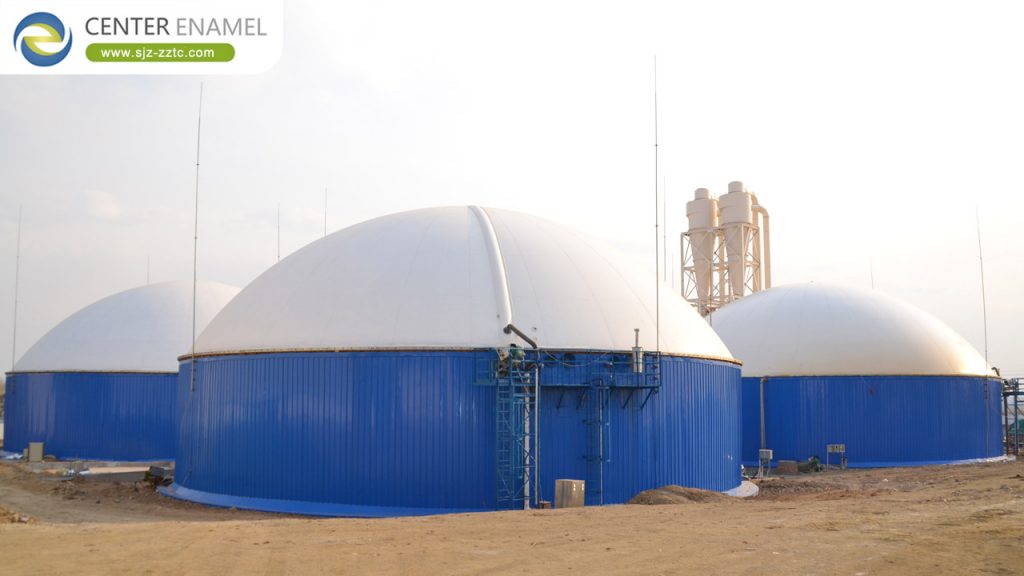
Malaysia Biogas Project. Five GFS tanks totaling 27,000 m³ digest agro-industrial waste at about 80% digestibility, producing 22,000 m³ of biogas per day — the anaerobic step that both recovers energy and reduces the organic mass that would otherwise become surplus sludge.
| Project | Malaysia Biogas Project |
| Location | Malaysia |
| Industry | Renewable Energy / Agro-industry |
| Application | Anaerobic digestion, mass and sludge reduction |
| Product | 5 GFS tanks (5,400 m³ each, Ø24.46 × 12 m) |
| Output | 22,000 m³ biogas/day, ~80% digestibility |
| Status | Delivered 2026 |
About Shijiazhuang Zhengzhong Technology Co., Ltd (Center Enamel)
Shijiazhuang Zhengzhong Technology Co., Ltd (Center Enamel) brings international project experience in anaerobic and sludge systems across Asia, Africa, and the Middle East. GFS tanks for biogas and digestate duty are delivered to 100+ countries, with flat-pack shipping and on-site erection that keep sludge and digestate containment on schedule wherever the plant sits.
Advantages and Limitations
Anaerobic stabilization is the most economical where biogas can be used, because it pays while it reduces mass. Limits: land application is only open after clean testing, and drying costs energy that the biogas may or may not cover.
Comparison: Anaerobic vs Aerobic Sludge Stabilization
| Method | Mass cut | Energy |
| Anaerobic | High + biogas | Net positive |
| Aerobic | Moderate | Consumes |
Manage excess sludge as dewater, stabilize, then reuse: dewatering shrinks volume, anaerobic digestion cuts mass and recovers biogas, and the residue returns nutrients to land where rules allow. Send your sludge volume and characteristics and we will size the digester and digestate tankage.
Frequently Asked Questions (FAQ)
Q1: What is the first step in sludge management?
A: Dewatering with a belt press or centrifuge to shrink volume before stabilization or transport.
Q2: Why stabilize sludge?
A: Stabilization kills pathogens and cuts odor and mass, making the residue safe to handle or apply.
Q3: Does anaerobic digestion help sludge?
A: Yes; it removes extra volatile solids and recovers biogas, so sludge volume and cost drop together.
Q4: Can sludge be used on farms?
A: Where metals and pathogens test clean, digestate is applied as fertilizer for its nitrogen and phosphorus.
Q5: What blocks land application?
A: High heavy metals, contaminants, or local limits on application rates and timing.
Q6: How much does anaerobic cut sludge mass?
A: Anaerobic stabilization typically removes 30-50% more volatile solids than untreated sludge.
Suggested CTA
Tell us your sludge volume and test results. We will size the anaerobic digester and GFS digestate storage for your site.