
How Is Food Waste Used? From Biogas to Bioplastics
Food waste is not simply a disposal problem. Increasingly, it is recognized as a valuable resource with multiple pathways for productive use. From generating renewable energy to creating soil amendments and even manufacturing biodegradable materials, food waste is being transformed in ways that reduce environmental harm while creating economic value.
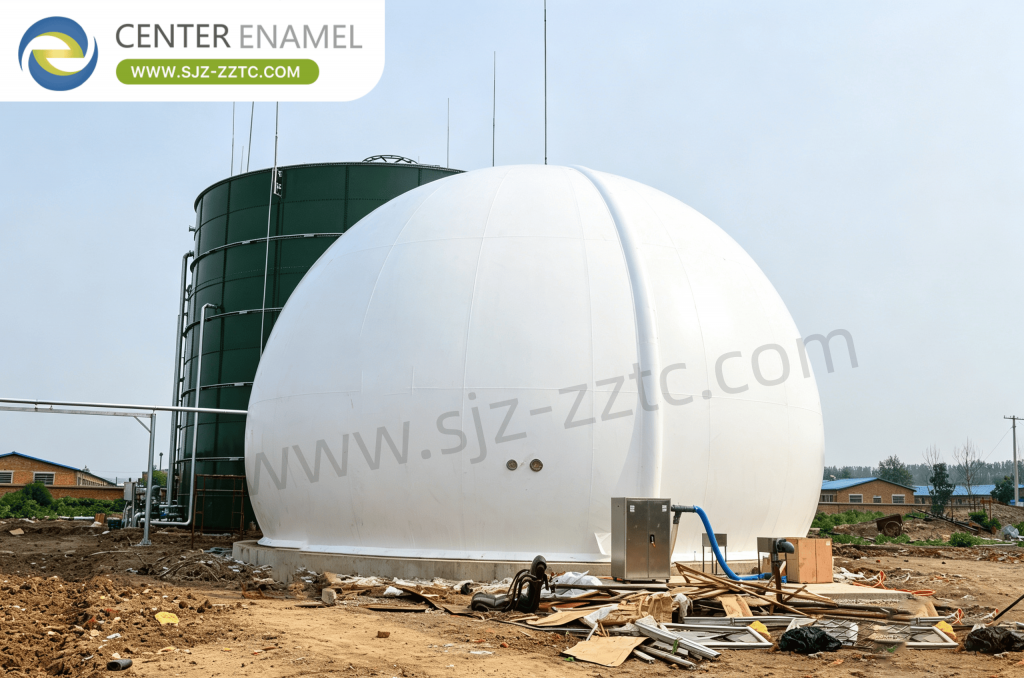
The choice of how to use food waste depends on its condition, composition, and location. Edible surplus can feed people. Inedible scraps can feed animals, generate biogas, or become compost. Emerging technologies are even converting food waste into bioplastics and other materials. This article explores the major ways food waste is used, with particular attention to anaerobic digestion for biogas production-one of the most promising pathways for converting waste into clean energy.
The Hierarchy of Food Waste Use: Prioritizing Best Outcomes
The U.S. Environmental Protection Agency's Food Recovery Hierarchy provides a framework for how food waste should ideally be used, ranked from most to least preferred . This hierarchy reflects the principle that the highest and best use of food is human consumption, followed by feeding animals, then industrial uses, and finally composting or energy recovery.
Table 1: Food Waste Utilization Methods and Their Outcomes
| Utilization Method | Best For | Primary Output | Key Benefit |
| Food donation | Edible surplus | Meals for people | Addresses food insecurity |
| Animal feed | Food scraps unsuitable for humans | Protein feed | Reduces commercial feed demand |
| Anaerobic digestion | Any organic food waste | Biogas + digestate | Renewable energy + fertilizer |
| Composting | Organic food waste | Nutrient-rich compost | Soil improvement |
| Industrial upcycling | Specific waste streams | New materials/products | Value-added products |
The hierarchy does not mean that lower-priority uses are without value. Rather, it encourages decision-makers to consider whether food waste could serve a higher purpose before resorting to energy recovery or disposal.
Feeding People: The Highest Use of Surplus Food
The most direct and beneficial use of food waste is redirecting edible surplus to people in need. Food donation programs collect unsold or excess food from retailers, restaurants, and food service operations and distribute it to food banks, shelters, and community organizations .
This approach addresses two problems simultaneously: food insecurity and unnecessary waste. In Rwanda, small businesses are building circular food systems that connect waste streams to productive uses. For example, coffee companies supply coffee pulp to mushroom producers, where it becomes the nutrient base for growing mushrooms . In the United States, apps like Flashfood allow shoppers to purchase groceries nearing their sell-by date at a discount, keeping food out of landfills while expanding access to affordable food .
The environmental benefits are substantial. Donating food not only reduces waste but also avoids the water, land, and energy resources that would be lost if that food were discarded.
Feeding Animals: Converting Scraps into Protein
Food waste that is no longer suitable for human consumption-but still safe and nutritious-can be processed into animal feed. This use ranks second in the EPA hierarchy because it captures the nutritional value of food while reducing demand for commercial feed production .
An innovative approach to this pathway involves black soldier fly larvae, which are voracious consumers of organic waste. These larvae can eat twice their body weight in food scraps within five hours and can be fed again the next day . A small-scale bioreactor system developed at UC Riverside can produce about one pound of larvae per square yard per day, with the larvae serving as protein-rich feed for poultry and fish .
The process also generates frass-the larvae's manure-which is a valuable soil amendment. Research suggests that insect fragments in frass may even stimulate natural plant defenses, acting almost like a vaccine for plants . This dual-output system makes insect-based food waste processing particularly efficient.
Converting Food Waste to Biogas Through Anaerobic Digestion
One of the most technically sophisticated and environmentally valuable uses of food waste is anaerobic digestion-a biological process that breaks down organic matter in the absence of oxygen to produce biogas . This process transforms food waste into two valuable outputs: renewable energy and nutrient-rich fertilizer.
How Anaerobic Digestion Works
Anaerobic digestion occurs in four stages: hydrolysis, acidogenesis, acetogenesis, and methanogenesis . In the first stage, complex organic polymers like carbohydrates and proteins are broken down into simpler compounds. These are then converted into organic acids, and finally into methane and carbon dioxide by methanogenic organisms.
A key challenge in digesting food waste is its high solid content, which makes hydrolysis the rate-limiting step . To overcome this, researchers have developed various pretreatment methods, including thermal pretreatment, microwave-assisted pretreatment, and biological pretreatment with hydrolytic microorganisms .
Biogas Yield and Applications
The biogas produced through anaerobic digestion consists primarily of methane (60–70%) and carbon dioxide (30–40%) . This biogas can be used directly for cooking, heating, or electricity generation, or upgraded to renewable natural gas (RNG) for injection into natural gas pipelines .
The energy potential is significant. A pilot study in Malaysia found that feeding 50 kg of food waste daily into a digester can generate 1.5 to 2.15 m³ of biogas per day . A study on disperser-aided thermal pretreatment achieved biomethane production of 281.8 mL/gCOD, with a net energy generation of 1,417.9 kWh per ton of food waste and an energy ratio of 2.31 .
Recent research has identified previously unknown bacteria in the Natronincolaceae family that play a crucial role in methane production, particularly in high-ammonia environments that would shut down other methane producers . This discovery could lead to more efficient digester designs that maintain stable biogas production under challenging conditions.
Co-Digestion for Enhanced Performance
Anaerobic co-digestion of food waste with other organic substrates-such as wastewater sludge, animal manure, or garden waste-can improve biogas yields and process stability. A study on co-digestion of food waste and waste-activated sludge achieved the highest biogas yield of 884 NmL/gVS with 65% biomethane content at a 90:10 mixing ratio .
The addition of waste-derived additives like eggshells has also been shown to enhance acidogenesis and methane production. In one study, eggshell addition increased volatile fatty acid concentration by more than 2.5-fold and stabilized the acetic acid proportion at approximately 79%, redirecting the process toward a more efficient methane-producing pathway .
Composting: Returning Nutrients to the Soil
Composting is a well-established method for converting food waste into a valuable soil amendment. The process involves controlled aerobic decomposition of organic matter to produce compost-a nutrient-rich material that improves soil structure, water retention, and microbial health .
Composting can take several forms, including windrow composting, vermicomposting (using worms), and in-vessel composting. Each method has advantages depending on the scale and type of food waste being processed. Composting is particularly suitable for food waste that cannot be used for animal feed or energy recovery, and it produces a product with clear agricultural value.
The environmental benefits of composting include reduced landfill waste, lower methane emissions compared to landfilling, and production of a renewable soil amendment that can reduce dependence on synthetic fertilizers .
Emerging Uses: Bioplastics, Materials, and Industrial Products
Beyond traditional uses, innovative companies are developing new applications for food waste as raw material for manufactured products. These "upcycling" approaches extract value from food waste streams that would otherwise be composted or digested.
In Michigan, a startup called EcoSphere Organics collects food scraps from local restaurants-coffee grounds, citrus rinds, and eggshells-and processes them into biodegradable coasters, compostable packaging, and plant-based leather alternatives using dehydration and fermentation techniques . This approach not only diverts waste from landfills but also creates new revenue streams and materials that replace petroleum-based products.
Industrial uses of food waste also include conversion into bio-based chemicals, enzymes, and other value-added products. While these technologies are still developing, they represent promising pathways for extracting maximum value from food waste streams .
If you are looking for a solution provider to convert food waste into biogas, please contact us. Our professional team will create a tailored solution for you.
FAQ
How does anaerobic digestion turn food waste into biogas?
Anaerobic digestion uses naturally occurring bacteria to break down food waste in an oxygen-free environment. The process occurs in four stages: hydrolysis (breaking down complex polymers), acidogenesis (producing organic acids), acetogenesis (converting acids to acetic acid), and methanogenesis (producing methane). The resulting biogas is approximately 60–70% methane and can be used for electricity, heat, or upgraded to renewable natural gas. A key advantage is that the process also produces digestate, a nutrient-rich fertilizer .
What is the most environmentally beneficial use of food waste?
The EPA's Food Recovery Hierarchy ranks uses from most to least preferred: first, reduce food waste at the source; second, donate edible surplus to feed people; third, feed animals; fourth, use for industrial purposes; fifth, compost or digest for energy recovery; and last, landfill or incinerate . The most beneficial use depends on the food's condition-edible food should feed people, while inedible scraps are best used for animal feed, biogas, or compost.
How much biogas can food waste produce?
Biogas yields vary depending on the composition of the food waste and the digestion process used. Studies have reported methane yields ranging from 396 Nml/gVS for fruit and vegetable waste to over 800 NmL/gVS for co-digested food waste and sludge . A pilot study in Malaysia found that 50 kg of food waste per day produced 1.5–2.15 m³ of biogas daily . Pretreatment methods can significantly enhance yields-one study achieved a 475% increase in biomethane production after disperser-aided thermal pretreatment .