
How Is Kitchen Waste Treated?
Kitchen waste is treated by first separating and dewatering the organic fraction, then stabilizing it - most often through anaerobic digestion, which recovers biogas, or composting, which returns stabilized organic matter to soil. The choice hinges on scale, local energy demand, and whether the priority is energy recovery or a soil product.
Collection And Pre-Treatment
Kitchen waste arrives mixed with packaging and excess water. The first job is sorting, shredding, and dewatering so the feed is consistent and not diluted - a wet, variable feed is the main reason digesters underperform. Dewatered solids feed the reactor; the pressed liquor is treated separately.
Anaerobic Digestion Route
Dewatered kitchen waste is an energy-rich organic feed ideal for anaerobic digestion in a CSTR or similar mixed reactor at mesophilic 35-38 C. Microbes convert the volatile solids into biogas (roughly 55-65% methane), which is used for heat, power, or upgrading. This is the route that pays back when scale and energy demand align.
Composting Route
Where energy recovery is not viable, aerobic composting stabilizes the organic fraction into a soil amendment. It is simpler and needs no gas system, but it consumes the energy value as heat and needs odor and leachate control. It suits smaller or dispersed streams.
| Route | Output | Best When | Trade-off |
| Anaerobic digestion | Biogas + digestate | Large, steady feed | Gas system cost |
| Composting | Soil amendment | Small / no energy need | Loses energy value |
| Co-digestion | Biogas + stability | Mixed organics | C:N balancing |
A Boundary Condition
High salt, meat content, or contamination raises the bar on pre-treatment and process control. Kitchen waste is not uniform; the treatment answer follows the actual composition, not the bin label.
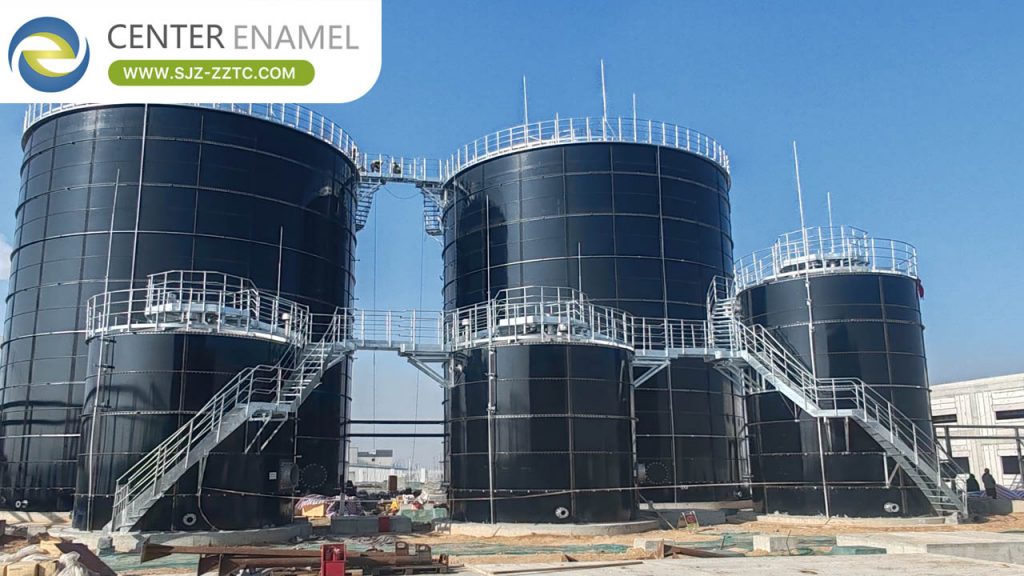
Project Case Study: Pakistan Food Waste Biogas Project
Project / Application: Food waste and napier grass converted to biogas, Pakistan. Industry: Waste-to-energy / biogas. Tank Type: CSTR (Continuous Stirred-Tank Reactor). Key Requirements: Convert organic food waste into renewable biogas.
| Field | Value | Source / Evidence |
| Core Technology | CSTR Process | Company project reference |
| Feedstock | Food waste + Pennisetum purpureum | Company project reference |
| Daily Biogas Output | 100 m3/day | Company project reference |
| Tank Quantity | Not Specified In The Available Source | Company project reference |
| Dimensions Per Tank | Not Provided In The Available Source | Company project reference |
| Installation Year | Not Specified | Company project reference |
About Company
Shijiazhuang Zhengzhong Technology Co., Ltd (Center Enamel) is a comprehensive high-tech enterprise specializing in wastewater engineering, process section contracting, and equipment manufacturing. The company delivers biogas and wastewater projects through three main lines - EPC (turnkey) contracting, equipment supply, and process packages - covering livestock and municipal wastewater, biomass energy, industrial wastewater, and food waste. Its reactor portfolio spans CSTR, USR, UBF, UASB, IC, and EGSB, backed by in-house Glass-Fused-to-Steel tank manufacturing (enamel firing at 820-930 C) and certifications including ISO 9001, NSF/ANSI 61, and CE-EN 1090. With 35+ years of operation, a 150,000 m2 manufacturing base, and projects in 100+ countries, Center Enamel provides the single-responsibility engineering behind food-waste-to-biogas projects such as the Pakistan CSTR plant that converts food waste and napier grass into 100 m3 of biogas per day - organic-waste stabilization delivered as energy, not landfill.
Comparison: Digestate Vs Compost
| Product | From | Use |
| Biogas | Anaerobic digestion | Heat / power / fuel |
| Digestate | Anaerobic residual | Fertilizer (nutrient loop) |
| Compost | Aerobic stabilization | Soil amendment |
Kitchen waste is treated by dewatering then anaerobic digestion for energy or composting for soil - the route follows scale, composition, and whether the priority is biogas or a soil product.
Frequently Asked Questions
Q1: What is the first step? A1: Sort, shred, and dewater to make a consistent, undiluted feed.
Q2: Is anaerobic used? A2: Yes; CSTR digestion at 35-38 C recovers biogas from the organic fraction.
Q3: What about composting? A3: Aerobic composting returns stabilized organic matter where energy recovery is not viable.
Q4: What is recovered? A4: Biogas and digestate from digestion; a soil amendment from composting.
Q5: Why dewater? A5: A wet, variable feed is the main cause of digester underperformance.
Q6: What temperature is used? A6: Mesophilic 35-38 C for stable anaerobic digestion.
Q7: Can it be co-digested? A7: Yes, with manure or green waste to balance C:N.
Q8: What tank is used? A8: A Glass-Fused-to-Steel CSTR resists the corrosive digester environment.
Suggested CTA
Describe your kitchen-waste volume and energy demand to an engineer, or request a food-waste treatment and biogas scope.