
How Is POME Wastewater Treated? Traditional Methods vs. Biogas Conversion
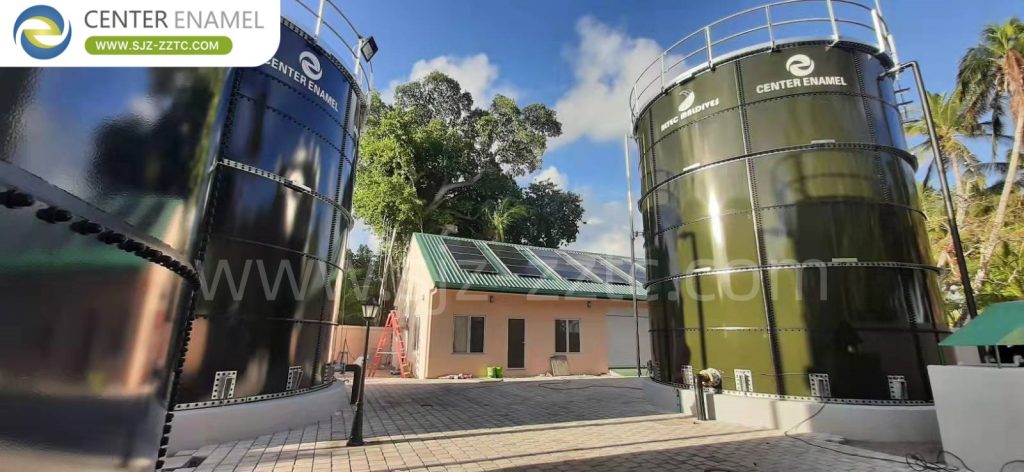
Palm Oil Mill Effluent (POME) is one of the most challenging byproducts of palm oil processing, and how it is treated has a direct impact on water quality, air emissions, and a mill's operating costs. This article walks through how POME is traditionally treated, why those methods fall short, and why converting POME into biogas has become the preferred modern solution.
What Is POME and Why It Needs Treatment
POME is a thick, acidic, high-strength organic wastewater generated during the extraction and clarification of crude palm oil from fresh fruit bunches. It contains extremely high chemical oxygen demand (COD) and biological oxygen demand (BOD) levels, along with oil residues, suspended solids, and nutrients such as nitrogen and phosphorus. If discharged untreated into rivers or land, POME can rapidly deplete dissolved oxygen in waterways, harming fish and aquatic ecosystems, while also producing strong, persistent odours that affect nearby communities. Because a single mill can generate several tons of POME for every ton of crude palm oil produced, effective treatment is not optional — it is essential for environmental compliance, community relations, and long-term operational sustainability.
Traditional POME Treatment: Open Pond and Lagoon Systems
For decades, the standard approach to POME treatment has relied on a series of open ponds or lagoons. Wastewater typically passes through a cooling pond, followed by anaerobic ponds where natural microbial activity gradually breaks down organic matter over several weeks, then facultative and aerobic ponds that further reduce pollutant concentrations before eventual discharge or land application. This system requires little specialized equipment and has long been favored for its low upfront capital cost and simplicity of operation, making it common across older or smaller palm oil mills that have not yet upgraded their wastewater infrastructure.
Limitations of Traditional Pond-Based Treatment
While inexpensive to build, open pond systems come with substantial drawbacks. They require large areas of land — often several hectares per mill — which limits expansion options and ties up valuable plantation space. Treatment retention times are long and difficult to control precisely, leading to inconsistent effluent quality that can still fail to meet discharge standards. Perhaps most significantly, anaerobic decomposition in open ponds releases methane directly into the atmosphere with no capture mechanism, contributing heavily to a mill's greenhouse gas footprint. Seepage and overflow risks during heavy rainfall also raise the chance of untreated effluent reaching nearby waterways, undermining environmental compliance efforts.
Modern Anaerobic Digestion: A Controlled Alternative
To address these shortcomings, many mills are shifting toward enclosed, engineered anaerobic digestion systems. Rather than relying on open-air decomposition, wastewater is treated inside sealed tanks or reactors where temperature, retention time, and microbial activity can be closely monitored and controlled. Pretreatment stages — including mechanical screening to remove large solids, oil separation to reduce residual fats, and a regulating tank to stabilize flow, temperature, and pH — prepare the wastewater before it enters the digester. One widely used design is the Upflow Solids Reactor (USR), suited to organic wastewater with total solids content between 3% and 6%, where wastewater flows upward through an active solid bed that breaks down organic pollutants efficiently while gas rises into a built-in gas holder above the tank.
Converting POME Into Biogas: How the Process Works
The defining advantage of enclosed anaerobic treatment is that it allows mills to capture the methane produced during digestion rather than losing it to the atmosphere. As microorganisms break down organic material inside the reactor, they generate biogas rich in methane, which is then dehydrated and desulfurized to remove moisture and hydrogen sulfide before use. This purified biogas can fuel boilers for process heat, run generators to produce electricity for mill operations, or be upgraded into compressed natural gas (CNG) for vehicle fuel. The digestate that remains after treatment separates into a liquid fraction, suitable for direct application as fertilizer on plantation land, and a fibrous solid fraction that can be composted into organic soil amendments — creating a far more complete resource loop than traditional pond treatment ever could.
Key Advantages of Biogas Conversion Over Traditional Treatment
Switching from open ponds to biogas-based treatment delivers benefits across several dimensions. Environmentally, it captures methane that would otherwise escape uncontrolled, significantly lowering a mill's overall greenhouse gas emissions. Operationally, enclosed systems require far less land than multi-pond lagoon networks and provide more consistent, predictable treatment performance. Financially, the biogas produced offsets fuel and electricity costs that mills would otherwise pay for diesel or grid power, while the fertilizer value of the digestate reduces reliance on purchased chemical fertilizers. Regulatory compliance also becomes more straightforward, as enclosed systems typically achieve more stable and reliable effluent quality, helping mills meet discharge standards and sustainability certification requirements more consistently than open pond systems.
Equipment That Makes Biogas Conversion Possible
Reliable biogas conversion depends on durable, well-engineered equipment suited to the corrosive, high-strength nature of POME. Glass-Fused-to-Steel (GFS) tanks are commonly used for anaerobic reactors because their fused glass coating resists acidic wastewater conditions over the long term, while modular bolted assembly allows considerably faster on-site construction than conventional welded tanks. Air-tight covers, such as Double Membrane Roof systems, are equally important, enabling efficient biogas collection and storage while reducing construction costs and land requirements compared with traditional gas holder structures. Supporting equipment — including gas holders, desulfurization units, boosters, and sludge dewatering machines — rounds out a complete system capable of turning raw POME into usable energy and byproducts.
Center Enamel's Experience in POME Biogas Treatment
Delivering an effective POME-to-biogas system requires proven engineering, reliable equipment, and a track record of successful project execution — an area where Center Enamel has built substantial expertise. Operating from a large-scale research and production base with an annual manufacturing capacity of 250,000 sheets, Center Enamel designs and supplies complete biogas treatment systems, including USR reactors, GFS tanks, and Double Membrane Roof gas storage solutions engineered specifically for high-strength organic wastewater like POME. The company's products are backed by international certifications including CE/EN1090, ISO 9001, NSF61, WRAS, and EN28765, and its project experience spans more than 100 countries worldwide. Offering full EPC services covering design, equipment supply, and construction, Center Enamel gives palm oil mill owners a single, dependable partner for converting POME treatment challenges into functioning, revenue-generating biogas assets.
Frequently Asked Questions
Q1: What is the main difference between traditional pond treatment and biogas conversion for POME?
Traditional ponds allow open-air decomposition with no gas capture, while biogas conversion uses sealed reactors to capture methane for use as fuel or electricity, reducing emissions and generating value.
Q2: How long does traditional POME pond treatment typically take?
Multi-pond lagoon systems can take several weeks to fully treat POME through sequential anaerobic, facultative, and aerobic stages, compared with the more controlled retention times of enclosed digesters.
Q3: Can biogas from POME treatment fully replace a mill's energy needs?
Biogas can significantly offset a mill's fuel and electricity costs by powering boilers or generators, though the exact contribution depends on effluent volume, digester efficiency, and the mill's overall energy demand.