
How Is Sewage Sludge Treated Before Release? A Complete Guide to Biosolids Processing
Sewage sludge is the unavoidable semi-solid byproduct generated during wastewater treatment. Before this material can be safely returned to the environment—whether through land application, incineration, or landfill disposal—it must undergo rigorous treatment to reduce volume, stabilize organic matter, and eliminate harmful pathogens. The specific sequence of treatment steps is crucial for protecting public health and complying with environmental regulations such as the EPA's 40 CFR Part 503 . Understanding this multi-stage process reveals how modern facilities transform a potential pollutant into a manageable resource or a safe disposable material.
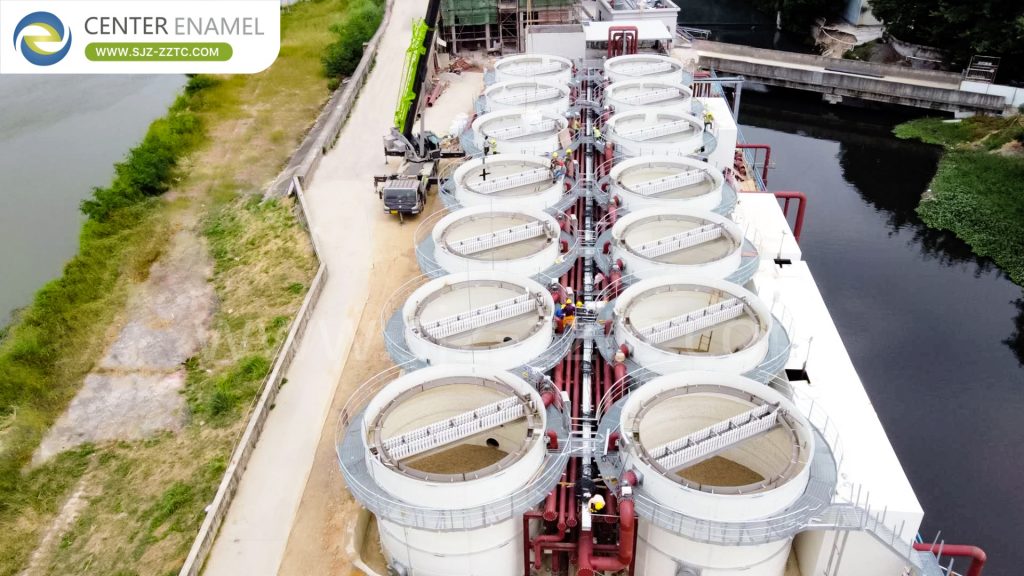
Thickening and Dewatering: Reducing the Volume
The first critical step in sludge treatment is volume reduction. Raw sludge from primary and secondary clarifiers is typically over 95% water. Thickening serves as the initial volume reduction stage, employing gravity settling, centrifugation, rotary drum filtration, or air flotation to remove free water. This step can reduce the sludge mass by up to 70%, significantly lowering the hydraulic load on downstream processes .
Following stabilization, dewatering further removes excess water using mechanical methods such as centrifuges, vacuum filtration, or press filtration. Dewatering reduces the sludge volume by an additional 15–20% and produces a semi-solid cake . The liquid removed during dewatering, known as reject water or centrate, is typically returned to the head of the wastewater treatment plant for further processing. Effective dewatering is essential because it reduces the energy required for subsequent drying or incineration and lowers transportation costs for disposal.
Stabilization: Controlling Odors and Organic Matter
Stabilization is the biological or chemical treatment designed to break down organic solids, minimize odor emissions, and reduce the potential for putrefaction . Without stabilization, sludge would continue to decompose, creating nuisance odors and attracting disease vectors.
Anaerobic digestion is one of the most common stabilization methods. In this process, microorganisms break down organic matter in the absence of oxygen within an enclosed bioreactor. This not only reduces volatile solids but also produces biogas (primarily methane), which can be captured and used as a renewable energy source. The EPA recognizes anaerobic digestion as a Process to Significantly Reduce Pathogens (PSRP) when conducted at specific time-temperature regimes, such as 15 days at 35–55°C or 60 days at 20°C . Aerobic digestion is an alternative that uses oxygen to achieve similar stabilization, while lime stabilization raises the pH to 12 or higher, creating an environment hostile to microorganisms and effectively halting fermentation .
Pathogen Reduction: Ensuring Biological Safety
The most critical public health concern regarding sludge disposal is the presence of pathogenic organisms, including bacteria, viruses, and parasitic ova. Regulations mandate specific treatment processes to reduce these pathogens to safe levels. The EPA defines two tiers of treatment: Processes to Significantly Reduce Pathogens (PSRP) and Processes to Further Reduce Pathogens (PFRP) .
PSRP is the minimum requirement for sludge that will be land applied with site restrictions. Recognized PSRP methods include aerobic digestion, air drying, anaerobic digestion, composting, and lime stabilization . For instance, composting must maintain a temperature of at least 40°C for five days, with the temperature exceeding 55°C for four hours during that period .
PFRP is required for sludge applied to land where public access is not restricted or where crops for direct human consumption are grown. PFRP methods are more stringent and include heat drying (moisture content reduced to 10% or lower), heat treatment (180°C for 30 minutes), thermophilic aerobic digestion, and pasteurization (70°C for 30 minutes) . The table below summarizes key time-temperature requirements for pathogen destruction.
| Pathogen Reduction Method | Key Parameters | Regulatory Tier |
| Anaerobic Digestion | 15 days at 35–55°C; or 60 days at 20°C | PSRP |
| Composting | 40°C for 5 days; 55°C for 4 hours within that period | PSRP |
| Lime Stabilization | pH raised to 12 for at least 2 hours | PSRP |
| Heat Drying | Moisture content ≤ 10%; particle temp > 80°C | PFRP |
| Pasteurization | 70°C for 30 minutes or longer | PFRP |
| Thermophilic Aerobic Digestion | 10 days at 55–60°C | PFRP |
Vector Attraction Reduction: Preventing Disease Spread
Even after pathogen reduction, sludge can still attract disease-carrying vectors such as rodents, flies, and birds if it contains sufficient volatile solids. Vector attraction reduction (VAR) is a regulatory requirement designed to prevent this. The EPA outlines multiple alternatives for VAR, including reducing volatile solids by at least 38%, achieving specific pH levels through alkaline addition, or incorporating the sludge into the soil within a specified timeframe .
For example, if sludge is applied to the land surface, it must be incorporated into the soil within six hours to prevent vectors from accessing it. Alternatively, injecting the sludge below the land surface eliminates vector contact entirely . These practices are particularly important for Class B sludge, which has undergone PSRP but may still contain detectable pathogen levels. By combining pathogen reduction with vector attraction reduction, facilities ensure that the treated material does not become a breeding ground for organisms that could transmit disease.
Final Processing: Drying and Quality Assurance
Before final disposal or beneficial reuse, treated sludge often undergoes drying to further reduce moisture content and weight. Thermal drying can reduce the water content to less than 10%, producing a stable, storable product that can be bagged, transported, and used as a soil amendment . Heat drying not only facilitates handling but also serves as a PFRP method, providing an additional barrier against pathogens.
Throughout the treatment process, sampling and analysis are essential for regulatory compliance. Facilities must monitor pollutant concentrations (such as heavy metals including arsenic, cadmium, lead, and mercury) and pathogen indicators at frequencies determined by the volume of sludge produced. For instance, facilities producing between 1,500 and 15,000 metric tons per year must sample every two months, while those producing over 15,000 metric tons must sample monthly . The table below outlines the monitoring frequency requirements.
| Sludge Volume (metric tons/365 days) | Monitoring Frequency |
| 0 ≤ Sludge < 290 | Once per year |
| 290 ≤ Sludge < 1,500 | Once per quarter |
| 1,500 ≤ Sludge < 15,000 | Once every two months |
| 15,000 ≤ Sludge | Once per month |
Disposal and Beneficial Reuse Pathways
Once sludge has been adequately treated, it enters one of several final management pathways. Land application is the most common beneficial reuse method, where treated sludge (now often called biosolids) is used as a soil conditioner or fertilizer on agricultural land, forests, or reclamation sites . The agronomic loading rate is calculated based on the nitrogen needs of the crop to prevent nutrient runoff into groundwater .
Incineration is another option, particularly in densely populated areas where land is scarce. Modern incinerators are equipped with air pollution control devices to capture pollutants, and the ash produced can be landfilled or used in construction materials . Landfilling remains a common disposal method, though it is increasingly restricted due to concerns about leachate and the loss of valuable organic matter . The choice of disposal pathway depends on local regulations, the quality of the treated sludge, and economic factors.
Regulatory Compliance and Environmental Protection
The entire treatment and disposal process is governed by strict regulations, primarily the EPA's Standards for the Use or Disposal of Sewage Sludge (40 CFR Part 503). These rules establish pollutant limits, pathogen reduction requirements, vector attraction reduction standards, and management practices for each disposal pathway . Facilities must obtain permits and maintain detailed records demonstrating compliance. For land application, cumulative pollutant loading rates are tracked for each field to ensure that heavy metals do not accumulate to hazardous levels over time .
Compliance with these regulations ensures that sewage sludge, when properly treated, poses minimal risk to human health and the environment. The multi-barrier approach—combining volume reduction, stabilization, pathogen destruction, vector control, and regulatory oversight—transforms what was once considered a waste product into a material that can be safely returned to the environment or utilized beneficially.
Frequently Asked Questions
What is the difference between Class A and Class B sewage sludge?
Class A sludge has undergone treatment that reduces pathogens to below detectable levels, allowing it to be used without site restrictions. Class B sludge has undergone a Process to Significantly Reduce Pathogens (PSRP), which reduces pathogens but does not eliminate them entirely; therefore, site restrictions on public access and crop harvesting apply for a specified period after application .
Can treated sewage sludge be used on crops for human consumption?
Yes, but with conditions. If the sludge meets PFRP (Class A) standards, it can generally be used without crop restrictions. If it only meets PSRP (Class B) standards, regulations prohibit harvesting crops that touch the soil for 14 months and root crops for 20 to 38 months, depending on whether the sludge was incorporated or left on the surface .
What happens to the water removed during sludge dewatering?
The liquid removed during thickening and dewatering, called reject water or centrate, contains high concentrations of ammonia and suspended solids. It is typically returned to the head of the wastewater treatment plant and mixed with incoming raw sewage for full treatment, ensuring that pollutants are not simply discharged without proper processing .