
How Is Wastewater Treated in the Meat Processing Industry?
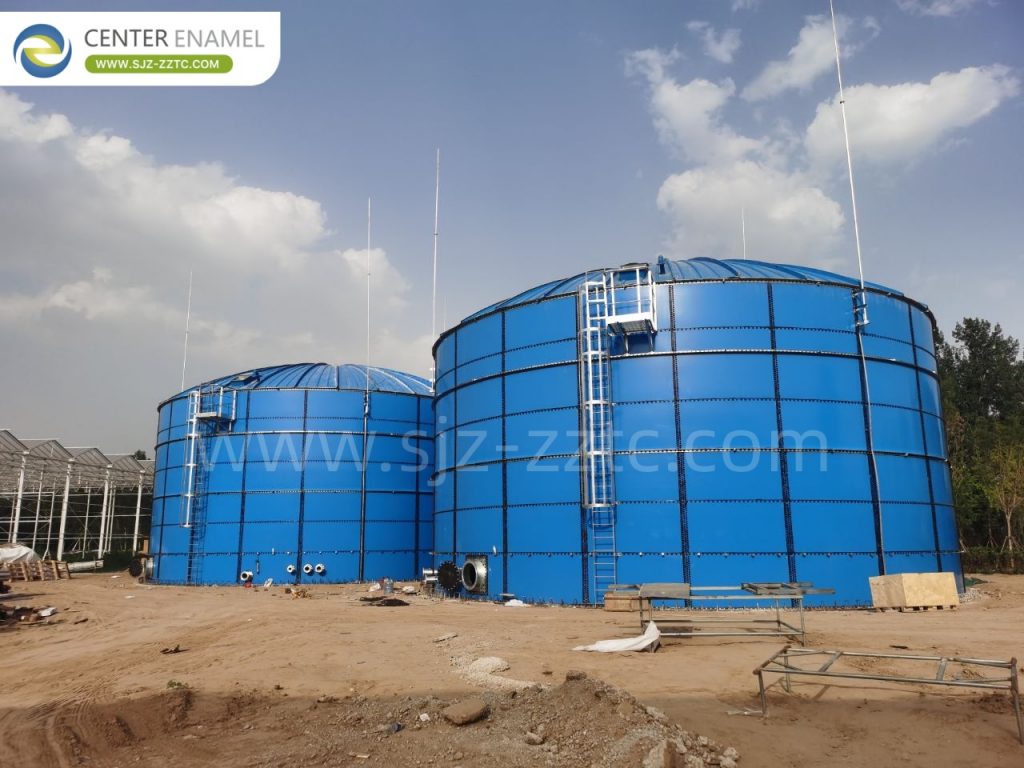
The meat processing industry generates large volumes of high-strength wastewater characterized by elevated levels of organic matter, fats, oils, proteins, and suspended solids that pose serious environmental risks if left untreated. Anaerobic digestion has emerged as the most sustainable and efficient treatment approach, converting these challenging effluents into renewable biogas while achieving regulatory compliance.
Wastewater Challenges in the Meat Processing Industry
Meat processing and slaughterhouse facilities produce wastewater with extremely high Biochemical Oxygen Demand (BOD) and Chemical Oxygen Demand (COD), along with elevated concentrations of fats, oils, and grease (FOG). Processing a single bird requires approximately 26.5 liters of water, with operations such as evisceration generating substantial wastewater volumes. The organic contaminants, if left untreated, can contribute to severe ecological damage, foul odors, and violation of environmental regulations.
Given the fluctuating nature of wastewater flows and organic loads in the meat processing industry, treatment solutions must be robust, reliable, and capable of handling variations in influent characteristics. Regulatory compliance is a key concern, with facilities required to meet stringent discharge standards that vary by country and region.
Anaerobic Digestion: The Preferred Treatment Solution
Anaerobic digestion is a biological process that breaks down organic matter in the absence of oxygen, producing biogas—a renewable fuel composed primarily of methane and carbon dioxide. This process offers significant advantages over conventional aerobic treatment methods, including lower energy requirements, reduced sludge volumes, and the potential for net energy production from organic contaminants.
Life Cycle Assessment (LCA) studies comparing conventional waste management with anaerobic treatment approaches have shown that anaerobic digestion systems exhibit significantly improved environmental footprints across all studied indicators, with reductions in certain environmental impact categories reaching up to 80%.
Four Major Anaerobic Digestion Technologies for Meat Processing Wastewater
1. CSTR Process (Continuous Stirred-Tank Reactor)
The CSTR Process is a widely adopted system for treating high-strength meat processing wastewater. The reactor employs mechanical mixing to maintain homogeneity, ensuring optimal contact between microorganisms and substrate. This configuration prevents stratification and accumulation of volatile fatty acids that can inhibit biogas production.
Key advantages of CSTR reactors for meat processing applications include:
Efficient Treatment of Organic Waste: CSTR reactors utilize anaerobic microorganisms to break down complex organic compounds such as fats, proteins, and other byproducts, converting them into biogas. This ensures high COD and BOD removal rates.
Biogas Production for Energy Recovery: The biogas generated can be captured and used as a renewable energy source for heating or power generation, significantly reducing facility energy costs.
Reduced Sludge Production: Compared to aerobic systems, CSTR reactors produce much less sludge, reducing the need for complex and costly sludge management systems.
Consistent and Reliable Performance: The system can accommodate varying organic loads and fluctuating flow rates common in meat processing.
CSTR digestate can be used as a low-odor organic fertilizer, as nutrients are converted into plant-available forms such as ammonium and phosphate during digestion.
2. UASB Reactor (Up-flow Anaerobic Sludge Blanket)
The UASB reactor is specifically engineered for high-strength industrial wastewater like meat processing effluents. In this system, wastewater flows upward through a dense sludge blanket of anaerobic microorganisms that degrade organic compounds and convert them into biogas.
UASB reactors can achieve significant reductions in COD (approximately 80%), BOD (approximately 95%), and TSS (approximately 80%). The reactor design allows for self-immobilization of microorganisms, forming a dense blanket of flocculated sludge at the bottom of the column. The combined action of gravity and substrate upward flow suspends the sludge blanket, enabling efficient treatment without requiring effluent recycling.
UASB reactors offer compactness, high loading rates, low sludge production, short hydraulic and solids retention times, and low operational costs with high methane production rates. However, substrates with high total solids mass fractions are not appropriate for UASB treatment due to particle accumulation tendencies.
3. IC Anaerobic Reactor (Internal Circulation)
The Internal Circulation (IC) anaerobic reactor is an advanced treatment system that enhances the anaerobic digestion process by promoting thorough mixing and effective microbial activity. The reactor design incorporates internal circulation mechanisms ensuring continuous contact between wastewater and biomass, optimizing organic pollutant degradation and maximizing biogas production.
Key features of the IC anaerobic reactor include:
Enhanced Mixing: The reactor design promotes uniform distribution of substrates and microorganisms, preventing dead zones and ensuring a stable digestion process.
Improved Organic Load Handling: The system is engineered to process high-strength wastewater, achieving significant COD and BOD reductions.
Efficient Biogas Recovery: The IC reactor increases biogas yield, which can offset energy costs and support on-site power generation.
The IC reactor minimizes sludge accumulation by promoting complete degradation of organic matter. This reduction lowers disposal costs and simplifies downstream processing, offering significant cost savings for meat processing facilities.
4. AnMBR (Anaerobic Membrane Bioreactor)
The Anaerobic Membrane Bioreactor (AnMBR) integrates membrane filtration with anaerobic digestion, preventing the washout of methanogenic microorganisms while producing a particle-free permeate that can be further treated for potential water reuse.
The AnMBR system effectively converts meat-processing wastewater into biogas, maintaining high methane yields—up to 518.7 Nm³ per ton of volatile solids removed—while reducing dissolved methane loss in the permeate. Key advantages include:
Rapid Start-up: AnMBR enables quick establishment of stable treatment.
Efficient COD Removal: The system achieves high organic load removal even at elevated loading rates.
Reduced Methane Loss: Membrane retention minimizes dissolved methane loss in effluent.
Challenges such as high salt and phosphate levels present opportunities for nutrient recovery and water reclamation, making AnMBR an increasingly attractive solution for the meat processing industry.
Center Enamel: Professional Wastewater Treatment Solutions Provider
Center Enamel stands as a global leader in providing specialized engineering infrastructure for meat processing wastewater treatment. As a pioneering manufacturer of Glass-Fused-to-Steel (GFS) tanks and advanced anaerobic reactor systems, the company delivers comprehensive solutions that make high-efficiency wastewater treatment and biogas recovery a reality.
With decades of innovation and project experience across more than 100 countries, Center Enamel offers:
CSTR Reactors: Designed specifically for high-strength slaughterhouse and meat processing wastewater, achieving efficient organic removal, biogas production, and regulatory compliance.
IC Anaerobic Reactors: Advanced systems that optimize mixing and biomass contact, maximizing biogas yield and minimizing sludge production.
GFS Tanks: The global benchmark for anaerobic reactors, featuring glass-fused-to-steel coating that provides unparalleled resistance to organic acids and corrosive elements, with a service life exceeding 30 years.
EPC Contractor Services: Comprehensive engineering, procurement, and construction services from concept to commissioning, ensuring seamless project delivery and compliance with stringent environmental standards.
Whether managing wastewater from a small processing facility or a large-scale meat plant, Center Enamel's technologies offer the efficiency, sustainability, and cost-effectiveness needed for long-term operational success.
Conclusion
Meat processing wastewater presents significant treatment challenges due to its high organic loads, fats, oils, and proteins. Advanced anaerobic digestion technologies—CSTR, UASB, IC, and AnMBR—offer sustainable solutions that transform this waste stream into renewable biogas while achieving regulatory compliance and reducing environmental impact. As global water and energy challenges intensify, the adoption of anaerobic treatment systems by the meat processing industry represents a strategic investment with substantial environmental and economic returns. Center Enamel's expertise in delivering these integrated solutions positions it as a trusted partner for the industry's journey toward sustainability.
FAQs
Q1: What are the main pollutants in meat processing wastewater?
Meat processing wastewater contains high concentrations of COD (typically 1,250-15,990 mg/L), BOD, fats/oil/grease (72-684 mg/L), total suspended solids (300-1,273 mg/L), total nitrogen, and phosphorus. These pollutants require effective treatment to meet discharge standards and prevent environmental contamination.
Q2: Which anaerobic treatment technology is best for meat processing wastewater?
The optimal technology depends on site-specific factors including wastewater volume, organic strength, and facility constraints. CSTR reactors are excellent for high-solids and fluctuating loads; UASB reactors suit lower-solids wastewater with stable flow; IC reactors handle high-strength loads with enhanced mixing; and AnMBR offers superior solids retention and permeate quality. Many facilities implement a combination approach for optimal results.
Q3: How does anaerobic digestion benefit meat processing facilities economically and environmentally?
Anaerobic digestion delivers substantial benefits: biogas production reduces energy costs by up to 49%; significantly reduced sludge disposal costs; production of nutrient-rich digestate as organic fertilizer; up to 80% reduction in environmental impact compared to conventional treatment; and compliance with environmental regulations.