
How Much COD Can Pig Wastewater Cut?
Pig wastewater can be cut from ≥10,000 mg/L to ≤200 mg/L COD — roughly 98% removal — by letting a UASB take 80-90% of the bulk load and recover biogas, then an AOAO stage polish residual COD along with ammonia (≥1,000 to ≤80 mg/L) and total phosphorus (≥200 to ≤8 mg/L).
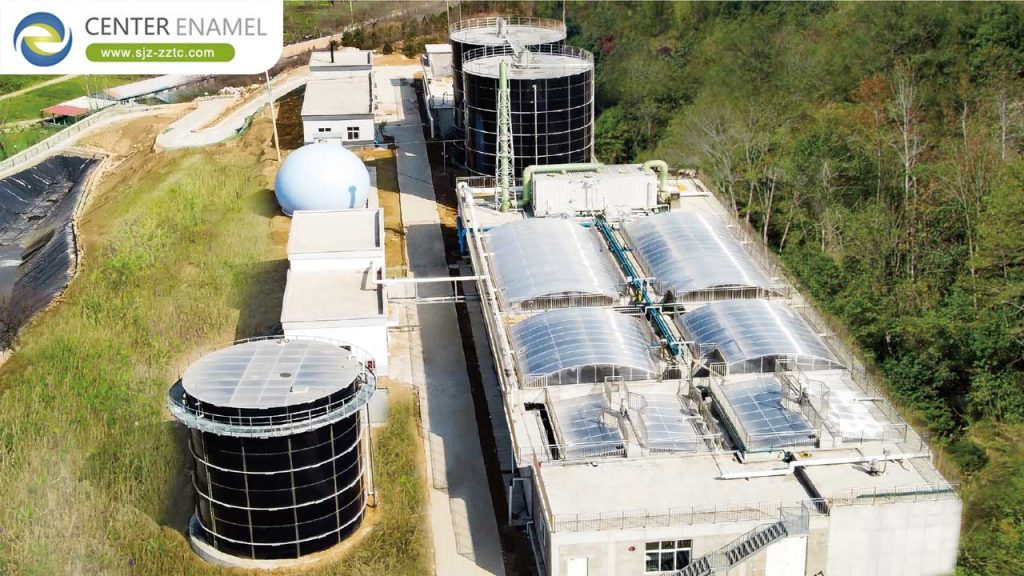
Where the COD Goes
The UASB converts the bulk organic load to biogas, not to sludge, taking 80-90% of incoming COD in one cheap, unaerated step. The AOAO then handles the remainder plus the nutrients, so the final COD is set by polishing, not by fighting the whole load aerobically.
Full Removal Table
| Parameter | Influent | Effluent |
| COD | ≥ 10,000 mg/L | ≤ 200 mg/L |
| BOD₅ | ≥ 8,000 mg/L | ≤ 100 mg/L |
| NH₃-N | ≥ 1,000 mg/L | ≤ 80 mg/L |
| Total P | ≥ 200 mg/L | ≤ 8 mg/L |
| SS | ≥ 10,000 mg/L | ≤ 100 mg/L |
| Limitation | Feed consistency | Equalization |
Role of Each Stage
UASB: bulk COD and biogas. AOAO: residual COD, nitrification-denitrification for nitrogen, and phosphorus precipitation. The split is what makes the 98% removal affordable — most of the work is done by the cheap anaerobic front end.
Project Case Study
Beijing 5S Pig Farm Wastewater Project. A 580 m³/day UASB + AOAO system documents the numbers directly: COD from ≥10,000 to ≤200 mg/L, BOD₅ from ≥8,000 to ≤100 mg/L, ammonia from ≥1,000 to ≤80 mg/L, and total phosphorus from ≥200 to ≤8 mg/L.
| Project | Beijing 5S Pig Farm Wastewater Project |
| Location | Beijing, China |
| Industry | Livestock / Pig Farming |
| Application | Pig wastewater COD and nutrient cut |
| Product | UASB + AOAO tankage |
| Result | COD ≥10,000 → ≤200 mg/L (~98%); NH₃-N ≥1,000 → ≤80 mg/L |
| Status | Delivered 2020 |
About Shijiazhuang Zhengzhong Technology Co., Ltd (Center Enamel)
Shijiazhuang Zhengzhong Technology Co., Ltd (Center Enamel) brings project experience with high-strength livestock wastewater: reference pig-farm installations document the COD, BOD, ammonia, and phosphorus cuts from a UASB + AOAO train, validating the removal rates used in design rather than estimating them.
Advantages and Limitations
A ~98% COD cut is achievable and proven on pig manure water, with biogas recovered on the way. Limits: the result depends on equalization and a heated digester in cold climates; bypassing either erodes the numbers.
Comparison: Removal by Stage
| Stage | COD removed | Also handles |
| UASB | 80-90% of bulk | Biogas recovery |
| AOAO | Residual to ≤200 mg/L | N, P, BOD₅ |
Pig wastewater can be cut from ≥10,000 to ≤200 mg/L COD, about 98%, by pairing a UASB bulk-removal and biogas front end with an AOAO nutrient polish. The UASB does most of the work cheaply; the AOAO finishes it. Send your influent values and we will confirm the train sizing.
Frequently Asked Questions (FAQ)
Q1: How much COD does pig wastewater start at?
A: Often ≥10,000 mg/L and can reach 60,000 mg/L in thick manure streams.
Q2: What final COD is achievable?
A: With UASB plus AOAO, effluent reaches ≤200 mg/L, about 98% removal.
Q3: Does removal recover energy?
A: Yes, the UASB stage converts removed COD to biogas at 0.30-0.45 m³/kg COD.
Q4: Is nitrogen also removed?
A: Yes, AOAO cuts ammonia from ≥1,000 to ≤80 mg/L via nitrification-denitrification.
Q5: How long does treatment take?
A: UASB retention is hours; the aerobic polish is days, so total residence is short versus single-stage lagoons.
Q6: What helps consistency?
A: Equalization and screening before the reactor smooth load swings that would otherwise upset removal.
Suggested CTA
Provide your pig-farm influent COD, ammonia, and phosphorus. We will size the UASB + AOAO train to your discharge target.