
How Much Digestate Is Produced from Anaerobic Digestion? A Data-Driven Guide
One of the most common questions asked by farmers, project developers, and waste managers considering anaerobic digestion (AD) is simple but critical: How much digestate will this plant produce? The answer determines storage requirements, transportation logistics, land application planning, and the overall economic viability of a biogas project.
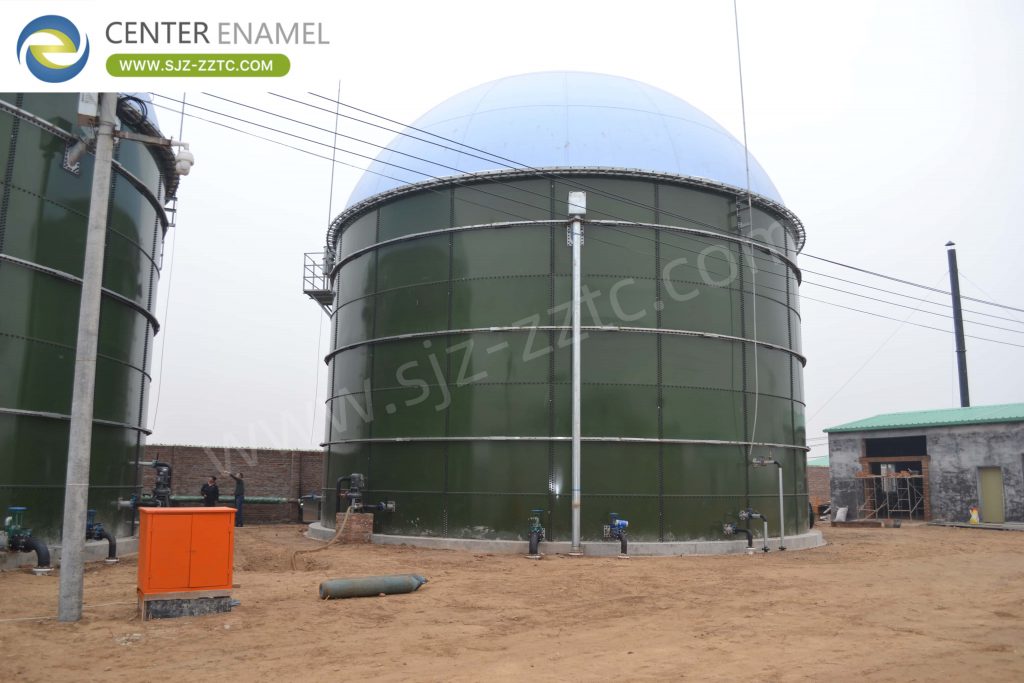
Unlike biogas, which is measured in cubic meters and often receives the majority of attention, digestate is measured by mass and can represent the largest physical output stream from an AD facility. In some systems, the mass of digestate produced is nearly equal to the mass of feedstock entering the digester. Understanding the factors that influence digestate yield is essential for anyone planning or operating a biogas plant.
The Basic Mass Balance: Feedstock In, Digestate and Biogas Out
Anaerobic digestion is fundamentally a mass conversion process. Organic matter entering the digester is partially converted into biogas (primarily methane and carbon dioxide), while the remaining material exits as digestate. The fundamental mass balance equation is straightforward:
Feedstock Mass = Biogas Mass + Digestate Mass
This means the quantity of digestate produced depends primarily on two factors: the total mass of feedstock fed into the system and the amount of that mass converted into biogas. The more biogas produced per tonne of feedstock, the less digestate remains.
However, there is an important nuance: biogas is largely composed of carbon and hydrogen that were originally part of the organic material. When these elements are converted into methane (CH₄) and carbon dioxide (CO₂), they leave the liquid-solid system as gas. The nutrients—nitrogen, phosphorus, potassium, and micronutrients—remain almost entirely in the digestate. This is why digestate is often described as a "concentrated" fertilizer relative to the original feedstock.
Typical Digestate Yields by Feedstock Type
The amount of digestate produced varies significantly depending on the feedstock. High-moisture feedstocks like animal slurry produce digestate at a rate very close to the input mass, while drier, more energy-dense feedstocks produce proportionally less digestate because a larger fraction of their mass is converted to biogas.
Table 1: Typical Digestate Production Rates by Feedstock
| Feedstock Type | Digestate Output (per tonne input) | Key Characteristics |
| Dairy Cow Slurry | 0.95–1.00 tonne | Very high mass retention; low biogas yield per tonne |
| Pig Slurry | 0.90–0.98 tonne | High moisture content; significant mass remains as digestate |
| Food Waste | 0.60–0.80 tonne | Higher biogas yield reduces digestate mass |
| Energy Crops (Maize Silage) | 0.70–0.85 tonne | Moderate biogas yield; digestate retains most nutrients |
| Sewage Sludge | 0.50–0.70 tonne | Significant mass loss to biogas; digestate requires careful handling |
| Municipal Solid Waste (organic fraction) | 0.85–0.90 tonne | Variable depending on contamination and moisture content |
Sources: Compiled from AD performance data and mass balance studies
The variation across feedstocks reflects differences in biodegradability and energy content. Slurries contain large amounts of water and relatively little volatile solids, so their mass is largely preserved through digestion. Food waste and energy crops contain more degradable organic matter, resulting in greater mass conversion to biogas and correspondingly lower digestate yields.
Real-World Data: Digestate Production from Operating Plants
Laboratory estimates provide useful benchmarks, but real-world operating data offers the most reliable picture of digestate production. Several long-term studies and facility reports provide valuable insights.
A two-year monitoring study of an on-farm anaerobic digester in Northern Ireland, fed primarily with dairy cow slurry, found that the volume of digestate recovered was approximately 99% of the volume of slurry fed . This near-unity mass balance is characteristic of slurry-based systems, where water content dominates the feedstock composition.
A full-scale biogas plant treating human feces in China reported more precise mass flow data. With an annual feeding amount of 2,555 tonnes, the plant produced 58.04 tonnes of biogas and 2,496.97 tonnes of digestate, of which 43.07 tonnes were solid residues and 2,453.90 tonnes were liquid digestate . This represents a digestate yield of approximately 97.7% of the input mass—again reflecting the high moisture content of the feedstock.
For food waste systems, the mass reduction is more pronounced. The higher volatile solids content of food waste means a greater proportion of the input is converted to biogas. A typical food waste AD facility might produce 0.7–0.8 tonnes of digestate per tonne of feedstock, depending on the specific composition and digestion efficiency.
Factors That Affect How Much Digestate Is Produced
Several variables influence digestate yield, and understanding these factors allows operators to predict and manage digestate production more accurately.
Volatile Solids Content: Volatile solids (VS) represent the organic fraction of the feedstock that can potentially be converted to biogas. Feedstocks with high VS content—such as food waste and energy crops—undergo greater mass loss during digestion, resulting in less digestate per tonne of input. In contrast, slurries with low VS content produce digestate at a rate close to the input mass .
Biogas Yield: The amount of biogas produced is inversely related to digestate quantity. Higher biogas yields mean more of the feedstock's mass has been converted to gas. For example, a feedstock yielding 500 m³ of biogas per tonne of VS will leave less residual mass than one yielding only 200 m³ per tonne .
Digestion Efficiency and Retention Time: Longer retention times and more complete digestion result in greater volatile solids destruction, which increases biogas production and reduces digestate mass. However, there are practical limits to how much of the organic matter can be converted.
Feedstock Moisture Content: Water is not converted to biogas, so high-moisture feedstocks inevitably produce high-moisture digestate. This is why slurry-based systems have digestate outputs approaching 100% of input mass .
Separation and Post-Treatment: Mechanical separation of digestate into liquid and solid fractions does not change the total mass produced, but it does change the form in which digestate leaves the facility. Post-treatment processes such as drying or composting can further reduce mass through evaporation and organic matter stabilization.
Digestate Production in Context: Comparing Output Streams
Understanding digestate production requires placing it alongside other outputs from the AD process. Biogas, while energetically valuable, represents a relatively small fraction of the input mass by weight. Digestate, by contrast, constitutes the overwhelming majority of the material output.
Table 2: Mass Distribution of AD Outputs for Different Feedstock Scenarios
| Output Stream | Slurry-Based System | Food Waste System | Energy Crop System |
| Biogas (mass equivalent) | 2–5% | 15–25% | 10–20% |
| Digestate (total) | 95–98% | 75–85% | 80–90% |
| — Liquid fraction | ~90% of digestate | ~70% of digestate | ~75% of digestate |
| — Solid fraction | ~10% of digestate | ~30% of digestate | ~25% of digestate |
Note: Biogas mass is calculated from volume and density; actual mass fraction depends on methane and CO₂ content. Digestate fractions vary with separation efficiency.
The contrast between slurry-based and food waste systems is striking. In slurry systems, biogas represents only a small fraction of the input mass, and digestate production is correspondingly high. Food waste systems, with their higher energy density, convert a larger share of input mass to biogas, resulting in proportionally less digestate.
Why Digestate Quantity Matters for Project Planning
Knowing how much digestate a plant will produce is not merely an academic exercise—it has direct implications for project design and operation.
Storage Requirements: Digestate must be stored between production and land application. Storage capacity must be sized to accommodate the expected volume, accounting for seasonal application windows and regulatory restrictions. In regions with limited application seasons, storage requirements can be substantial.
Transportation Logistics: Digestate is heavy and relatively low-value per unit mass. Transporting liquid digestate over long distances is often economically unfeasible, which means most digestate must be used on nearby land. Understanding production volume helps determine whether sufficient nearby land is available for agronomic application.
Nutrient Management Planning: Digestate application rates must be calculated based on crop nutrient requirements and the nutrient concentration of the digestate. Accurate production estimates are essential for developing compliant nutrient management plans.
Regulatory Compliance: Many jurisdictions impose limits on nutrient application rates, particularly for nitrogen and phosphorus. Knowing digestate production volume allows operators to ensure they can comply with these limits.
Managing Digestate Quantity Through Separation and Processing
While the total mass of digestate produced is largely determined by feedstock characteristics, the form in which it is managed can be altered through separation and post-treatment. Mechanical separation divides digestate into a liquid fraction (rich in soluble nutrients, particularly ammonium nitrogen and potassium) and a solid fraction (rich in phosphorus and organic matter) .
This separation offers practical advantages. The liquid fraction can be applied via irrigation or fertigation systems with lower transportation costs per unit of nutrient. The solid fraction is more easily transported and can be used as a soil amendment or further processed into compost or pellets. Separation does not reduce total digestate mass, but it improves handling efficiency and allows nutrients to be directed to where they are most needed.
Frequently Asked Questions
Does digestate production vary seasonally?
Yes, digestate production can vary seasonally if the feedstock supply or composition changes throughout the year. For example, farms may feed different ratios of slurry, silage, or other substrates depending on seasonal availability. However, for continuously fed systems with stable feedstock, digestate production is relatively consistent. Storage capacity should be designed to accommodate periods when land application is not possible, such as winter months or during wet conditions when soil compaction is a concern.
Can digestate production be reduced?
The total mass of digestate is primarily determined by the mass and composition of the feedstock. While you cannot fundamentally change the mass balance, you can alter the form and concentration of digestate through separation, evaporation, or drying. Post-treatment processes such as ammonia stripping or membrane filtration can concentrate nutrients and reduce liquid volume, but these add cost and complexity. In practice, the most effective way to manage digestate quantity is through careful feedstock selection and planning for adequate land application capacity.
How does digestate production compare to raw manure volume?
For slurry-based systems, digestate production is typically very close to the volume of raw slurry fed to the digester—often 95% or more by mass . The key difference is not the quantity but the quality: digestion mineralizes organic nitrogen into plant-available ammonium, reduces pathogens and weed seeds, and produces a more uniform, predictable fertilizer product. Farmers who send slurry to an AD plant generally receive back a similar volume of digestate with enhanced fertilizer value.