
How Much Energy Does Drying Waste Require?
Drying waste needs about 2.6 MJ of thermal energy per kilogram of water removed to take it from ~20°C feed to vapor at 100°C (sensible heat ~0.33 MJ/kg plus latent heat 2.26 MJ/kg). Concretely, drying one tonne of biomass from 50% to 10% MC removes ~400 kg water and costs roughly 1,000 MJ thermal (≇280 kWh)—before dryer and stack losses, which often add 20–50%.
What the Energy Goes To
Water removal has two parts: heating liquid water from feed temperature to 100°C (~4.18 kJ/kg·K × 80 K ≈ 0.33 MJ/kg), then vaporizing it (latent heat 2.26 MJ/kg at 100°C). Above the boiling point, superheating the steam adds a little more. The latent heat dominates—roughly 85% of the bill is just turning water into vapor.
The Core Numbers
Use ~2.6 MJ/kg water as a first-order thermal figure for drying to vapor at 100°C. Real dryers also lose heat through exhaust and shell, so delivered energy is typically 3.0–3.5 MJ/kg water. Mechanical dewatering (screw press, centrifuge) before thermal drying is far cheaper per kg water and should always come first.
| Step | Energy | Note |
| Heat water 20→100°C | ~0.33 MJ/kg | sensible |
| Vaporize at 100°C | 2.26 MJ/kg | latent (dominant) |
| Subtotal to vapor | ~2.6 MJ/kg | first-order |
| With dryer losses | 3.0–3.5 MJ/kg | realistic |
| Mechanical dewatering | 0.05–0.15 MJ/kg | use first |
Worked Example: A Tonne of Wet Biomass
Start: 1,000 kg at 50% MC = 500 kg water + 500 kg dry solids. Target 10% MC = 500 kg water in 4,500 kg total → want 500/0.10 − 500 = 4,500 kg total, so 4,500 − 1,000 = 3,500 kg water to remove? No—recompute: at 10% MC, dry solids 500 kg = 90% of total, total = 556 kg, water = 56 kg. Water removed = 500 − 56 = 444 kg. At 2.6 MJ/kg that is ~1,150 MJ thermal (~320 kWh), or ~1,400 MJ with losses. Mechanical dewatering to 30% MC first removes most water at a fraction of that cost.
Applications
Drying matters wherever wet biomass or sludge must combust or transport. It pairs naturally with the moisture article: drying is the cure for “too wet to burn,” but only pays when the heat comes from plant waste heat, not bought fuel.
Technical Considerations
Always mechanically dewater first (screw press, belt, centrifuge) to shed free water cheaply, then thermal-dry with flue-gas or turbine-exhaust heat. Recovering latent heat from the dryer exhaust (heat exchangers) cuts the 20–50% losses. Track the energy balance: the extra combustion energy from drier feed must exceed the drying energy spent.
How to Make Drying Worth It
Source heat from the plant itself, dewater mechanically upstream, and recover exhaust heat. Only dry what you must—blending wet with dry fuel can avoid a dryer entirely. If drying needs bought energy, the project economy usually fails.
Project Case Study
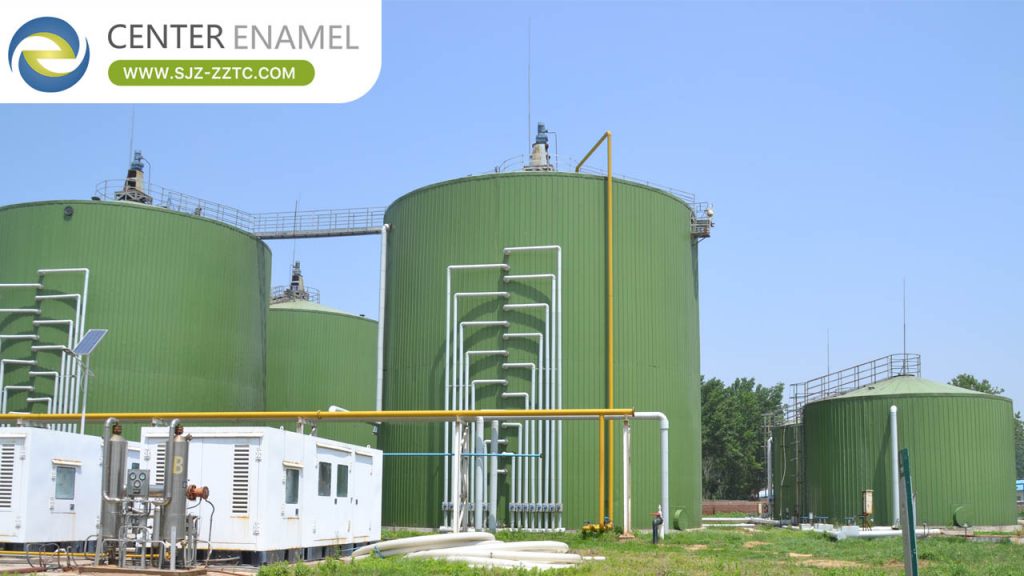
Indonesia Biogas Project — Anaerobic Reactors. Palm-oil wastewater treatment with 3 GFS tanks serving anaerobic digestion of high-moisture POME. The project reflects the agro-sector pattern where wet residues are digested (not combusted) to avoid the drying-energy penalty entirely—and where bolted GFS tankage handles the wet front end. It is a real reference for choosing AD over drying when feed is very wet.
| Project | Indonesia Biogas Project — Anaerobic Reactors |
| Location | Indonesia |
| Industry | Palm oil / Agro-industry |
| Application | High-moisture POME anaerobic digestion |
| Product | GFS anaerobic digester tanks |
| Capacity | 3 GFS tanks, palm ETP |
| Quantity | Ø17.58 × 8.4 m + Ø16.82 × 7.2 m |
| Material | Glass-Fused-to-Steel (GFS) |
| Standards | ISO 28765, AWWA D103 |
| Status | Delivered reference project |
About Center Enamel
Center Enamel contributes relevant project experience in exactly these wet, high-moisture agro streams: across palm-oil and livestock projects in Asia and Africa, its bolted GFS tanks (ISO 9001, ISO 28765, AWWA D103, CE/EN 1090) store POME, leachate, and digestate that would otherwise demand expensive drying. The engineering takeaway the company demonstrates is to treat very wet feed by anaerobic digestion rather than combustion, sidestepping the ~2.6 MJ/kg water drying penalty while still recovering energy as biogas.
Advantages and Limitations
Drying unlocks wet fuel for combustion and cuts transport weight. Limits: thermal drying is energy-hungry and only pays with waste-heat sourcing; mechanical dewatering is far cheaper and should precede it. Very wet, low-LHV streams are often better digested than dried.
Comparison: Water-Removal Methods
| Method | Energy / kg water | When to use |
| Mechanical dewatering | 0.05–0.15 MJ | first, free water |
| Thermal drying (waste heat) | 3.0–3.5 MJ | final drying |
| Thermal drying (bought heat) | 3.0–3.5 MJ | avoid |
| Anaerobic digestion | net energy gain | very wet feed |
Drying waste costs about 2.6 MJ thermal per kg of water removed (latent heat 2.26 MJ/kg dominates), or ~3.0–3.5 MJ/kg with losses—roughly 1,000–1,400 MJ to dry a tonne of 50% MC biomass to 10%. Mechanically dewater first and use plant waste heat; when feed is very wet, anaerobic digestion often beats drying outright.
Frequently Asked Questions (FAQ)
Q1: How much energy does drying waste require?
A: About 2.6 MJ thermal per kg of water removed (sensible ~0.33 + latent 2.26 MJ/kg to vapor at 100°C); realistically 3.0–3.5 MJ/kg with dryer losses.
Q2: What is the latent heat of water?
A: 2.26 MJ/kg at 100°C—this single term is ~85% of the drying energy bill.
Q3: How much to dry a tonne of biomass?
A: From 50% to 10% MC removes ~440 kg water ≈ 1,150 MJ thermal (~320 kWh), or ~1,400 MJ with losses.
Q4: Is drying worth the energy?
A: Only if the heat is plant waste heat; bought-energy drying usually fails the energy balance. Mechanically dewater first.
Q5: Is there a cheaper alternative to wet feed?
A: Yes—anaerobic digestion of very wet residue avoids the drying penalty and still recovers energy as biogas.
Q6: How do I reduce drying cost?
A: Dewater mechanically upstream, dry with flue-gas/turbine exhaust, and recover exhaust latent heat with heat exchangers.
Suggested CTA
Tell us your waste moisture, volume, and available waste heat. We will calculate the drying-energy balance, compare drying vs anaerobic digestion, and specify GFS or epoxy tanks for wet storage and digestate handling.