
How Much Less Sludge Than Aerobic?
An anaerobic UASB makes roughly one-sixth to one-third as much sludge as aerobic treatment - about 0.05-0.10 kg VSS per kg COD removed versus 0.3-0.6 kg VSS per kg COD - because anaerobic biology routes most organic carbon to methane instead of to new cell mass. On a plant treating, say, 10,000 kg COD per day, that is the difference between roughly 500-1,000 kg and 3,000-6,000 kg of sludge solids produced daily.
1. The Sludge Ratio
The ratio is not a marketing claim; it follows from the yield coefficient. Anaerobic methanogens grow slowly and convert substrate to gas, while aerobic heterotrophs oxidize substrate and build biomass. Multiply each yield by the COD load and the gap is immediate and large for any high-strength stream.
2. Worked Example
| Daily COD load | 10,000 kg | 10,000 kg |
| Yield (kg VSS/kg COD) | 0.05-0.10 | 0.3-0.6 |
| Sludge solids made | 500-1,000 kg | 3,000-6,000 kg |
| Where carbon goes | Methane | CO2 + cells |
3. What the Saving Means
Less sludge means smaller thickening and dewatering equipment, lower hauling and land-application volume, and often no separate anaerobic digester downstream because the anaerobic reactor already stabilizes the load. For farms and factories with high-strength wastewater, this is usually the single largest OPEX argument for anaerobic-first design.
Project Case Study
Beijing 5S Pig Farm Wastewater Treatment Project. A 580 m3/day plant using UASB + AOAO that cut COD from 10,000 to 200 mg/L - a delivered example where the UASB front stage removes most load with minimal sludge before the aerobic polish.
| Project | Beijing 5S Pig Farm Wastewater Treatment Project |
| Location | Beijing, China |
| Industry | Livestock / Pig Farm |
| Application | UASB-first sludge reduction |
| Product | GFS process tanks |
| Effluent | COD 10,000 to 200 mg/L |
| Status | Delivered 2020 |
About Shijiazhuang Zhengzhong Technology Co., Ltd (Center Enamel)
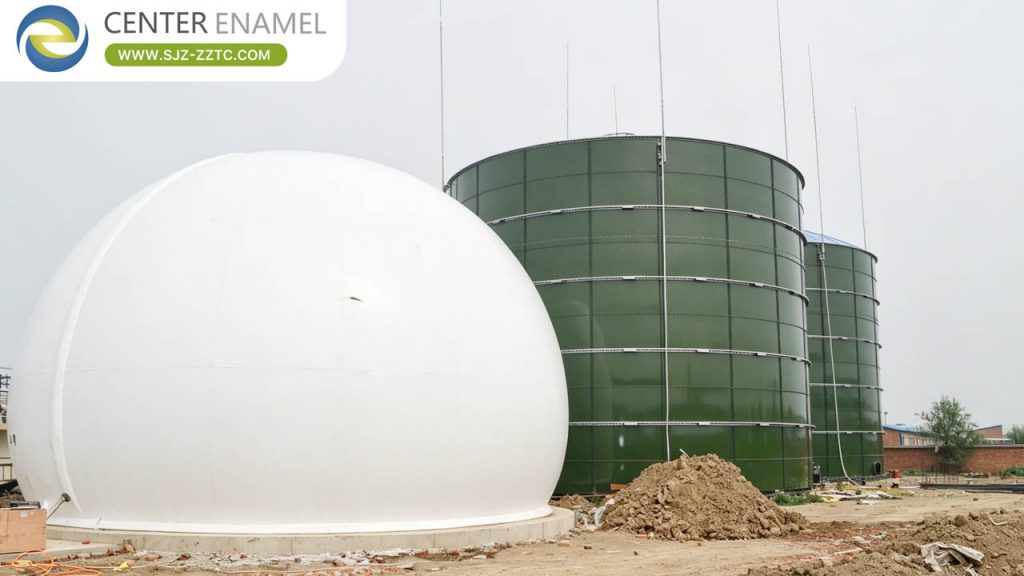
Shijiazhuang Zhengzhong Technology Co., Ltd (Center Enamel) supplies the product technology that delivers the saving: bolted GFS UASB and buffer tanks fuse glass to steel at 820-930 C for an inert, impermeable barrier against corrosive, H2S-bearing liquor, and ship flat-pack so the anaerobic-first train is delivered on schedule and resists the duty for decades.
Comparison: Sludge and Energy
| Criterion | Anaerobic UASB | Aerobic |
| Sludge yield | 0.05-0.10 kg VSS/kg COD | 0.3-0.6 kg VSS/kg COD |
| Energy | Makes biogas | Spends aeration |
| OPEX driver | Less sludge | Aeration + more sludge |
Anaerobic makes about one-sixth to one-third the sludge of aerobic treatment, 0.05-0.10 versus 0.3-0.6 kg VSS per kg COD. For high-strength streams that is a major OPEX saving. Send your COD load and we will size the GFS UASB-first train and quantify the sludge reduction.
Frequently Asked Questions (FAQ)
Q1: How much less sludge does anaerobic make?
A: Roughly one-sixth to one-third: 0.05-0.10 vs 0.3-0.6 kg VSS per kg COD.
Q2: How is sludge mass calculated?
A: Multiply the yield coefficient by the daily COD load removed.
Q3: Why does aerobic make more?
A: Aerobic heterotrophs oxidize substrate and build biomass instead of making methane.
Q4: What is the energy difference?
A: Anaerobic recovers biogas; aerobic spends 0.5-1.5 kWh/kg COD on aeration.
Q5: What tank capacity is available?
A: GFS tanks from 200 m3 to 60,000 m3.
Q6: What COD removal does UASB achieve?
A: About 80-90% of the soluble load at 5-15 kg COD/m3-day.
Suggested CTA
Send your COD load and stream strength. We will size the GFS UASB-first train and quantify the sludge and energy saving.