
How Much Sludge Does UASB Produce?
A UASB produces very little excess sludge — about 0.05–0.10 kg VSS (volatile suspended solids) per kg COD removed, roughly one-tenth the 0.5–1.0 kg VSS/kg COD of aerobic activated sludge. Most anaerobic biomass is retained inside the reactor as dense granular sludge and is not wasted; only a small amount of inactive or excess solids leaves with the effluent or during periodic wastage.
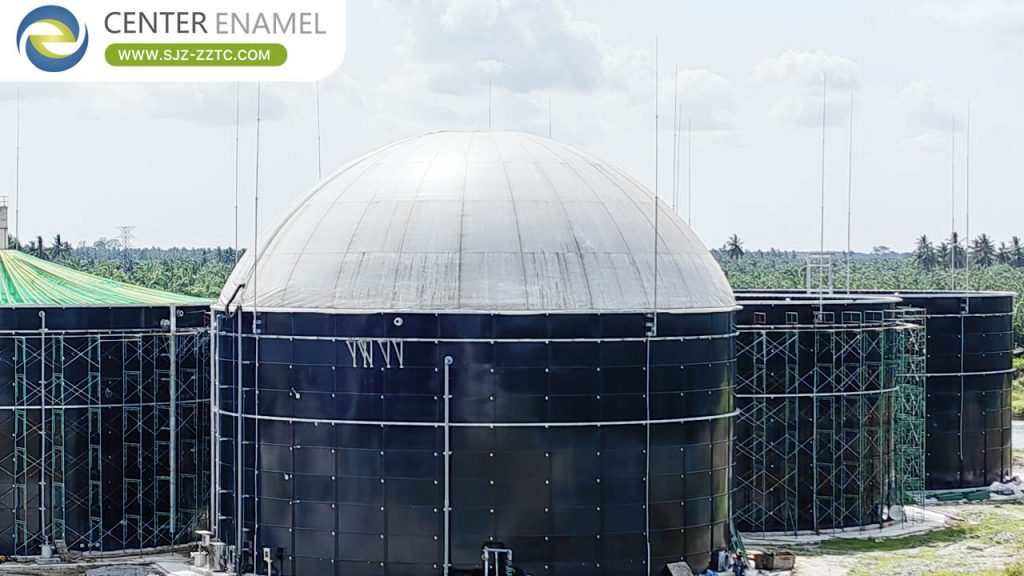
Why UASB Makes Less Sludge
Anaerobic conversion routes most organic carbon to biogas (CH₄ + CO₂), not to new cell mass. With a low yield coefficient, far less biomass is synthesized per kg COD than in aerobic respiration, where carbon is oxidized to CO₂ with high cell growth. The retained granular blanket is the reason UASB stays compact.
Where the Sludge Goes
Granular sludge settles and is held in the blanket; only light effluent suspended solids and occasional wastage are removed. Excess is drawn sparingly to control blanket height and age. The result is a small, manageable sludge stream versus the large return-and-waste flows of aerobic plants.
| Process | Sludge yield (kg VSS/kg COD) | Biomass fate |
| Aerobic activated sludge | 0.5–1.0 | high wastage |
| UASB (anaerobic) | 0.05–0.10 | retained granular |
| UASB + CHP | 0.05–0.10 | retained + biogas |
Technical Considerations
Granular sludge needs careful quality control: maintain OLR 5–15 kg COD/m³·day, protect settleability (granules 1–3 mm, settle 40–80 m/h), and avoid washout from excessive upflow velocity. Tankage (GFS or steel) must resist H₂S; monitor blanket height and effluent SS to time wastage. Good QA keeps sludge yield low and stable.
How to Scope Sludge Handling
Estimate COD load, apply 0.05–0.10 kg VSS/kg COD to size any sludge storage/thickening, and plan rare wastage rather than continuous return. Confirm influent quality (soluble, warm) so the granular bed stays healthy. A COD sheet lets suppliers size the UASB and minimal sludge facilities.
Project Case Study
Pharmaceutical Wastewater Treatment in Jiangdong. A high-salinity plant with 6 granular-sludge anaerobic reactors (12.66 × 24 m each, 1,000 m³/day), achieving ≥ 70% COD removal under salt up to 6,000 mg/L. It shows quality-controlled granular-sludge anaerobic tankage retaining biomass and minimizing excess sludge on difficult industrial wastewater.
| Project | Pharmaceutical Wastewater Treatment in Jiangdong |
| Location | Xiaoshan District, Hangzhou, China |
| Industry | Pharmaceutical |
| Application | High-salinity industrial wastewater |
| Product | Granular sludge anaerobic reactors |
| Capacity | 1,000 m³/day |
| Quantity | 6 sets (12.66 × 24 m) |
| COD removal | ≥ 70% |
| Status | Delivered 2019 |
About Center Enamel
Center Enamel applies its quality control discipline to anaerobic tankage, where low sludge yield depends on retaining healthy granular biomass. The company controls material traceability, enamel continuity, bolt-torque verification, and hydrostatic testing on every Glass-Fused-to-Steel (GFS) reactor — glass fused at 820–930°C — so anaerobic systems like the Jiangdong granular-sludge plant perform to verified COD and sludge targets.
Advantages and Limitations
UASB’s low sludge yield cuts handling, dewatering, and disposal cost and shrinks the plant footprint. Limits: granular sludge is sensitive to shocks and toxins, so feed quality control matters; and very cold or high-solid feed can undermine the blanket. Verified QA protects the yield advantage.
Comparison: Sludge Burden
| Process | Excess sludge | Handling load |
| Aerobic | high (0.5–1.0) | continuous return/waste |
| UASB | low (0.05–0.10) | rare wastage |
| UASB benefit | ~±10× less | small storage |
UASB produces only 0.05–0.10 kg VSS per kg COD removed — about one-tenth of aerobic — because most carbon becomes biogas and biomass is retained as granular sludge. Scope sludge handling as a small, occasional stream, and protect the blanket with QA and H₂S-resistant GFS tankage.
Frequently Asked Questions (FAQ)
Q1: How much sludge does UASB produce?
A: About 0.05–0.10 kg VSS per kg COD removed, roughly one-tenth of aerobic activated sludge.
Q2: Why so little sludge?
A: Anaerobic conversion sends most carbon to biogas, not cell mass, and the granular blanket retains biomass.
Q3: How is excess sludge managed?
A: Rare wastage controls blanket height; there is no continuous return/waste stream like aerobic plants.
Q4: What affects sludge yield?
A: OLR (5–15 kg COD/m³·day), feed solubility, temperature, and granular-sludge health.
Q5: What tank material suits UASB?
A: Glass-Fused-to-Steel, glass fused at 820–930°C, resists H₂S from biogas liquor.
Q6: What project experience exists?
A: Delivered 6 granular-sludge anaerobic reactors for high-salinity pharma wastewater in Hangzhou.
Provide your COD load and influent quality. We will size a UASB by OLR, estimate the small sludge stream, and quote H₂S-resistant GFS tankage with verified QA.