
Municipal Wastewater Treatment Plants: How Modern Systems Clean Water at Scale
Every time a toilet flushes or a drain runs, a complex industrial system springs into action. A municipal wastewater treatment plant sits at the boundary between urban life and the natural environment, receiving millions of gallons of used water each day and transforming it into something safe enough to return to rivers, lakes, or fields. The scale is staggering: Germany alone operates roughly 9,000 treatment plants serving about 97 percent of its population .
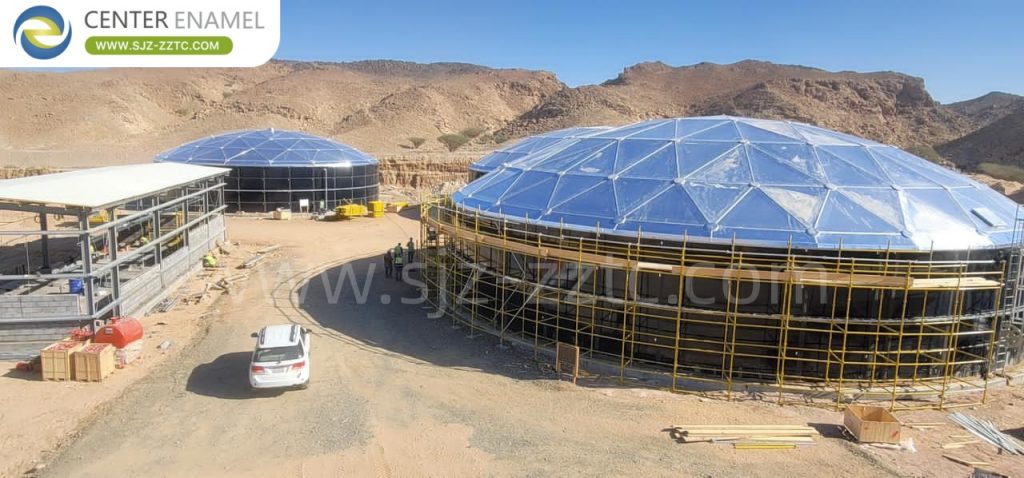
Yet the core logic of these facilities is remarkably consistent across countries and technologies. Treatment unfolds in sequential stages, each targeting a different class of pollutant-large debris, suspended solids, dissolved organic matter, nutrients, and pathogens. Understanding how a municipal wastewater treatment plant works reveals not only the engineering behind clean water but also the growing role of these facilities as resource recovery centers, generating energy from sludge and recovering nutrients that would otherwise be lost.
The Three-Stage Architecture of Modern Treatment
Most municipal wastewater treatment plants follow a three-stage sequence: primary, secondary, and tertiary treatment . Primary treatment is physical, using screens and settling tanks to remove material that either floats or sinks. Secondary treatment is biological, deploying microorganisms to consume dissolved organic matter that physical processes cannot capture. Tertiary treatment is polish and refinement, targeting nutrients like nitrogen and phosphorus, and in some cases micropollutants and pathogens, before the effluent is discharged or reused.
This staged approach is not arbitrary. Each stage protects the next. If grit and debris were not removed first, they would damage pumps and clog downstream equipment. If biological treatment did not reduce organic load, nutrient removal would be overwhelmed. The sequence reflects decades of engineering refinement aimed at reliability and cost-effectiveness. The German Environment Ministry notes that this three-stage treatment has led to an encouraging increase in oxygen content in water bodies, improving conditions for fish and other aquatic organisms .
Primary Treatment: Physical Separation of Solids and Grit
The first stop for incoming wastewater is the bar screen, where large objects-paper, bottles, branches, rags-are physically held back and removed by automated rakes . From there, the flow enters a grit chamber, where the channel widens and the velocity drops. Heavier mineral particles like sand and gravel settle to the bottom while lighter organic material continues downstream. This step protects downstream mechanical equipment from abrasion and reduces deposits in pipes .
The water then moves into a primary settling tank, where it is retained for roughly two hours. In this quiet environment, fine suspended particles settle as raw sludge at the bottom, while fats and oils float to the surface and are skimmed off . Primary treatment typically removes about 30 percent of the total polluting matter from the incoming raw wastewater, though well-designed settling tanks can achieve higher removal of suspended solids and biochemical oxygen demand . The collected sludge is not discarded; it is thickened and sent to the digesters, where it becomes a source of renewable energy.
Secondary Treatment: The Biological Workhorse
Secondary treatment is where the microbiology does the heavy lifting. The most common configuration is the activated sludge process, in which wastewater flows into an aeration tank and oxygen is injected to create favorable conditions for microorganisms . These bacteria feed on dissolved organic particles, forming colonies or flocs that settle in a secondary settling tank. A portion of this settled biomass is returned to the aeration tank to maintain the microbial population, while the excess becomes waste-activated sludge.
Variants exist. Trickling filters use fixed beds of rock or plastic media over which wastewater flows, allowing a microbial slime layer to develop and consume organics . Oxidation ditches and sequencing batch reactors offer different operational rhythms. The choice depends on land availability, energy costs, and effluent standards. After secondary treatment, most impurities have been removed except for the nutrients phosphorus and nitrogen, which can fuel algal blooms if discharged untreated .
Tertiary Treatment and Nutrient Removal
Tertiary treatment targets what secondary biology leaves behind. Phosphorus removal is often achieved through chemical precipitation: a precipitant is dosed into the effluent, reacting with phosphates to form water-insoluble compounds that settle as sludge . Nitrogen removal typically relies on biological nitrification and denitrification, converting ammonia to nitrate and then to nitrogen gas that escapes to the atmosphere. These processes require careful control of oxygen levels and retention times, as different microbial communities operate under aerobic and anoxic conditions .
Beyond nutrients, tertiary treatment may include disinfection through chlorination, ozonation, or ultraviolet light, and filtration to capture residual suspended solids. Emerging concerns have pushed the frontier further. The revised EU Urban Wastewater Treatment Directive requires certain plants to be equipped with a fourth treatment stage by 2045 to reduce micropollutants such as pharmaceutical residues and personal care products . This layered approach means a modern municipal wastewater treatment plant is not a single technology but a train of specialized processes, each tuned to a specific contamination problem.
Table 1: Treatment Stages and Their Primary Targets
| Stage | Core Process | Primary Removal Target | Typical Outcome |
| Primary | Screening, grit removal, sedimentation | Large debris, grit, settleable solids | ~30% of total polluting matter removed |
| Secondary | Activated sludge or trickling filter | Dissolved organic matter (BOD/COD) | Most organic pollutants degraded |
| Tertiary | Chemical precipitation, biological nutrient removal, filtration | Nitrogen, phosphorus, residual solids | Effluent suitable for discharge or reuse |
| Advanced (emerging) | Ozonation, activated carbon | Micropollutants, trace organics | Reduced environmental persistence |
Sludge Treatment: Turning Waste into Energy and Fertilizer
The sludge collected from primary and secondary settling tanks is a liability and an opportunity. It arrives with a water content of around 98 percent, making it bulky and costly to handle . Thickening reduces this volume by roughly half. The thickened sludge then enters an anaerobic digester, where it is held at around 35°C for several weeks. In the absence of oxygen, bacteria break down the organic matter and produce digester gas that is approximately two-thirds methane and one-third carbon dioxide .
This biogas is captured and stored, then used as fuel for generating electricity or heat. For a municipal wastewater treatment plant, this energy recovery can offset a meaningful portion of the facility‘s power demand-a critical advantage given that aeration and pumping are energy-intensive. After digestion, the remaining material is stabilized, odor-free, and suitable for further dewatering. The phosphorus contained in sewage sludge is increasingly recognized as a critical raw material that can be reclaimed . Depending on local regulations and contaminant levels, digested sludge can be applied to agricultural land as a soil amendment, composted, or disposed of in landfills .
Table 2: Sludge Treatment Pathways and Outcomes
| Treatment Step | Purpose | Typical Result |
| Thickening | Reduce water content and volume | Volume reduced by roughly 50% |
| Anaerobic digestion | Stabilize organics, produce biogas | Methane-rich gas for energy; stabilized sludge |
| Dewatering | Further reduce moisture | Reduced transport and disposal costs |
| Final use or disposal | Nutrient recovery or safe containment | Agricultural amendment, compost, or landfill |
Scale, Energy, and the Circular Economy Dimension
A municipal wastewater treatment plant is often the largest energy consumer in a small municipality. Aeration alone can account for half or more of a plant’s electricity bill. This has driven interest in optimizing treatment processes not just for water quality but for energy efficiency. Co-digestion of sewage sludge with food waste or other organic substrates can boost biogas production, improving the plant‘s energy balance and potentially allowing it to approach energy neutrality . Sludge from municipal plants has a relatively low carbon-to-nitrogen ratio, which can limit methane yield when digested alone; adding high-energy co-substrates addresses both energy output and process stability .
The circular economy framing extends beyond energy. Phosphorus is a finite resource, and its recovery from sewage sludge and ash is an active area of research and regulation in Europe. Water itself is increasingly viewed as a resource rather than a waste stream, with treated effluent being reused for irrigation, industrial cooling, or even potable supply in water-scarce regions. These shifts mean the municipal wastewater treatment plant of the future is less a disposal facility and more a resource recovery hub, extracting value from what was once considered purely waste.
FAQ
What is the difference between primary and secondary treatment?
Primary treatment is physical, using screens and settling tanks to remove debris and suspended solids. Secondary treatment is biological, using microorganisms to consume dissolved organic matter that physical processes cannot capture .
What happens to the sludge produced by a wastewater treatment plant?
Sludge is thickened, then digested anaerobically to stabilize it and produce biogas for energy. The digested material is dewatered and may be used as a soil amendment, composted, or disposed of according to local regulations .
Why is nutrient removal necessary before discharging treated water?
Excess nitrogen and phosphorus can cause eutrophication in receiving waters, leading to algal blooms that deplete oxygen and harm aquatic life. Tertiary treatment removes these nutrients to protect water quality .
If you are planning a new municipal wastewater treatment facility or upgrading an existing plant for nutrient removal or energy recovery, the right configuration depends on your effluent standards, sludge management options, and energy goals. Our team can help you evaluate treatment train options and sludge digestion strategies tailored to your community. Contact us to discuss your project and turn your wastewater into a resource.