
How to Choose the Best Anaerobic Digester: A Guide to Five Wastewater Treatment Technologies
Choosing the best anaerobic digester is an important decision for wastewater treatment plants and biogas projects. Different industries produce wastewater with different organic concentrations, solid contents, flow rates, and treatment requirements. Selecting an unsuitable reactor may result in unstable operation, poor treatment efficiency, increased maintenance costs, and reduced biogas production.
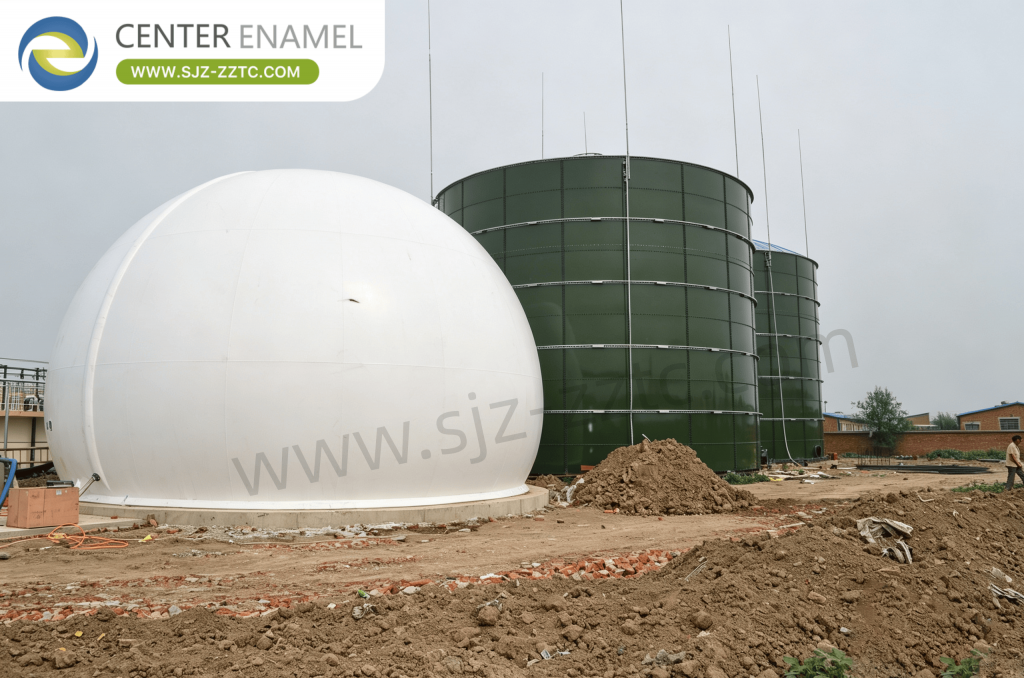
Common wastewater and biogas treatment technologies include CSTR, UASB, IC, USR, and A2O. Each technology has different operating principles and suitable applications. Understanding these differences helps project owners select an appropriate solution based on wastewater characteristics, industry requirements, and project objectives.
Understand Your Wastewater Characteristics First
Before selecting an anaerobic digester, it is essential to analyze the wastewater that needs treatment. Different wastewater characteristics determine which reactor technology is most suitable.
Key parameters include:
COD (Chemical Oxygen Demand): Indicates the concentration of organic pollutants.
BOD (Biochemical Oxygen Demand): Measures biodegradable organic matter.
TSS (Total Suspended Solids): Determines the amount of suspended particles.
pH Level: Affects microbial activity and anaerobic digestion stability.
Temperature: Influences the growth and activity of anaerobic microorganisms.
Wastewater Flow Rate: Determines the required treatment capacity.
For example, wastewater with high organic concentrations may benefit from anaerobic digestion and biogas recovery, while municipal wastewater often requires biological nitrogen and phosphorus removal.
CSTR: Suitable for Biogas and High-Solids Wastewater Projects
CSTR (Continuous Stirred Tank Reactor) is an anaerobic digestion technology that continuously mixes wastewater or organic materials inside a reactor tank.
Mechanical mixers or other mixing systems help maintain contact between microorganisms and organic materials, improving digestion efficiency.
Suitable applications:
Biogas production projects
Palm oil mill effluent (POME) treatment
Restaurant wastewater treatment
Organic wastewater with relatively high solid content
Main advantages:
Handles wastewater and organic materials with relatively high solid content.
Provides consistent mixing throughout the reactor.
Supports anaerobic digestion and methane production.
Offers flexible operation for different organic feedstocks.
CSTR is particularly suitable for projects that focus on organic waste treatment and renewable energy recovery. It is commonly considered for agricultural waste and industrial biogas applications.
UASB: Suitable for Aquaculture, Brewery, and Textile Wastewater
UASB (Upflow Anaerobic Sludge Blanket) is a high-rate anaerobic treatment technology. Wastewater enters from the bottom of the reactor and flows upward through a granular sludge bed containing anaerobic microorganisms.
During treatment, organic pollutants are decomposed and biogas is generated. A gas-liquid-solid separator helps retain sludge while separating treated water and biogas.
Suitable applications:
Aquaculture wastewater treatment
Brewery wastewater treatment
Textile wastewater treatment
Beverage production wastewater treatment
Main advantages:
High organic loading capacity.
Relatively compact reactor structure.
Low aeration energy requirements.
Effective organic matter removal and biogas recovery.
UASB is a good option for wastewater containing sufficient biodegradable dissolved organic matter. However, suspended solids, toxic substances, and sudden changes in organic loading should be carefully controlled.
IC: Suitable for Pharmaceutical, Chemical, and Food Industries
IC (Internal Circulation) Reactor is an advanced high-rate anaerobic reactor developed from the UASB concept. It uses internal liquid and gas circulation to improve wastewater distribution and contact between microorganisms and organic pollutants.
Its multi-stage structure allows high organic loading rates within a relatively compact installation.
Suitable applications:
Pharmaceutical wastewater treatment
Brewery and distillery wastewater
Chemical industry wastewater
Paper manufacturing wastewater
Dairy product wastewater
Beverage production wastewater
Main advantages:
High volumetric organic loading capacity.
Efficient internal circulation and mixing.
Compact footprint for industrial projects.
Potentially high biogas production.
IC reactors are especially useful for industrial wastewater with high concentrations of biodegradable organic pollutants. However, pretreatment may be necessary when wastewater contains excessive suspended solids or inhibitory substances.
USR: Suitable for Palm Oil, Biogas, and Organic Wastewater Projects
USR (Upflow Solid Reactor) is an anaerobic treatment technology designed for wastewater and organic materials with relatively high solid content.
Its upflow configuration allows organic materials to interact with anaerobic microorganisms during the digestion process. It can be considered for projects where conventional high-rate sludge blanket reactors may face challenges with solids management.
Suitable applications:
Palm oil mill effluent treatment
Biogas production projects
Restaurant wastewater treatment
Aquaculture wastewater treatment
Main advantages:
Suitable for certain high-solids organic wastewater streams.
Supports organic matter decomposition and biogas generation.
Can be applied to agricultural and industrial waste treatment.
Helps recover energy from organic waste.
USR can be considered for palm oil processing and organic waste treatment projects. Actual performance depends on wastewater composition, solids characteristics, reactor design, and operating conditions.
A2O: Suitable for Municipal Wastewater Treatment
A2O (Anaerobic-Anoxic-Oxic) is a biological wastewater treatment process consisting of three treatment zones: anaerobic, anoxic, and aerobic.
Unlike CSTR, UASB, IC, and USR, A2O is primarily designed for biological nutrient removal rather than anaerobic biogas digestion.
The three zones perform different functions:
Anaerobic zone: Supports biological phosphorus removal.
Anoxic zone: Promotes denitrification and nitrogen removal.
Oxic zone: Supports organic matter degradation, nitrification, and phosphorus uptake.
Suitable applications:
Municipal sewage treatment
Urban domestic wastewater treatment
Wastewater projects requiring nitrogen and phosphorus removal
Main advantages:
Effective biological nitrogen and phosphorus removal.
Suitable for municipal wastewater treatment plants.
Helps improve treated water quality.
Can be adapted to different wastewater treatment capacities.
A2O is a suitable choice when the main project objective is meeting municipal wastewater discharge standards rather than maximizing biogas production.
Comparison of Five Wastewater Treatment Technologies
The following table summarizes the main differences between the five technologies and their typical industrial applications.
| Technology | Main Treatment Characteristics | Suitable Applications |
| CSTR | Continuous mixing and anaerobic digestion | Biogas, palm oil, restaurants |
| UASB | Upflow granular sludge treatment | Aquaculture, brewery, textile, beverages |
| IC | High-rate anaerobic treatment with internal circulation | Pharmaceuticals, chemical, paper, dairy, beverages |
| USR | Upflow anaerobic treatment for solid-rich organic waste | Palm oil, biogas, restaurants, aquaculture |
| A2O | Biological nitrogen and phosphorus removal | Municipal wastewater |
Key Factors When Choosing an Anaerobic Digester
Selecting the right anaerobic digester requires more than considering the industry name. Project owners should evaluate several important factors.
1. Wastewater composition
Analyze COD, BOD, TSS, pH, and organic matter biodegradability before selecting a reactor.
2. Organic loading rate
Different reactors have different capacities for handling organic pollutants. High-strength wastewater may require high-rate anaerobic technologies such as UASB or IC.
3. Solid content
Wastewater containing large amounts of suspended solids may require pretreatment or a reactor designed to handle higher solid concentrations, such as CSTR or USR.
4. Biogas production requirements
If renewable energy recovery is a major project objective, consider the methane production potential of the wastewater and the suitability of anaerobic digestion.
5. Discharge standards
If the project requires advanced nitrogen and phosphorus removal, A2O or an appropriate combined treatment process may be necessary.
6. Investment and operating costs
Evaluate reactor construction, pretreatment equipment, energy consumption, maintenance, labor, and expected operating life.
How to Select the Right Technology for Your Project
There is no single anaerobic reactor suitable for every wastewater treatment or biogas project.
For palm oil mill effluent, CSTR and USR are potential options. For brewery and beverage wastewater, UASB and IC can be considered. Pharmaceutical, chemical, paper, and dairy wastewater may benefit from IC technology when organic loading and wastewater characteristics are suitable.
For aquaculture wastewater, UASB and USR may be considered depending on organic concentration and suspended solids. Municipal sewage treatment generally requires A2O when biological nitrogen and phosphorus removal is a priority.
In some projects, combining anaerobic treatment with aerobic or advanced treatment processes can achieve better overall treatment performance.
Conclusion
Choosing the best anaerobic digester depends on wastewater characteristics, industrial applications, treatment objectives, and project economics.
CSTR and USR are potential solutions for organic waste and biogas projects, while UASB and IC are widely used options for high-strength industrial wastewater. A2O is more suitable for municipal wastewater requiring biological nutrient removal.
Before making a final decision, conduct wastewater testing and a technical feasibility assessment. Matching the reactor technology to actual project conditions is essential for achieving stable operation, efficient wastewater treatment, and long-term economic benefits.
Frequently Asked Questions (FAQs)
1. Which anaerobic digester is best for industrial wastewater?
UASB and IC reactors are common choices for industrial wastewater with high biodegradable organic content. CSTR and USR may be more suitable for certain wastewater streams with higher solid content. The final choice depends on wastewater characteristics and treatment requirements.
2. What is the difference between CSTR and UASB reactors?
CSTR uses continuous mixing to improve contact between microorganisms and organic materials, making it suitable for various organic waste and biogas projects. UASB uses an upward wastewater flow through a granular sludge bed, making it suitable for high-rate treatment of biodegradable industrial wastewater.
3. Is A2O an anaerobic digestion technology?
A2O is a biological wastewater treatment process rather than a conventional anaerobic digester. It combines anaerobic, anoxic, and aerobic zones to remove organic pollutants, nitrogen, and phosphorus. It is mainly used in municipal wastewater treatment plants.