
How to Convert Food Waste to Biogas: A Complete Guide for Sustainable Energy Recovery
Food waste represents one of the most underutilized resources in the global energy transition. With approximately 931 million tons of food waste generated annually worldwide, the potential for converting this material into renewable energy through anaerobic digestion is substantial . Biogas produced from food waste typically contains 55–65% methane, making it a viable substitute for natural gas in heating, electricity generation, and vehicle fuel applications .
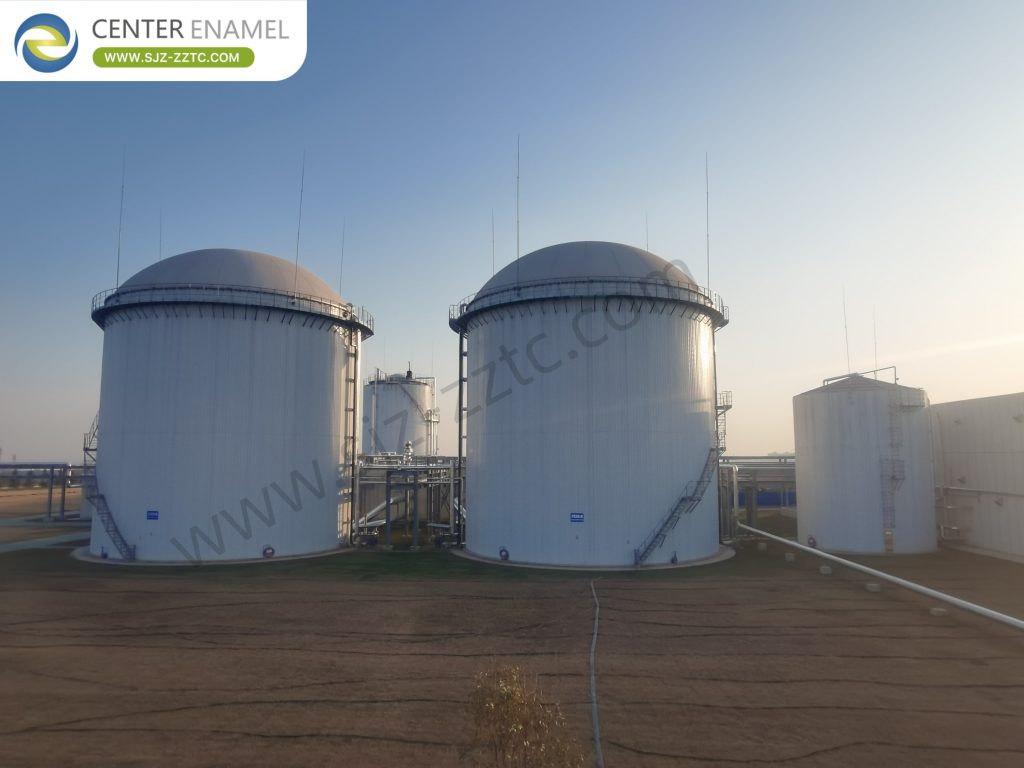
For businesses generating significant food waste-from restaurants and universities to food processing facilities-understanding the conversion pathway from plate scrapings to pipeline-quality gas is both an environmental imperative and an economic opportunity. This guide explains the complete process, from feedstock preparation through gas utilization.
Understanding the Anaerobic Digestion Process
Anaerobic digestion is a biological process in which microorganisms break down organic matter in the absence of oxygen, producing biogas and a nutrient-rich residue called digestate. The process occurs in four sequential stages: hydrolysis, acidogenesis, acetogenesis, and methanogenesis. Food waste, with its high moisture content and readily biodegradable organic fraction, is particularly well-suited to this treatment pathway.
The composition of food waste significantly influences biogas potential. Food waste typically contains 51–79% carbohydrates, 6–24% fats, and 15–24% proteins on a dry weight basis . This composition supports methane yields ranging from 0.4 to 0.6 cubic meters of biogas per kilogram of volatile solids under optimal conditions . However, the rapid degradation of food waste can lead to volatile fatty acid accumulation and process instability if not properly managed, which is why pretreatment and process control are essential for reliable operation.
Pretreatment Methods to Enhance Biogas Yield
Raw food waste contains complex organic polymers-cellulose, lipids, and proteins-that are only slowly accessible to anaerobic microorganisms. Hydrolysis of these compounds is widely recognized as the rate-limiting step in anaerobic digestion . Pretreatment disrupts cellular structures and solubilizes organic matter, accelerating digestion and increasing overall methane recovery.
Thermal hydrolysis is among the most established pretreatment methods. Heating food waste to temperatures between 100°C and 180°C breaks down cell walls and dissolves lipids, increasing soluble organic content by 30–50% and reducing fermentation time by 20–30% compared to untreated material .
Microwave irradiation offers a more rapid alternative, using molecular dipole rotation to heat water within the waste and disrupt biomass structure. Low-intensity microwave treatment has been shown to enhance solubilization while avoiding the energy penalties and sugar degradation associated with excessive power input .
Biological pretreatment employs exogenous enzymes or functional microorganisms to hydrolyze complex organics under mild conditions. This approach minimizes energy input while improving substrate bioavailability for subsequent digestion stages .
Mechanical and cavitation-based methods such as hydrodynamic cavitation reduce particle size and improve mass transfer, facilitating better contact between microorganisms and substrate .
| Pretreatment Method | Mechanism | Reported Benefits | Considerations |
| Thermal hydrolysis | Heat-induced cell disruption | 30–50% VFA increase; 20–30% time reduction | Energy demand; equipment cost |
| Microwave irradiation | Dipole rotation; bond cleavage | Enhanced solubilization at low intensity | Energy optimization required |
| Biological (enzymatic) | Targeted polymer hydrolysis | Mild conditions; low energy | Slower reaction rates |
| Hydrodynamic cavitation | Bubble collapse; shear forces | Particle size reduction; oil separation | Scale-up complexity |
Key Process Parameters for Optimal Digestion
Successful biogas production from food waste depends on maintaining stable conditions for the microbial consortium. Several operational parameters require careful control.
Temperature is perhaps the most critical variable. Mesophilic digestion (35–37°C) offers greater process stability and lower energy input, while thermophilic conditions (55°C) accelerate reaction rates and improve pathogen destruction but demand more precise control . Most commercial food waste digesters operate in the mesophilic range.
Substrate-to-inoculum ratio (S/I) determines the initial balance between food and microorganisms. Research indicates that lower S/I ratios (around 0.5 on a volatile solids basis) generally produce higher cumulative biogas yields, as the greater microbial population can more rapidly metabolize the incoming substrate without experiencing acidification . For batch systems, this ratio is particularly important during startup.
Organic loading rate (OLR) and hydraulic retention time (HRT) must be balanced to prevent volatile fatty acid accumulation while maximizing throughput. Food waste mono-digestion typically operates at OLRs of 5–20 g VS/L·d with HRTs of 2–10 days in high-rate systems . Continuous stirred tank reactors remain the most common configuration, though two-stage systems that separate acidogenesis from methanogenesis offer improved stability for high-strength food waste .
pH and alkalinity monitoring is essential because food waste degrades rapidly, producing acids that can overwhelm the system‘s buffering capacity. Methanogens function optimally at pH 6.8–7.4; when pH drops below 6.5, methane production declines sharply.
Reactor Configurations and Scale-Up Considerations
The choice of reactor design depends on feedstock characteristics, project scale, and intended products. For food waste from commercial sources such as cafeterias and restaurants, several configurations are commercially proven.
Single-stage continuous stirred tank reactors (CSTR) are the workhorse of the biogas industry. They handle high solids content and tolerate compositional variability, making them suitable for mixed food waste streams. However, their relatively long HRT and potential for short-circuiting limit conversion efficiency.
Two-stage anaerobic digestion separates hydrolysis-acidogenesis from acetogenesis-methanogenesis, allowing each microbial community to operate under optimal conditions. Recent research has demonstrated that adding alkaline waste materials such as eggshells to the acidogenic stage can redirect fermentation toward acetate production, increasing volatile fatty acid concentrations by more than 2.5-fold and improving subsequent methane yields .
Advanced liquefaction-anaerobic digestion (ALAD) represents a newer approach in which food waste solids are first liquefied through biological hydrolysis, and the resulting liquid is treated in high-rate upflow anaerobic sludge blanket (UASB) reactors. This configuration retains slow-growing methanogens while achieving high organic loading rates exceeding 10 kg COD/m³/d .
| Reactor Type | Typical Scale | Advantages | Limitations |
| Single-stage CSTR | Commercial | Proven reliability; handles variability | Longer HRT; lower conversion efficiency |
| Two-stage AD | Pilot to commercial | Process stability; higher VFA yields | Greater complexity; higher capital cost |
| ALAD with UASB | Pilot scale | High loading rates; methanogen retention | Emerging technology; limited track record |
Biogas Yield and Utilization Pathways
The actual biogas yield from food waste varies with composition, pretreatment, and process efficiency. European Union reference data indicate that food waste digesters achieve methane production of 66–86 cubic meters per ton of wet waste input, with methane content of 55–62% . More recent studies report biogas yields of 320–350 liters per kilogram of dry matter for university cafeteria waste, with methane content of 57–62% .
Raw biogas requires conditioning before most end uses. Hydrogen sulfide, moisture, and carbon dioxide must be removed to varying degrees depending on the application. For combined heat and power (CHP) generation, partial desulfurization and drying suffice, with electrical efficiencies of 35–40% achievable in modern engines. For grid injection or vehicle fuel, biogas must be upgraded to biomethane with methane content exceeding 96%, typically through water scrubbing, amine absorption, or membrane separation.
The digestate-the material remaining after digestion-contains the mineral nutrients from the original food waste in plant-available forms. When properly stabilized and tested for contaminants, it serves as an organic fertilizer and soil amendment, closing the nutrient loop in the circular economy .
Economic and Environmental Considerations
The economic case for food waste-to-biogas projects rests on multiple revenue streams: gate fees for waste acceptance, energy sales, and digestate valorization. Capital costs vary widely by scale and technology, but commercial projects typically achieve payback periods of five to eight years depending on local energy prices and waste disposal costs.
Environmental benefits extend beyond renewable energy generation. Diverting food waste from landfills avoids methane emissions from anaerobic decomposition in uncontrolled settings-a greenhouse gas with roughly 28 times the warming potential of carbon dioxide over a 100-year horizon. The digestate replaces synthetic fertilizers, reducing energy consumption and emissions associated with their production. A life cycle assessment of the ALAD process confirmed environmental benefits superior to conventional two-stage digestion, particularly in terms of net energy recovery and carbon footprint .
Operational challenges remain. Food waste composition varies seasonally and by source, requiring flexible process control. Impurities such as plastics and metals must be removed before digestion to protect equipment. Foaming and acidification episodes require active management. These factors underscore the importance of experienced engineering and robust monitoring systems.
Frequently Asked Questions
How much biogas can one ton of food waste produce?
The methane yield depends on the volatile solids content and pretreatment. As a practical reference, food waste digesters in Europe typically produce 66–86 cubic meters of methane per ton of wet waste input, corresponding to total biogas volumes of 110–150 cubic meters per ton . Fresh cafeteria waste with high moisture content tends toward the lower end, while drier, more concentrated waste streams achieve higher yields.
What is the difference between food waste digestion and composting?
Composting is an aerobic process that produces a soil amendment but captures no energy. Anaerobic digestion operates without oxygen, producing biogas (a renewable fuel) and digestate (a liquid or solid fertilizer). Digestion is preferred when energy recovery is a priority and when the waste has high moisture content unsuitable for efficient composting.
Can small-scale operations convert food waste to biogas economically?
Small-scale digesters (household to small farm scale) are technically feasible but face economic challenges in most developed markets due to relatively high capital costs per unit of gas produced and the need for consistent feedstock. For restaurants and institutions, the economics improve when waste disposal costs are high and when the biogas offsets purchased energy. Community-scale systems that aggregate waste from multiple sources often represent the most viable small-to-mid-scale model.
Ready to explore a food waste-to-biogas solution for your facility? Contact our engineering team to discuss your feedstock characteristics, site constraints, and energy goals-we will help you evaluate whether anaerobic digestion is the right fit and outline a path from feasibility study to commissioning.