
How to Dispose of Bagasse? Complete Sustainable Disposal & Biogas Production Guide
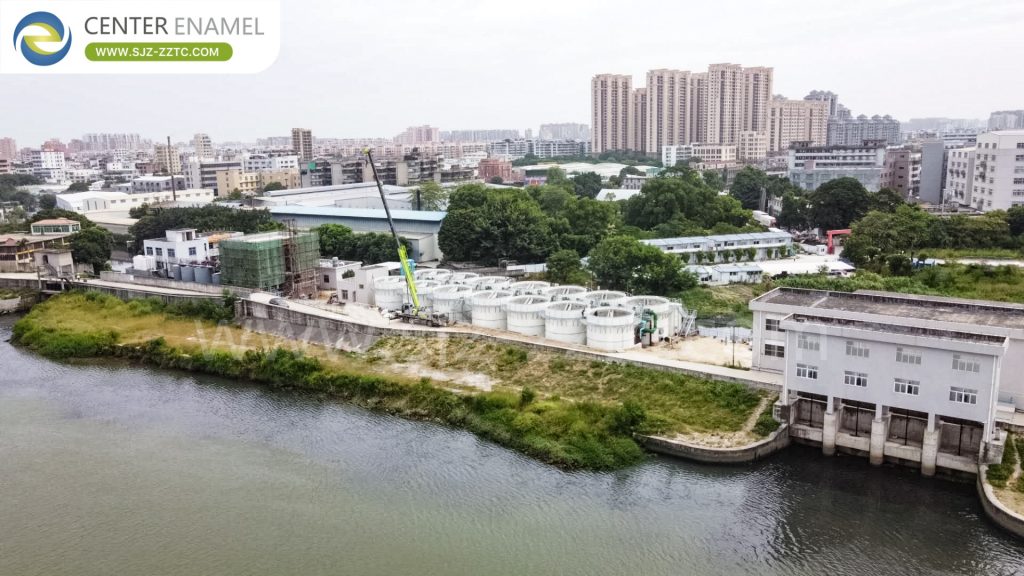
For sugar mills, agricultural processing plants, and biomass-intensive industries, one critical question remains constant: how to dispose of bagasse in an economical, eco-friendly, and sustainable way. Bagasse — the fibrous residue left after sugarcane is crushed for juice — is one of the most abundant organic wastes in tropical and subtropical regions. Traditional disposal methods have long created environmental harm, financial burdens, and wasted energy potential.
Today, the best answer to how to dispose of bagasse is no longer burning or landfilling. Instead, converting bagasse into biogas through advanced anaerobic digestion has become the global leading solution. This method not only solves disposal challenges but also generates clean energy, organic fertilizer, and long-term economic value. As a top global EPC contractor for biomass and biogas projects, Center Enamel provides full-cycle solutions for bagasse disposal and biogas production, helping businesses turn waste into profit.
Common Traditional Bagasse Disposal Methods & Their Problems
Before exploring sustainable solutions, it is important to understand why old bagasse disposal practices are no longer acceptable.
1. Open Burning
Many regions still burn bagasse directly for disposal. This releases large amounts of smoke, particulate matter (PM2.5), toxic gases, and carbon emissions. It causes air pollution, violates environmental regulations, and damages public health.
2. Landfilling
Landfilling bagasse wastes valuable land resources. Bagasse decomposes slowly and releases methane — a greenhouse gas 25 times more potent than CO₂. Leachate from landfills also pollutes soil and groundwater.
3. Simple Composting
Composting is too slow, requires large spaces, and cannot handle large-scale bagasse output. It is inefficient for industrial sugar mills and creates odor and pest problems.
4. Direct Dumping or Piling
Improper stacking leads to decay, odor, insect breeding, drainage blockages, and ecological risks.
These problems explain why industries worldwide are now asking: how to dispose of bagasse in a way that protects the environment and creates value?
The most effective modern solution is anaerobic digestion for biogas production.
How to Dispose of Bagasse Through Biogas Production
Bagasse is rich in cellulose, hemicellulose, sugars, and organic matter — making it ideal feedstock for anaerobic digestion. Instead of treating bagasse as waste, it becomes a resource for clean energy.
The anaerobic digestion process converts bagasse into biogas in four stable stages:
Hydrolysis: Microbes break down large organic molecules into soluble substances.
Acidification: Acidogenic bacteria turn materials into organic acids.
Acetogenesis: Intermediates are converted into acetic acid.
Methanogenesis: Methanogenic bacteria produce biogas (55–70% methane).
The produced biogas can be used for power generation, heating, steam production, and grid injection. The digested residue becomes high-quality organic fertilizer, completing a circular economy model.
This is the most scientific, profitable, and sustainable answer to how to dispose of bagasse.
Four Core Anaerobic Technologies for Bagasse Biogas Projects
To answer how to dispose of bagasse efficiently, Center Enamel provides four mature anaerobic technologies to match different project scales and bagasse conditions.
1. CSTR (Completely Stirred Tank Reactor)
Best for high-solid bagasse. Full mechanical mixing prevents floating scum and sediment, ensuring stable fermentation and high biogas yield. The most widely used technology for industrial bagasse projects.
2. UASB (Upflow Anaerobic Sludge Blanket)
Ideal for low-solid bagasse slurry and leachate. High efficiency, low operation cost, suitable for medium-scale projects.
3. USR (Upflow Solids Reactor)
Simple structure, low investment, easy maintenance. Perfect for small-scale and decentralized bagasse disposal.
4. IC (Internal Circulation)
Biogas-driven internal circulation increases loading rate by 3–5 times. Small footprint, high efficiency for land-limited areas.
These technologies make how to dispose of bagasse no longer a problem — but a profitable business model.
Key Equipment for Bagasse Biogas Projects
Professional bagasse disposal and biogas projects require reliable equipment to operate long-term in high-temperature, high-humidity, and corrosive environments.
GFS Tanks (Glass-Fused-to-Steel Tanks)
Fused at over 820°C
pH 1–14 corrosion resistance
UV-stable, acid-proof, long service life (over 30 years)
Bolted assembly for fast installation
Best choice for CSTR, UASB, USR, and IC systems
Double Membrane Gas Holders
High airtightness, automatic pressure control, safe biogas storage.
FBE Tanks
Cost-effective anti-corrosion tanks for water and slurry storage.
Agitation, Feeding, and Discharging Systems
Stable, automatic, and customized for bagasse characteristics.
Why Choose Center Enamel for Your Bagasse Disposal & Biogas Project
If you are searching for how to dispose of bagasse with professional support, Center Enamel is your trusted global EPC partner.
1. Full-Cycle Turnkey EPC Solutions
From design, manufacturing, installation to commissioning and after-sales — one-stop service.
2. Advanced Anaerobic Technologies
CSTR, UASB, USR, IC fully optimized for bagasse.
3. World-Leading GFS Tanks
Asia’s largest production base, 200+ patented enamel formulas.
4. International Certifications
ISO 28765, AWWA D103, NSF/ANSI 61, CE, OSHA, 1500V spark test per tank.
5. Rich Global Experience
Successful projects in Southeast Asia, Europe, North America, and Africa.
6. Customized Solutions
Tailored systems based on bagasse composition, climate, and project scale.
Center Enamel turns the question how to dispose of bagasse into a sustainable, profitable, and low-carbon solution.
Center Enamel’s Professional Installation & Service
- Hydraulic jacking top-down installation — no scaffolding or large cranes
- Zero on-site welding — factory-prefabricated components
- Fast construction and commissioning
- Local after-sales support worldwide
Successful Bagasse & Biomass Biogas Projects by Center Enamel
Case1: Indonesia Biogas Project
Application: Anaerobic Reactors for Palm Oil Wastewater Treatment Plant
Tank Models: Ø17.58 × 8.4 m, Ø16.82 × 7.2 m
Number of Tanks: 3 GFS Tanks
Installation Date: 2013
Case2: Turkey Food Waste Treatment Project
Process: CSTR
Tank Dimensions: φ16.81 × 16.8 m (H) — 2 Units Unit
Total Volume: 7,452 m³
Completion Date: 2020
When asking how to dispose of bagasse, the most sustainable and profitable solution is converting it into biogas via anaerobic digestion. Traditional methods cause pollution and cost money, while biogas projects generate energy, reduce emissions, and support circular economy.
With advanced CSTR/UASB/USR/IC technologies, high-performance GFS tanks, and full EPC services, Center Enamel helps sugar mills and biomass enterprises solve bagasse disposal efficiently. If you want a safe, legal, and valuable way to manage bagasse, choose biogas technology — and choose Center Enamel as your partner.