
How to Make Biogas from Cow Dung? Complete Practical Guide
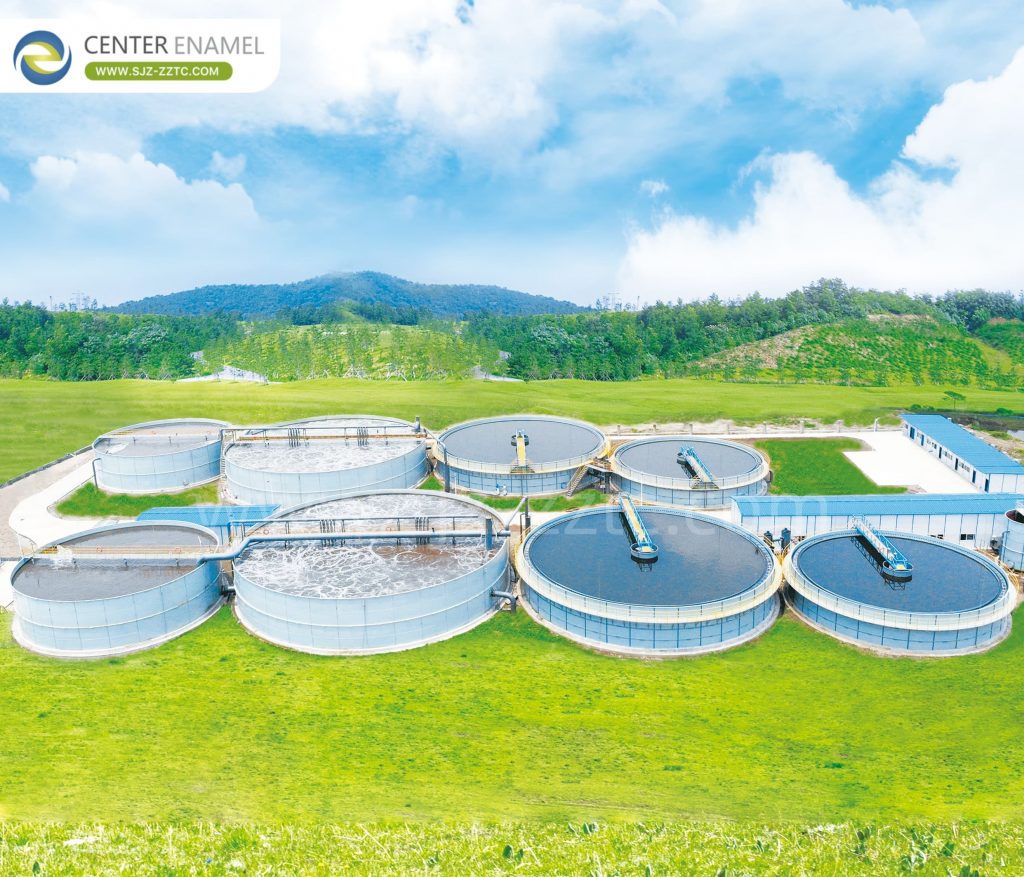
With the rapid development of global animal husbandry and the increasing demand for clean renewable energy, cow dung has become one of the most ideal raw materials for biogas production. Many farmers, breeding farms, investors and engineering teams want to know clearly: how to make biogas from cow dung efficiently, stably and safely?
This article gives a full set of practical answers, including detailed production steps, key control conditions, system composition, four mainstream anaerobic processes, application advantages of GFS Tanks, as well as the professional EPC strength and project experience of Center Enamel, providing a complete reference for building a high-efficiency cow dung biogas project.
Why Cow Dung Is Perfect for Biogas Production
Before learning how to make biogas from cow dung, it is necessary to understand why cow dung is widely used in biogas projects.
- Rich in organic matter, cellulose, protein and carbohydrates, with high biodegradability
- Stable output, large supply, easy to collect and transport
- Suitable C/N ratio (about 20–25:1), ideal for anaerobic microbial growth
- Low cost, reduces breeding pollution and turns waste into energy
- Digestate can be made into organic fertilizer, forming a circular agriculture system
These characteristics make cow dung one of the best raw materials for biogas production in the world.
Full Steps: How to Make Biogas from Cow Dung
The production of biogas from cow dung is completed through a closed anaerobic digestion system. The whole process is standardized, scientific and repeatable.
1. Raw Material Collection & Preprocessing
First, collect fresh cow dung from dairy farms, cattle farms or pastures. Remove impurities such as stones, plastic, ropes and soil to avoid blocking pipelines and reactors.
2. Dilution & Concentration Adjustment
Fresh cow dung has high moisture and viscosity. It needs to be diluted with water to reach a suitable concentration:
- Total solids (TS): 6%–10% for small and medium projects
- Total solids (TS): 8%–12% for large-scale CSTR projects This step ensures good fluidity and microbial activity.
3. Feeding into Anaerobic Digester
The prepared cow dung slurry is pumped into a sealed anaerobic reactor. The system must be strictly oxygen-free to ensure normal activity of methanogens.
4. Anaerobic Digestion Reaction (Core Stage)
Under suitable temperature, pH and mixing conditions, microorganisms decompose organic matter into biogas. The whole reaction is divided into four stages:
- Hydrolysis: Macromolecular organics are broken down into small soluble molecules
- Acidification: Acid-producing bacteria generate volatile fatty acids
- Acetogenesis: Intermediates are converted into acetic acid, hydrogen and carbon dioxide
- Methanation: Methanogens produce biogas (55%–70% methane, 30%–45% CO₂)
5. Biogas Collection & Storage
Biogas is automatically collected from the top of the reactor and stored in gas storage tanks. It is then desulfurized, dehydrated and purified to remove hydrogen sulfide and moisture.
6. Biogas Utilization
Purified biogas can be used for:
- Power generation
- Cooking and heating
- Boiler fuel
- Biomethane injection into pipeline network
- Vehicle fuel
7. Digestate Treatment & Recycling
The residue after fermentation is rich in nitrogen, phosphorus, potassium and organic matter. It can be made into organic fertilizer for farmland, fruit forests and vegetables, realizing zero waste discharge.
Key Operating Conditions for Making Biogas from Cow Dung
To ensure stable and high yield of biogas, the following conditions must be strictly controlled:
1. Temperature
- Mesophilic: 35–38°C (best efficiency, most widely used)
- Thermophilic: 50–55°C (fast reaction, high energy consumption)
- Room temperature: affected by climate, low efficiency in winter
2. pH Value
The suitable pH range is 6.8–7.5. Too high or too low will inhibit methanogens and reduce gas production.
3. Mixing
Adequate mixing prevents stratification and crusting, improves contact between microorganisms and cow dung, and increases gas yield.
4. Sealing Performance
The entire system must be well sealed to avoid air intake and biogas leakage, ensuring safety and efficiency.
5. Feeding Cycle
Continuous or semi-continuous feeding keeps the system stable and avoids sudden changes in concentration and temperature.
Four Advanced Anaerobic Technologies for Cow Dung Biogas Projects
When learning how to make biogas from cow dung, choosing the right anaerobic process is critical. Center Enamel provides four mature technologies for different project scales and conditions:
1. CSTR (Continuous Stirred-Tank Reactor)
Equipped with a mechanical stirring system, suitable for high-solid cow dung. It has strong anti-shock load capacity, stable gas production and high efficiency, making it the first choice for large-scale farms.
2. UASB (Upflow Anaerobic Sludge Blanket)
Relies on high-activity granular sludge, with high organic load and small floor space. It is suitable for low-concentration cow dung slurry and pre-treated wastewater.
3. USR (Upflow Solid Reactor)
Simple structure, strong anti-clogging performance, no complex pretreatment required. Low investment and operation cost, ideal for rural small and medium-sized biogas projects.
4. IC (Internal Circulation)
High-load and high-efficiency reactor with internal circulation. Its treatment efficiency is 3–5 times that of traditional technology, suitable for large-scale centralized cow dung treatment projects.
Core Equipment Advantage: GFS Tanks for Cow Dung Biogas Projects
GFS Tanks (Glass-Fused-to-Steel Tanks) are the most important equipment in biogas projects, which directly determine the stability, safety and service life of the system.
1. Super Corrosion Resistance
High-temperature sintered enamel layer resists acid, alkali, hydrogen sulfide and organic acid corrosion, adapting to harsh cow dung fermentation environment.
2. Excellent Airtightness
Special sealing structure prevents biogas leakage, ensuring safe and efficient gas collection and storage.
3. Modular Bolted Installation
Factory prefabricated, on-site assembly, no on-site welding, short construction period, suitable for remote farms.
4. Long Service Life
Service life exceeds 30 years, smooth surface is not easy to scale, low maintenance cost.
5. Flexible Expansion
Tank capacity can be expanded with the increase of breeding scale and biogas demand.
6. Wide Adaptability
Suitable for anaerobic digestion tanks, storage tanks, mixing tanks, etc., fully compatible with CSTR, UASB, USR and IC processes.
Why Choose Center Enamel as Your EPC Contractor
Center Enamel is a leading global EPC contractor for biogas projects, with rich experience in cow dung biogas projects around the world, helping customers successfully implement how to make biogas from cow dung with high efficiency.
1. Strong R&D and Manufacturing Strength
With 200+ patented enamel technologies, strict quality control system, products comply with ISO, AWWA and other international standards.
2. Full Turnkey EPC Services
Provide one-stop service including design, production, transportation, installation, commissioning, training and after-sales maintenance.
3. Customized Process Design
According to farm scale, cow dung output, climate and site conditions, tailor the best anaerobic process to maximize gas production.
4. Rich Global Project Experience
Successful cases in Asia, Africa, Europe, North America and Oceania, familiar with local policies, climate and construction environment.
5. High Efficiency and Cost-Effectiveness
Optimize system design to improve gas yield, reduce operation cost and create long-term benefits for customers.
6. Professional Installation & Acceptance
Adopt hydraulic jacking and modular bolted installation, with professional technical guidance and strict safety acceptance.
Learning how to make biogas from cow dung is not complicated, but to achieve stable, efficient and safe operation, professional processes, high-quality equipment and standardized management are required.
Cow dung biogas project can not only solve environmental pollution caused by breeding, but also provide clean energy and high-quality organic fertilizer, realizing the integration of energy, environmental protection and agriculture.
With advanced anaerobic technologies (CSTR, UASB, USR, IC) and high-performance GFS Tanks, Center Enamel provides safe, reliable and economic full solutions for cow dung biogas projects. We have helped numerous farms and investors turn waste cow dung into valuable clean energy, and will continue to contribute to global circular economy and low-carbon development.