
How to Make Biogas from Garbage? A Step-by-Step Guide to Waste-to-Energy
Turning garbage into biogas is not only possible-it is a proven and increasingly popular solution for both waste management and renewable energy production. Biogas is produced through a natural biological process called anaerobic digestion, where microorganisms break down organic matter in the absence of oxygen .
This process generates a methane-rich gas that can be captured and used for electricity, heating, or even vehicle fuel. The organic fraction of municipal solid waste (OFMSW)-which includes food scraps, yard waste, and other biodegradable materials-is an ideal feedstock for biogas production . In this comprehensive guide, we will walk through every step of how to make biogas from garbage, from feedstock preparation to final utilization.
Step 1: Understanding What Garbage Can Be Used
Not all garbage is suitable for biogas production. The ideal feedstocks are biodegradable organic materials, primarily the organic fraction of municipal solid waste (OFMSW) . This includes food waste, vegetable scraps, fruit peels, coffee grounds, grass clippings, leaves, and small amounts of paper. Agricultural residues, animal manure, and sewage sludge can also be used . According to global estimates, by 2025 the world will generate approximately 2.2 billion tons of waste annually, with an average of 56% being organic waste . This represents a massive untapped resource for biogas production. However, non-organic materials like plastics, metals, glass, and hazardous waste must be removed before the digestion process begins.
Step 2: Pre-Treatment and Feedstock Preparation
Before garbage can be converted into biogas, it must be properly prepared. Pre-treatment typically involves several key steps :
Screening and Sorting: Garbage is passed through a screening system to separate organic from non-organic materials . This step is critical because contaminants like plastics can damage equipment and inhibit the digestion process.
Crushing and Shredding: The organic waste is crushed or shredded to reduce particle size . Smaller particles increase the surface area available for microorganisms, accelerating the digestion process and improving biogas yield.
Homogenization: The shredded material is mixed to create a consistent feedstock, ensuring uniform digestion.
Proper pre-treatment significantly enhances fermentation efficiency and overall biogas production .
Step 3: The Anaerobic Digestion Process
The core of biogas production is anaerobic digestion, a biological process where microorganisms break down organic matter in an oxygen-free environment . This process occurs in four distinct stages :
Hydrolysis: Complex organic compounds like carbohydrates, proteins, and fats are broken down into simpler sugars, amino acids, and fatty acids.
Acidogenesis: The simpler compounds are further fermented into volatile fatty acids, alcohols, hydrogen, and carbon dioxide.
Acetogenesis: The products from acidogenesis are converted into acetic acid, hydrogen, and carbon dioxide.
Methanogenesis: Methanogenic archaea convert acetic acid and hydrogen/carbon dioxide into methane (CH₄) and water.
The result of these four stages is biogas, typically composed of 40–75% methane and 15–60% carbon dioxide, with trace amounts of hydrogen sulfide, ammonia, and other gases .
Step 4: Choosing the Right Digestion System
There are two primary types of anaerobic digestion systems used for processing garbage: wet digestion and dry digestion. Dry anaerobic digestion is particularly well-suited for organic municipal waste with high solids content (total solids exceeding 20%) . This technology has gained significant popularity because:
It requires less reactor volume and can handle higher organic loading rates
It needs less water addition and lower energy consumption
It can tolerate higher levels of impurities, minimizing pre-treatment costs
Full-scale continuous dry AD systems treating OFMSW have demonstrated biogas production rates of 5–6.6 m³ biogas per m³ reactor per day at organic loading rates of 10.5–12 kg TVS/m³ per day . Co-digestion-processing multiple waste types together-can further enhance biogas yields. For example, co-digesting OFMSW with sewage sludge at a 75/25 ratio has been shown to significantly increase methane production .
Step 5: Optimizing Biogas Yield
Several strategies can be employed to maximize biogas production from garbage:
Co-Digestion: Mixing different feedstocks helps balance the carbon-to-nitrogen (C/N) ratio. Optimal C/N ratios range from 26 to 30 for microorganisms . OFMSW alone can cause acidification, while sewage sludge has a low C/N ratio. Combining them creates a more favorable environment for digestion.
Temperature Control: Digestion can be performed at mesophilic (around 35°C) or thermophilic (around 55°C) temperatures. Thermophilic digestion generally produces more biogas but requires more energy input.
Organic Loading Rate Management: Exceeding optimal loading rates can cause process instability. Studies show that biogas yield declines when ammonia concentrations exceed certain thresholds, typically when co-substrates like chicken manure exceed 10% of the feed .
pH Monitoring: Maintaining pH between 6.8 and 7.5 is crucial for methanogen activity.
Step 6: Biogas Collection and Storage
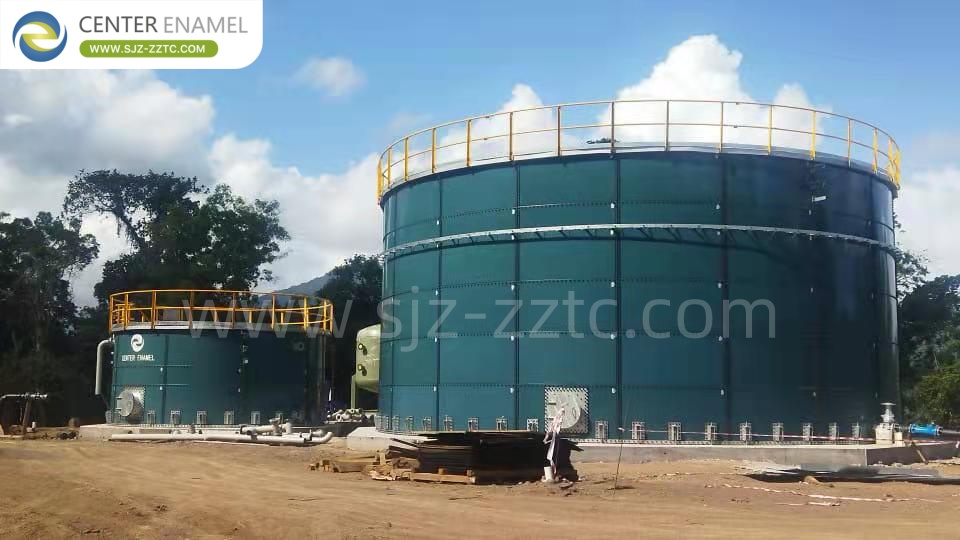
Once produced, biogas must be collected and stored safely until it is used. Biogas storage requires specialized tanks that are airtight, corrosion-resistant, and capable of withstanding the harsh environment created by hydrogen sulfide, methane, carbon dioxide, and moisture . Glass-Fused-to-Steel (GFS) tanks are an industry-leading solution for this purpose . These tanks feature a glass enamel coating fused to steel at high temperatures (820°C–930°C), creating a corrosion-resistant barrier that can last over 30 years under harsh industrial conditions . Key features include:
Gas-tight construction to prevent methane leakage
Excellent resistance to H₂S and other corrosive gases
Modular bolted design for rapid on-site assembly
Compliance with international standards including AWWA D103-09 and ISO 28765
Step 7: Biogas Purification and Upgrading
Raw biogas contains impurities that must be removed before it can be used in certain applications. The purification process typically includes :
Desulfurization: Hydrogen sulfide (H₂S) is corrosive and toxic. Biological desulfurization systems remove H₂S using specialized bacteria.
Dehydration: Moisture is removed to prevent corrosion and freezing in pipelines.
CO₂ Removal: For applications requiring higher methane purity (e.g., vehicle fuel or grid injection), carbon dioxide is removed through processes like pressure swing adsorption or membrane separation.
After purification, biogas can be used directly for electricity and heat generation or upgraded to biomethane (over 95% methane) for injection into natural gas networks or as vehicle fuel .
Why Biogas from Garbage Matters
Converting garbage to biogas addresses two pressing global challenges: waste management and renewable energy production. Landfills are a major source of methane emissions-a greenhouse gas over 25 times more potent than CO₂. By capturing this methane through controlled anaerobic digestion, we prevent its release into the atmosphere while generating clean energy . Additionally, the residual digestate from the digestion process is rich in nutrients and can be used as a fertilizer, completing the circular economy loop .
Center Enamel: Your Professional Waste-to-Energy Project Solutions Provider
Center Enamel (Shijiazhuang Zhengzhong Technology Co., Ltd.) is a global leader in providing high-performance storage solutions for biogas and anaerobic digestion projects. With over 30 years of experience and successful projects delivered to more than 100 countries, Center Enamel offers state-of-the-art Glass-Fused-to-Steel (GFS) biogas storage tanks and anaerobic digesters .
Why choose Center Enamel for your biogas project?
Superior Corrosion Resistance: The GFS coating provides exceptional protection against H₂S, methane, and moisture, ensuring a service life exceeding 30 years
Gas-Tight Integrity: Advanced sealing systems prevent biogas leakage, maximizing energy recovery and ensuring safety
Modular Design: Bolted construction enables rapid installation, easy scalability, and cost-effective transport
International Standards: Tanks meet AWWA D103-09, ISO 28765, and NSF/ANSI 61 standards
Global Expertise: With successful biogas projects in France, Malaysia, and many other countries, Center Enamel has the engineering expertise to support projects of any scale
Whether you are developing a small agricultural digester or a large-scale municipal waste-to-energy facility, Center Enamel provides the durable, reliable storage infrastructure you need for long-term success.
Frequently Asked Questions (FAQs)
1. What types of garbage can be used to make biogas?
Biodegradable organic waste such as food scraps, vegetable waste, yard trimmings, paper, and agricultural residues are ideal. Plastics, metals, glass, and hazardous waste must be removed before processing .
2. How long does it take to produce biogas from garbage?
The digestion process typically takes 16–30 days, depending on the system type, temperature, and feedstock composition. Dry anaerobic digestion systems often have hydraulic retention times of 16–18 days .
3. What storage tanks are best for biogas projects?
Glass-Fused-to-Steel (GFS) tanks are the industry standard for biogas storage due to their excellent corrosion resistance, gas-tight construction, and long service life. Center Enamel is a leading global provider of these tanks .