
How to Make Biogas from Grass? A Step-by-Step Guide to Sustainable Energy
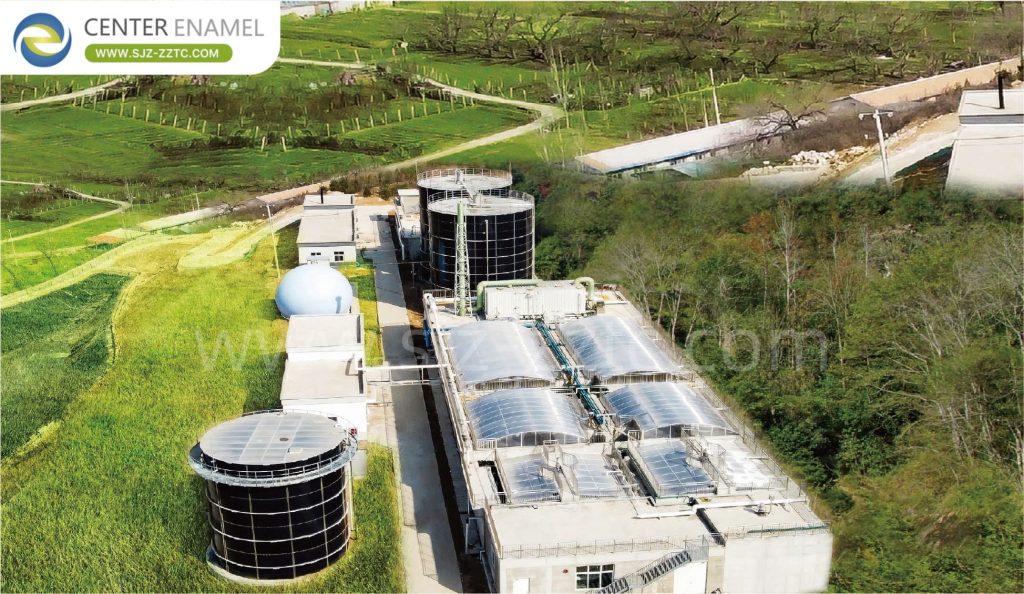
Grass is one of the most abundant and underutilized feedstocks for biogas production worldwide. From roadside grass clippings to dedicated energy crops like Napier grass, this renewable biomass source offers a sustainable pathway to clean energy without competing with food production . But how exactly do you turn grass into biogas? This guide walks you through the entire process, from feedstock selection to the role of advanced storage solutions.
The Challenge and Promise of Grass as a Biogas Feedstock
Grass biomass contains high levels of lignocellulosic fibers-cellulose, hemicellulose, and lignin-which form a rigid structure that resists biological breakdown . This makes grass more challenging to digest than manure or food waste. However, modern pre-treatment technologies and anaerobic digestion systems have unlocked this potential, making grass a viable and increasingly popular feedstock.
One of the major advantages of using grass for biogas is that it does not compete with food crops for land use. Roadside grass clippings, for instance, are generated as a by-product of landscape maintenance and are often composted or incinerated-representing a missed energy opportunity .
Types of Grass Suitable for Biogas Production
A wide range of grass types can be used for biogas production:
Napier grass (Pennisetum purpureum): A fast-growing energy crop with yields of 438–500 tons per year, known for its high lignocellulosic content and drought tolerance .
Roadside grass clippings: Collected from verges and median strips, available in spring, summer, and autumn .
Grass silage: Ensiled grass that can be stored year-round for consistent feedstock supply .
Flower-rich fen grassland: Extensive grassland biomass suitable even with late harvest dates .
The harvesting period significantly affects biogas yield. Studies show that spring grass yields higher methane potential (340.2 NL·kg⁻¹VS) compared to summer grass (307.7 NL·kg⁻¹VS), though summer grass produces more biomass per hectare .
The Biogas Production Process from Grass
The conversion of grass to biogas follows a multi-stage anaerobic digestion process. Here is a step-by-step overview:
Step 1: Feedstock Collection and Preparation
Grass must be harvested and prepared for digestion. For roadside grass, a "cut-and-collect" system is commonly used . Grass can be used fresh, but ensiling-a preservation method that ferments the grass-provides a year-round feedstock supply and reduces the risk of process acidification .
Step 2: Pre-Treatment
Pre-treatment is essential for grass due to its lignocellulosic structure. Several methods have proven effective:
Hydrothermal Fermentative Pretreatment (HFP): This low-temperature treatment (35°C for 12 hours) has been shown to yield the highest overall methane production-184.5 m³ CH₄ per ton of dry biomass-representing a 65% increase in biodegradability compared to untreated grass . The process relies on microbial activity to break down plant structures without high energy input.
Thermal Hydrolysis Pretreatment (THP): A high-temperature treatment (125–200°C) that uses heat to disrupt biomass structures, though it may inhibit digestion above 200°C .
Freeze-Thaw Cycles: Pre-treating grass at low temperatures (−15°C or −23°C) in a double freeze-thaw cycle can increase specific methane yield by up to 100% compared to untreated grass .
Mechanical Size Reduction: Reducing particle size improves surface area for microbial activity and can enhance yields .
Step 3: Anaerobic Digestion
After pre-treatment, the grass undergoes anaerobic digestion-a process where microorganisms decompose organic matter in the absence of oxygen, producing biogas primarily composed of methane (49–55%) and carbon dioxide.
There are two main digestion configurations:
Wet Digestion: Uses a continuous, stirred tank reactor (CSTR). While effective, wet digestion of grass can face operational challenges such as clogging and poor mixing . Grass silage liquor has achieved methane yields of 0.385 m³ per kg of COD, with a methane content of 70–80% .
Dry Digestion: A high-solids process that overcomes clogging issues and requires smaller reactor volumes. Dry batch digestion at pilot and large scales has achieved biogas yields up to 700 Nm³ per ton of dry organic matter . However, dry digestion requires careful operation to prevent acidification, especially during initial scale-up .
Two-Phase Digestion: This process separates hydrolysis/acidification from methanogenesis, using a leach bed reactor followed by an anaerobic filter. At optimal parameters (55°C), methane yields comparable to one-phase systems can be achieved with retention times of only 25 days .
Step 4: Biogas Collection and Storage
Once produced, biogas must be safely collected and stored. Biogas contains methane (CH₄), carbon dioxide (CO₂), and trace amounts of hydrogen sulfide (H₂S) and ammonia (NH₃). The collected gas can be used directly for heat and power generation or upgraded to biomethane for injection into the gas grid .
Biogas Yields from Grass
With proper pre-treatment and digestion, grass can achieve impressive yields:
Specific Methane Yield: Up to 274.18 NL·kgVS⁻¹ for fresh spring grass .
Biogas Yield: Up to 700 Nm³ per ton of dry organic matter .
Methane Content: Typically 49–55%, though grass silage liquor can achieve 70–80% .
Methane Potential: 340.2 NL·kg⁻¹VS for spring grass, 307.7 NL·kg⁻¹VS for summer grass .
The cutting time and preservation method significantly affect yields. Fresh grass generally produces more biogas than ensiled grass, and ensiling without additives can reduce methane production .
Grass as Part of the Circular Economy
Grass-based biogas production aligns with circular economy principles. The digestate-the residue left after digestion-can be processed into bio-based fertilizers, returning nutrients to the soil . In Ireland, integrating grass silage with cattle slurry for biogas production reduced greenhouse gas emissions by 24% compared to conventional beef farming, while reducing synthetic fertilizer use by up to 65% for nitrogen .
Center Enamel: Biogas Storage Solutions for Grass-Based Projects
For any grass-to-biogas project, reliable infrastructure is essential. Center Enamel, with over 36 years of experience and more than 500 successful projects worldwide, provides industry-leading Glass-Fused-to-Steel (GFS) tanks and comprehensive EPC services for biogas facilities.
Glass-Fused-to-Steel (GFS) Tanks
GFS tanks are the preferred choice for biogas storage due to their exceptional durability and performance characteristics:
Superior Corrosion Resistance: The glass coating withstands the corrosive environment of biogas, including hydrogen sulfide (H₂S) and organic acids, ensuring a 30–50 year service life.
Gas-Tightness: Precision sealing prevents methane leakage, maximizing energy recovery and ensuring safety.
Modular Bolted Design: Rapid on-site assembly reduces construction time and costs, especially valuable in remote agricultural locations.
pH Resistance: GFS tanks handle a wide pH range, from acidic to alkaline, making them suitable for diverse biogas processes.
Integrated Biogas Storage Solutions
Center Enamel offers integrated GFS tanks with Double Membrane Gasholders, creating a complete biogas storage system. The double membrane design operates on a constant-pressure principle, ensuring stable gas delivery to CHP engines or upgrading units. The outer membrane protects the inner membrane from weather, while the inner membrane adjusts volume based on gas production, maintaining consistent pressure for optimal energy generation.
Comprehensive EPC Services
As an experienced EPC Contractor, Center Enamel provides turnkey solutions covering design, procurement, construction, and commissioning. Services include:
Customized Engineering: Tailored tank designs meeting AWWA D103, ISO 28765, and Eurocode standards.
Ancillary Equipment: Gas holders, desulfurization units, and gas utilization systems.
Global Support: Projects completed in over 90 countries, with local installation and commissioning support.
Making biogas from grass is a proven, sustainable process that transforms abundant biomass into renewable energy. Through proper pre-treatment-whether hydrothermal fermentative pretreatment, thermal hydrolysis, or freeze-thaw cycles-grass can achieve methane yields comparable to energy crops. Dry digestion and two-phase systems offer effective configurations for handling grass's fibrous nature. Center Enamel’s Glass-Fused-to-Steel tanks and comprehensive EPC services provide the durable, reliable infrastructure needed to make grass-to-biogas projects successful-delivering long-term performance, safety, and energy recovery for operators worldwide.
FAQs
Q: Can grass be used alone for biogas production, or does it need to be mixed with other feedstocks?
A: Grass can be used as a sole feedstock for anaerobic digestion, as demonstrated by pilot and large-scale projects using roadside grass clippings . However, co-digestion with manure or slurry can improve process stability by balancing the carbon-to-nitrogen ratio and preventing acidification .
Q: What is the best pre-treatment method for grass to maximize biogas yield?
A: Hydrothermal fermentative pretreatment (HFP) at 35°C for 12 hours has shown the highest overall methane production (184.5 m³ per ton of dry biomass), increasing biodegradability by 65% . Freeze-thaw cycles can increase yields by up to 100% compared to untreated grass .
Q: How do GFS tanks support grass-based biogas projects?
A: GFS tanks provide gas-tight, corrosion-resistant storage for biogas, with a service life exceeding 30 years. Their modular bolted design enables rapid installation and scalability, making them ideal for biogas plants in agricultural areas. Center Enamel offers complete EPC services for turnkey project delivery.