
How to Make Clean Fuel from Rice Crop Residues: A Complete Guide to Biogas Production from Rice Straw
Rice straw is one of the most abundant agricultural residues on the planet, yet it is routinely burned in fields, releasing particulate matter and greenhouse gases into the atmosphere. What if that same straw could be transformed into a clean, renewable fuel? Anaerobic digestion offers exactly that pathway, converting rice crop residues into biogas rich in methane—a fuel suitable for cooking, electricity generation, and even vehicle fuel after upgrading. This article explains the science behind why rice straw produces biogas, the obstacles that must be overcome, and the practical methods that make the process work at scale.
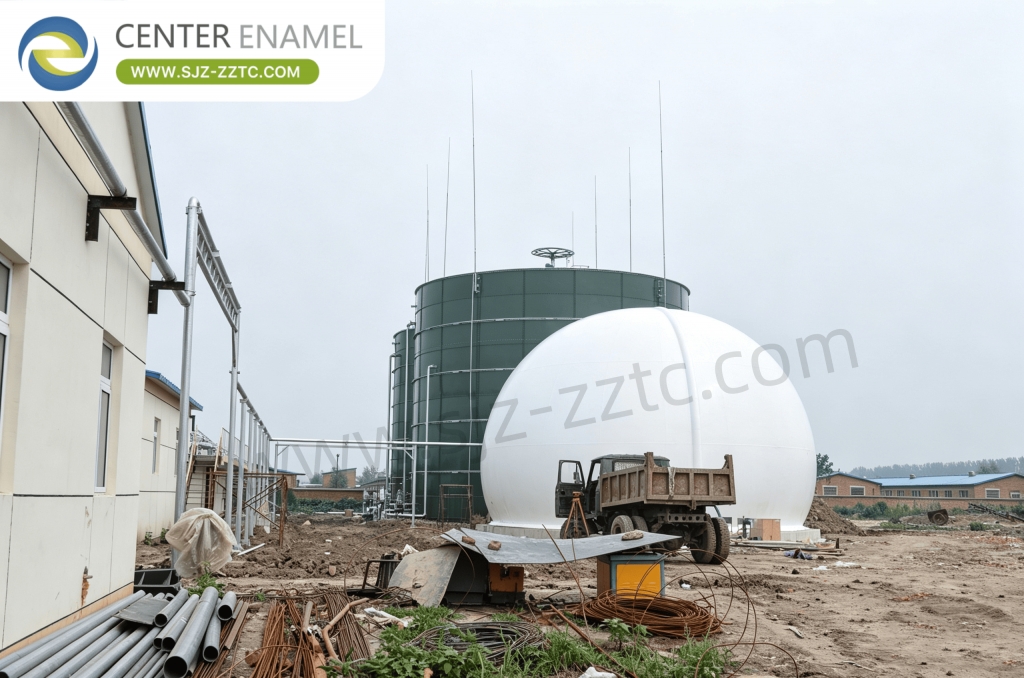
Why Rice Straw Can Produce Biogas: The Science of Anaerobic Digestion
Rice straw is a lignocellulosic biomass composed primarily of cellulose (34-43%), hemicellulose (19-22%), and lignin (13-23%), along with significant silica content (10-15%) . Cellulose and hemicellulose are polysaccharides—long chains of sugars that microorganisms can break down and convert into methane under oxygen-free conditions. This is the fundamental reason rice straw is a viable biogas feedstock: it stores solar energy in chemical bonds that anaerobic microbes can unlock.
The anaerobic digestion process unfolds in four stages. Hydrolytic bacteria first break down the complex polymers into soluble sugars. Acidogenic bacteria then ferment these sugars into volatile fatty acids. Acetogenic bacteria convert those acids into acetic acid, hydrogen, and carbon dioxide. Finally, methanogenic archaea—the methane producers—consume acetate and hydrogen to generate methane (CH₄) and carbon dioxide (CO₂). The resulting biogas typically contains 50-70% methane, with the remainder mostly CO₂ .
What makes this process particularly attractive for rice-growing regions is that the raw material is essentially free and already concentrated in one place after harvest. Instead of burning it, farmers can feed it into a digester and recover a clean-burning gas, plus a nutrient-rich digestate that can be returned to the field as fertilizer.
The Core Challenge: Why Rice Straw Resists Digestion
If rice straw is so rich in sugars, why isn't biogas production from it already widespread? The answer lies in its structure. Rice straw has evolved to resist microbial attack. Lignin forms a protective sheath around cellulose and hemicellulose, physically blocking enzymes from reaching the sugars inside. Silica adds another layer of recalcitrance, making the straw tough and abrasive . This natural shield is excellent for a plant standing in a field, but it is a serious obstacle for a biogas operator.
The practical consequence is that untreated rice straw digests slowly and incompletely. Without intervention, methane yields are modest and retention times are long, making the economics unfavorable for many projects. Researchers have measured methane yields from untreated rice straw ranging from 92 to 280 liters per kilogram of volatile solids, depending on conditions and variety . The upper end of that range is achievable, but it requires careful process control.
A second challenge is the carbon-to-nitrogen ratio. Rice straw has a high C:N ratio, often exceeding 60:1, while anaerobic microbes perform best at around 25-35:1 . Nitrogen supplementation or co-digestion with nitrogen-rich materials such as animal manure solves this problem effectively.
Pretreatment Methods That Unlock Rice Straw's Energy Potential
The single most impactful intervention for improving biogas yield from rice straw is pretreatment. The goal is to disrupt the lignin-carbohydrate matrix without destroying the sugars that feed methane production. Several approaches have proven effective in peer-reviewed research.
Alkaline pretreatment is among the most reliable. Sodium hydroxide (NaOH) treatment has been shown to increase methane production by 13-15% compared with untreated straw . Sodium carbonate, a milder alkali, also improves digestibility by swelling the fiber and partially removing lignin .
Acetic acid pretreatment at low concentration offers a gentler chemical route. Soaking rice straw in 2% acetic acid for 24 hours increased cumulative biomethane production by 24.3% over untreated straw, with a net profit estimated at US$106 per ton of dry straw . The acid partially degrades hemicellulose and modifies lignin structure, opening the fiber for microbial access.
Hydrogen peroxide (H₂O₂) pretreatment has achieved some of the most dramatic results. Under optimized conditions, H₂O₂ treatment yielded 290 mL of methane per gram of volatile solids—88% higher than untreated rice straw . H₂O₂ is attractive because it degrades into water and oxygen, leaving no toxic residue.
Biological pretreatment is gaining attention as a lower-energy alternative. Aerobic digestion as a biological pretreatment, combined with bioaugmentation, can enhance biogas production without harsh chemicals . Research has also shown that simply optimizing process parameters—particle size, solids loading, temperature, pH, and trace element supplementation—can achieve methane yields exceeding 80% of the theoretical maximum without any thermochemical pretreatment at all .
The table below summarizes key pretreatment options and their reported effects.
| Pretreatment Method | Typical Conditions | Reported Improvement in Methane Yield | Key Considerations |
| Untreated (baseline) | — | 92-280 L CH₄/kg VS | Simple but inefficient |
| NaOH (alkaline) | Thermochemical | 13-15% increase | Effective, requires chemical handling |
| Acetic acid (2%) | 24-hour soak | 24.3% increase | Mild conditions, profitable |
| H₂O₂ | Optimized oxidation | Up to 88% increase | Clean residue, higher cost |
| Biological (aerobic) | Aerobic pre-digestion | Variable, process-dependent | Low energy, slower |
Step-by-Step: Building a Biogas System for Rice Straw
Converting rice straw to biogas at a practical scale requires attention to several operational factors. The following steps outline the essential workflow.
Step 1: Harvest and preparation. Collect straw shortly after harvest and dry it to prevent spontaneous decomposition. Grinding or chopping the straw to 1-3 cm increases the surface area available to microbes; research has shown that particulate straw of about 1 mm can achieve high methane yields when other conditions are optimized .
Step 2: Pretreatment (optional but recommended). Based on the methods above, choose a pretreatment that fits your resources and scale. For smallholder systems, a simple 24-hour soak in dilute acetic acid or a mild alkaline solution may be practical. For larger operations, mechanical grinding combined with biological pretreatment may offer a better energy balance.
Step 3: Digester loading and inoculation. Rice straw is typically loaded at 5-10% solids into a sealed anaerobic digester. It must be inoculated with a microbial consortium capable of lignocellulose degradation—cattle dung slurry is a common and effective inoculum . Maintain a C:N ratio near 25:1, supplementing with urea or manure if needed.
Step 4: Process control. Keep the digester at mesophilic temperature (35-40°C) for optimal microbial activity . Monitor pH and maintain it between 6.5 and 8.0. Mixing helps ensure contact between microbes and substrate, but excessive agitation can disrupt the microbial granules that form in some digester designs.
Step 5: Gas collection and use. Biogas is collected from the headspace of the digester. Raw biogas can be burned directly in a stove or generator. For vehicle fuel or grid injection, it must be upgraded to remove CO₂ and hydrogen sulfide, producing biomethane with methane content above 90%.
The table below provides a quick-reference summary of key process parameters.
| Parameter | Optimal Range | Notes |
| Temperature (mesophilic) | 35-40°C | Thermophilic (50-55°C) also possible but less stable |
| pH | 6.5-8.0 | Monitor for acidification |
| C:N ratio | 25-35:1 | Supplement nitrogen if straw-dominated |
| Solids loading | 5-10% | Higher loading may require more frequent mixing |
| Particle size | 1-3 cm (or finer) | Smaller particles digest faster |
| Retention time | 20-40 days | Depends on pretreatment and temperature |
Scaling Up: From Farm-Scale Digesters to Industrial Biorefineries
Rice straw biogas can be implemented at multiple scales. At the farm level, small fixed-dome or plug-flow digesters can process crop residues alongside animal manure, providing cooking fuel for a household or a small community. The key advantage here is that the digestate—the material left after digestion—retains nutrients and can be composted or applied directly to fields, closing the nutrient loop.
At the industrial scale, rice straw biogas becomes part of a biorefinery concept. Research has demonstrated that anaerobic digestion can be sequenced with ethanol fermentation to extract more value from the same straw. In one study, mesophilic and thermophilic anaerobic digestion of rice straw generated biogas yields of 236.8 and 275.8 liters per kilogram of volatile solids, respectively, and the resulting digestate fiber was then converted to ethanol, achieving a total gross energy output of 1.468 GJ per ton per day . This sequential approach maximizes energy recovery and improves the economics of large facilities.
Techno-economic analyses paint an encouraging picture. A modeled biogas plant treating pretreated rice straw co-digested with swine slurry projected annual revenue of approximately €2.4 million, a net profit of €1.5 million, and a payback period under three years . These figures depend on local feedstock costs, energy prices, and policy incentives, but they demonstrate that rice straw biogas can be commercially viable when designed thoughtfully.
Environmental and Economic Benefits of Rice Straw Biogas
The environmental case for rice straw biogas is compelling. Open burning of rice straw releases CO₂, CO, nitrogen oxides, sulfur dioxide, polycyclic aromatic hydrocarbons, and fine particulate matter—pollutants linked to respiratory illness and climate forcing . Diverting straw to anaerobic digestion eliminates these emissions while producing a renewable fuel that displaces fossil energy.
The climate benefit extends further when biogas replaces firewood or coal for cooking. Methane that would otherwise be released from decomposing straw in fields is captured and burned as fuel, converting a potent greenhouse gas into CO₂ with a much lower warming potential. Meanwhile, the digestate returns organic matter and nutrients to the soil, improving soil health and reducing reliance on synthetic fertilizers.
Economically, rice straw biogas creates value from a waste stream. Farmers gain an additional income source or a cost-effective energy supply. Rural communities gain local energy resilience. And the biogas industry gains a feedstock that is available in enormous quantities across Asia, Africa, and other rice-producing regions.
Frequently Asked Questions
Can rice straw alone produce biogas without any additives?
Yes, but inefficiently. Rice straw lacks sufficient nitrogen for optimal microbial growth, so supplementation with nitrogen sources (urea, manure) or co-digestion with nitrogen-rich wastes is strongly recommended. Without adjustment, biogas production will be slow and incomplete .
How much biogas can one ton of rice straw produce?
Methane yields vary widely based on pretreatment and process conditions, ranging from roughly 92 to 290 liters of methane per kilogram of volatile solids . Since rice straw is typically 85-95% volatile solids, one ton of dry straw can theoretically produce 90-280 cubic meters of methane, depending on how well the process is managed.
Is rice straw biogas production practical for small farms?
Yes, with appropriate scale and management. Small farms can use low-cost digesters and simple pretreatment methods such as chopping and nitrogen supplementation. Co-digesting straw with animal manure is particularly practical because it balances the C:N ratio and provides a ready source of microorganisms.
Ready to turn your rice crop residues into clean, renewable energy? Our team specializes in designing anaerobic digestion systems tailored to agricultural feedstocks, from pretreatment optimization to full-scale digester engineering. Contact us today to discuss how rice straw biogas can work for your farm, cooperative, or waste management project. Reach out for a consultation and let us help you transform agricultural waste into a reliable source of clean fuel.