
How to Manage Livestock Manure? Complete Anaerobic Solutions With Premium GFS Tanks
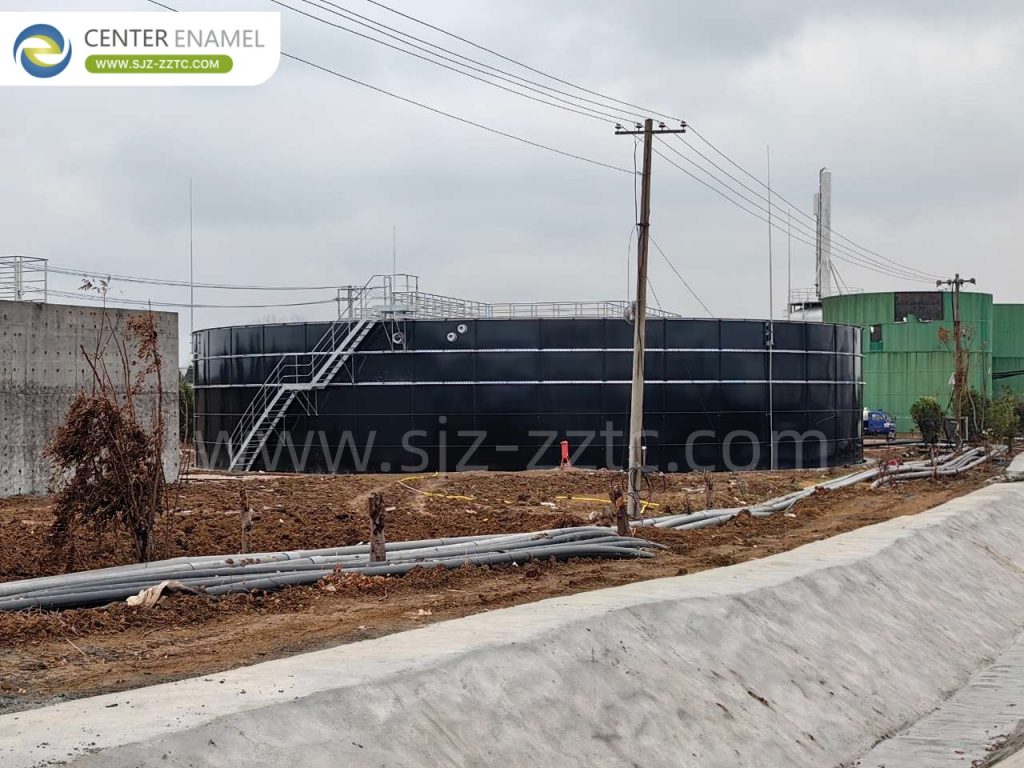
Global livestock farming expands rapidly to satisfy rising meat, milk and egg demand across Asia, Europe and Africa, producing billions of tons of livestock manure annually. Improper manure stacking and random disposal have become a prominent environmental headache for modern agriculture. Effective livestock manure management turns waste into valuable renewable resources: clean biogas for energy supply and nutrient-rich organic fertilizer for crop planting.
This article systematically classifies livestock manure types, analyzes widespread environmental damages from mismanaged waste, compares mainstream disposal routes, highlights four mature anaerobic technologies, elaborates core strengths of GFS Tanks as biogas core equipment, and introduces Center Enamel’s decades-long global experience in turnkey manure biogas EPC projects to help farms and agricultural investors build profitable circular farming systems.
Main Categories of Livestock Manure
Livestock manure varies greatly in moisture, solid content, organic composition and treatment difficulty based on breeding varieties and feeding patterns, split into four primary categories:
Pig Manure: High moisture (75%~85%), mixed with leftover feed residues, urine and flushing wastewater, classified as high-moisture mixed manure from intensive confined pig farms; small backyard pig breeding produces scattered semi-solid pig dung without centralized collection.
Poultry Manure (Chicken, Duck, Turkey): Low water content but high nitrogen, phosphorus and uric acid concentration, easy to release strong ammonia odor under high temperature; caged layer farms generate concentrated manure mixed with bedding materials.
Ruminant Manure (Cattle, Buffalo, Sheep, Goat): Cow and buffalo dung features high crude fiber content from forage feeding; free-range sheep/goat manure is scattered solid waste on pastures while barn-fed ruminants produce centralized semi-solid manure.
By-product Organic Residues: Additional high-moisture organic waste from slaughterhouses and feed processing factories, often mixed with livestock manure as supplementary raw feedstock for biogas fermentation projects.
Different manure physical properties directly decide matching management and anaerobic treatment technologies, making classified collection the first step of standardized livestock manure management.
Severe Environmental Impacts Caused by Unregulated Livestock Manure
Uncontrolled livestock manure disposal triggers multi-dimensional ecological pollution and hinders regional carbon reduction targets globally:
Air Pollution & Greenhouse Gas Emission: Untreated piled manure continuously releases irritant ammonia and hydrogen sulfide, creating pervasive stench around rural residential areas; anaerobic natural decomposition of random-stacked manure leaks massive methane (28 times higher greenhouse effect than CO₂ in 100-year cycle). Dry-season open-air manure burning by farmers generates toxic volatile organic pollutants and seasonal regional haze.
Water Source Contamination: Heavy rainfall washes residual antibiotics, heavy metals and soluble nitrogen/phosphorus from exposed manure into underground aquifers, rivers and lakes, accelerating water eutrophication, algal bloom and permanent deterioration of freshwater resources. Many major global river basins face nutrient overload mainly from agricultural livestock waste runoff.
Soil Degradation: Excessive raw manure direct field application leads to soil salinization, nutrient imbalance and pathogen accumulation, damaging soil microbial structure and lowering long-term farmland productivity. Surplus manure overflow into landfills speeds up landfill saturation and hidden methane leakage risks.
Public Health Risks: Raw manure carries abundant parasites, bacteria and viral pathogens; contaminated drinking water and crops increase zoonotic disease transmission risks for nearby rural residents.
Best Practical Solutions for Sustainable Livestock Manure Management
Multiple manure disposal options exist on the market; anaerobic digestion biogas project equipped with durable GFS Tanks ranks as the optimal all-around solution balancing environmental protection, energy production and economic returns, compared with three conventional management methods:
Traditional Open Composting
Aerobic natural decomposition converts solid manure into organic fertilizer; low construction investment but highly restricted by humid tropical or rainy climates, long compost cycle, large land occupation, inevitable ammonia volatilization and odor escape, only suitable for small-volume solid ruminant manure.
Direct Farmland Return
Raw manure directly applied as field fertilizer; low cost yet hard to control nutrient overdose and rain runoff pollution, requiring strict land carrying capacity calculation and seasonal application timing to avoid eutrophication risks.
Anaerobic Digestion Biogas Recycling
Manure is sealed inside anti-corrosion GFS Tanks for four-phase oxygen-free anaerobic fermentation: hydrolytic decomposition → acidification → acetogenesis → methanation. Outputs include two high-value products:
Purified biogas (55%~70% methane): used for on-site farm power generation, barn heating and domestic cooking gas after desulfurization and dehydration, cutting farm reliance on imported fossil fuels; upgraded biomethane can inject into natural gas pipelines or serve as vehicle fuel.
Post-fermentation digestate: processed into high-grade organic fertilizer free of harmful pathogens for rice, fruit, oil crop and cash tree planting, realizing full closed-loop circular agriculture from breeding to planting.
This method eliminates almost all odor and methane leakage, cuts pollution completely while creating stable continuous revenue streams for farm operators, becoming mainstream standardized manure management worldwide.
Four Core Advanced Anaerobic Digestion Technologies for Diversified Livestock Manure
Center Enamel develops four differentiated mature anaerobic technologies fully compatible with modular GFS Tanks, customized for different manure types, moisture content and project scales across global breeding regions:
CSTR (Continuously Stirred Tank Reactor): Installed with built-in mechanical stirring inside matched GFS Tanks, achieves full uniform mixing of high-moisture pig/poultry manure to prevent tank crust and material stratification, strong anti-shock load capacity; perfect for large centralized biogas plants in intensive industrial breeding belts.
UASB (Upflow Anaerobic Sludge Blanket): Depends on high-activity granular sludge bed to remove organic COD efficiently with low daily power consumption; exclusively applicable for liquid manure after solid-liquid pre-separation treatment.
USR (Upflow Solid Reactor): Compact layout, low construction cost and excellent anti-blocking performance, enabling direct high-solid raw manure fermentation without complex pre-processing; ideal for scattered small household biogas stations in remote rural villages.
IC (Internal Circulation Reactor): High-efficiency advanced anaerobic equipment with processing capacity 3–5 times higher than conventional reactors, driven by internal biogas circulation; tailor-made for super-large cross-regional centralized manure disposal hubs in major agricultural provinces.
Investors can select single technology or combined processes (CSTR+UASB, USR+IC) based on local manure composition and project budget.
Outstanding Advantages of GFS Tanks as Biogas Core Fermentation Equipment
GFS Tanks serve as the core fermentation and digestate storage facility of full-set biogas projects, far superior to traditional concrete or ordinary welded steel tanks with multiple irreplaceable strengths:
Extreme Anti-Corrosion Performance: Glass enamel fused onto steel plate under 820~930℃ high temperature forms seamless inert coating resistant to acid, alkali, hydrogen sulfide and volatile fatty acids inside anaerobic tanks, adapting tropical high-humidity, coastal salt corrosion and variable continental climates, pH tolerance ranging from 1 to 14.
Ultra-Long Service Lifespan: Designed for over 30-year stable service with minimal routine maintenance; no regular recoating or anti-rust repair required, drastically reducing whole-life project operating costs compared with concrete tanks prone to crack and corrosion leakage.
Modular Bolted Assembly: Standardized enamel steel plates with bolt connection allow quick on-site installation without field welding; flexible volume expansion or dismantling for project scale adjustment, shortening construction period by over 40% vs cast-in-place concrete tanks.
Smooth Inner Surface: Non-porous enamel surface restricts microbial scaling and organic sludge adhesion inside tanks, lowering regular tank cleaning frequency and improving overall anaerobic digestion efficiency.
Full International Certification: All Center Enamel-manufactured GFS Tanks pass ISO, AWWA D103 and EN international quality standards, complying with global agricultural and environmental construction regulations.
Matching auxiliary equipment including double membrane gas holder, solid-liquid separator, dehydration desulfurization tank and biogas safety torch forms a complete closed biogas system supporting stable long-term Livestock Manure Biogas Project operation.
Center Enamel’s Rich Global EPC Experience in Livestock Manure Biogas Projects
As a leading global full-turnkey EPC contractor focusing on manure biogas engineering for over 30 years, Center Enamel accumulates abundant cross-continental project experience covering Southeast Asia, Middle East, Europe and North America:
Full One-Stop EPC Service: Integrates customized project design, self-owned GFS Tanks production, international logistics shipment, on-site installation, system commissioning, local operator training and long-term global after-sales maintenance.
Localized Customized Technical Optimization: Adjust CSTR/UASB/USR/IC process parameters according to regional climate, local manure characteristics and national environmental laws to maximize per-unit biogas yield and project profit margin for global clients.
Global Verified Successful Cases:
Case1: Biogas Project in Malaysia
Tank dimensions: φ22.93m x 12.325m (H) (1 unit)
Total volume: 5,087 m³ (1 unit)
Completion year: 2025
Case2: Biogas Project in Indonesia
Tank application: Palm oil mill effluent (POME) treatment plant
Tank model: Ø19.86m x 8.4m
Number of tanks: 3 GFS tanks
Installation: 7 personnel, 40 days
Installation date: November 2009
Professional Standardized Tank Installation Team: Adopts hydraulic jacking top-down construction to eliminate high-altitude scaffold risks; full-process on-site technical supervision plus strict post-installation air tightness, pressure and anti-corrosion testing for all finished GFS Tanks.
Effective livestock manure management is no longer optional but essential for sustainable global agriculture and carbon neutrality goals. Among all existing disposal routes, anaerobic digestion biogas projects fitted with robust long-service-life GFS Tanks and matched four mainstream anaerobic technologies deliver the maximum comprehensive gains in environment, energy and economy.
With decades of worldwide biogas EPC experience and mature localized solution capability, Center Enamel’s tailor-made manure recycling systems perfectly adapt diverse regional climate and livestock breeding conditions across continents. Deploying standardized biogas solutions effectively eliminates manure pollution, upgrades farm economic benefits via biogas power and organic fertilizer sales, cuts fossil fuel import dependency and accelerates circular agriculture development for global livestock industry long-term sustainable growth.