
How to Run a Livestock Wastewater Project
A livestock wastewater project treats the very high-strength manure and wash water from pig, cattle, and poultry farms—streams often above 10,000 mg/L COD—using an anaerobic front-end (UASB or CSTR) followed by aerobic polishing. Done right, it cuts COD by 95%+ and recovers biogas (55–65% CH₄) from waste that would otherwise be a permit and odor liability.
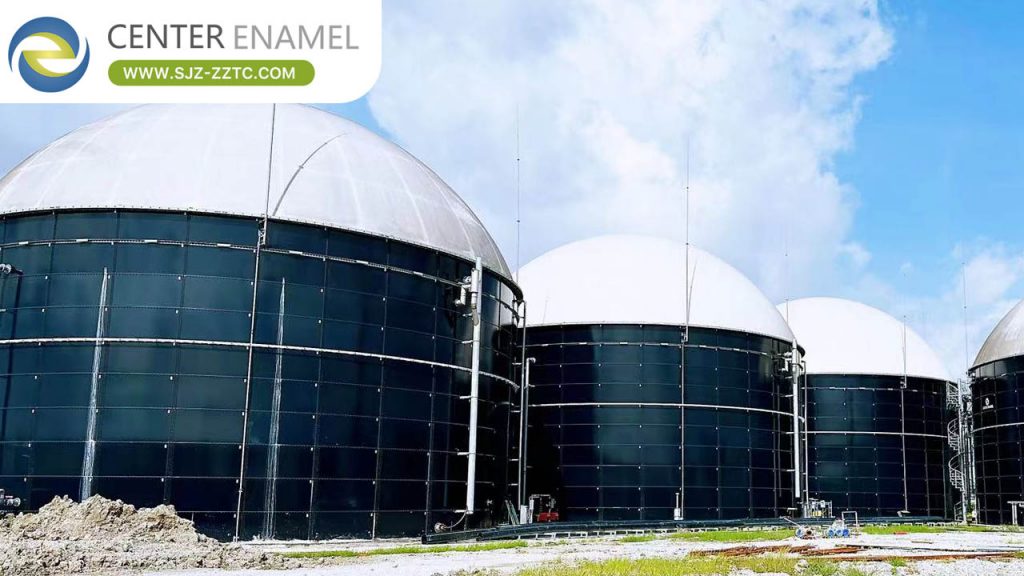
Why Livestock Wastewater Is Hard
Pig farm wastewater can carry COD ≥ 10,000 mg/L, ammonia-N ≥ 1,000 mg/L, and SS ≥ 10,000 mg/L. It is warm, putrescible, and nitrogen-rich, so a single aerobic stage is uneconomic; anaerobic digestion first removes most COD cheaply and makes biogas.
Process: UASB + AOAO
A proven train is UASB (Upflow Anaerobic Sludge Blanket) for high-rate COD removal at OLR 5–15 kg COD/m³·day, then AOAO (Anaerobic-Oxic-Anoxic-Oxic) for nitrogen and residual COD. A Beijing pig farm using UASB + AOAO took COD from ≥ 10,000 to ≤ 200 mg/L and ammonia-N from ≥ 1,000 to ≤ 80 mg/L at 580 m³/day.
| Parameter | Influent | Effluent | Removal |
| COD Cr | ≥ 10,000 mg/L | ≤ 200 mg/L | ≥99% |
| Ammonia-N | ≥ 1,000 mg/L | ≤ 80 mg/L | ≥92% |
| SS | ≥ 10,000 mg/L | ≤ 100 mg/L | ≥99% |
| BOD₅ | ≥ 8,000 mg/L | ≤ 100 mg/L | ≥99% |
Biogas Recovery
The anaerobic stage converts volatile solids to biogas at ~0.30–0.45 m³/kg COD removed. Cattle and pig manure feed CSTR (Continuous Stirred-Tank Reactor) digesters well; a cold-climate cattle farm uses CSTR with insulation to keep mesophilic 35–38°C operation stable.
Technical Considerations
Manage ammonia inhibition at high protein feeds, size equalization for flush-cycle peaks, and specify corrosion-resistant GFS tanks for the anaerobic and storage duty. USR (Upflow Solids Reactor) suits solid-heavy manure; plan digestate land application to close the nutrient loop.
How to Scope the Project
Tie sizing to herd size and manure volume, set the discharge limit, pick UASB/CSTR + aerobic, and specify tank material. A livestock count + limit sheet lets suppliers quote reactor and storage tanks accurately.
Project Case Study
Beijing 5S Pig Farm Wastewater Treatment Project. A 580 m³/day pig farm plant using UASB + AOAO (physical + biological + chemical), reducing COD from ≥ 10,000 to ≤ 200 mg/L and fecal coliforms from ≥ 5.6×10⁶ to ≤ 4.0×10³ CFU/100ml. A documented livestock wastewater project with GFS tankage.
| Project | Beijing 5S Pig Farm Wastewater Treatment |
| Location | Beijing, China |
| Industry | Livestock / Pig Farm |
| Application | Pig farm wastewater |
| Product | UASB + AOAO tanks (GFS) |
| Capacity | 580 m³/day |
| Material | Glass-Fused-to-Steel (GFS) |
| Standards | ISO 28765 |
| Status | Delivered 2020 |
About Center Enamel
Center Enamel demonstrates its industry application experience across livestock wastewater: pig farms (Beijing 5S, 580 m³/day UASB + AOAO), hoggeries (Gaopu Dashun, 300 m³/day USR + AOAO), and cattle farms (Wushenqi, cold-climate CSTR). The company supplies bolted GFS anaerobic and storage tanks engineered for high-strength, ammonia-rich, H₂S-laden manure duty—manufactured under ISO 9001 with ISO 28765 / AWWA D103 design.
Advantages and Limitations
Anaerobic-first livestock treatment recovers biogas and slashes COD 95%+, turning a liability into energy. Limits: ammonia inhibition needs management, solid-heavy manure needs USR or pre-screening, and digestate land application must be planned. GFS tanks resist the corrosive environment.
Comparison: UASB vs CSTR vs USR
| Reactor | Feed type | Strength | Note |
| UASB | dissolved COD | high-rate | granular sludge |
| CSTR | mixed slurry | robust | cold-climate ok |
| USR | solid-heavy | handles solids | livestock manure |
A livestock wastewater project pairs an anaerobic front-end (UASB/CSTR/USR) with aerobic polishing to cut COD 95%+ and recover biogas (55–65% CH₄). Specify corrosion-resistant GFS tanks and manage ammonia and digestate for a permit-compliant, energy-positive result.
Frequently Asked Questions (FAQ)
Q1: How do you treat livestock wastewater?
A: Anaerobic front-end (UASB/CSTR/USR) at 35–38°C for high-rate COD cut, then aerobic (AOAO) polishing for nitrogen and residual COD.
Q2: What COD removal is achievable?
A: ~95%+; a Beijing pig farm reached ≤ 200 mg/L from ≥ 10,000 mg/L COD using UASB + AOAO.
Q3: Can it make biogas?
A: Yes—anaerobic digestion yields ~0.30–0.45 m³/kg COD biogas at 55–65% CH₄.
Q4: Which reactor for manure?
A: UASB for dissolved COD, CSTR for mixed slurry (cold-climate ok), USR for solid-heavy manure.
Q5: What standards apply to tanks?
A: GFS tanks to ISO 28765 / AWWA D103, ISO 9001, CE/EN 1090.
Q6: What capacity is available?
A: GFS tanks from 200 m³ to 60,000 m³ for livestock and biogas duty.
Share your herd size, manure volume, and discharge limit. We will recommend a UASB/CSTR/USR + aerobic train and specify GFS tanks with standards for your livestock wastewater project.