
How to Treat Slaughterhouse Wastewater? Advanced Anaerobic Solution with Premium GFS Tanks
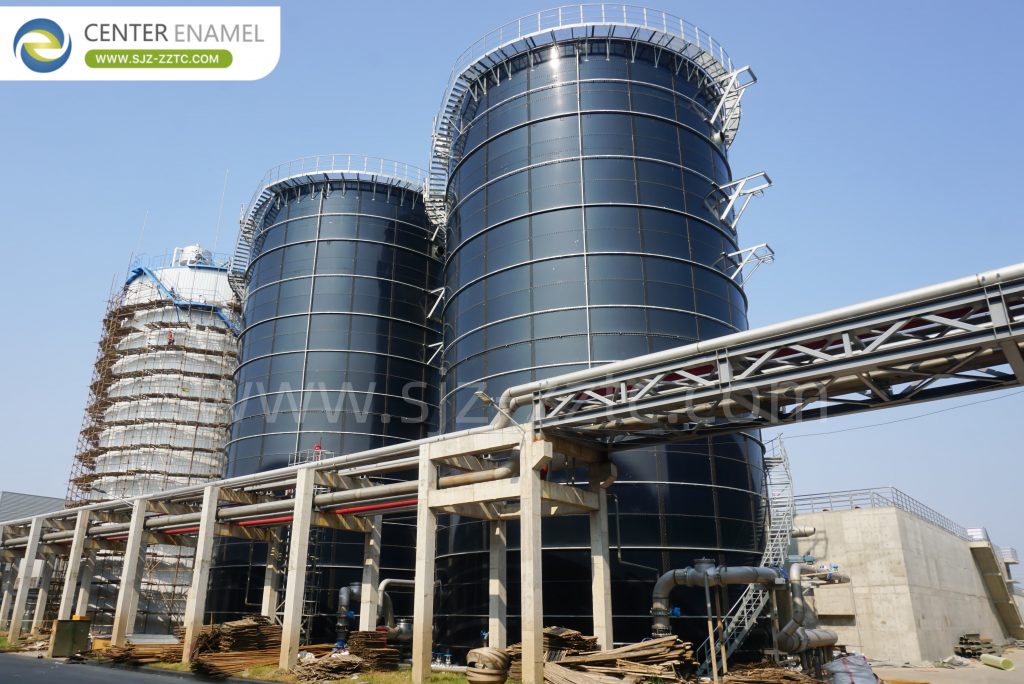
Slaughterhouse wastewater is recognized as high-concentration organic effluent containing abundant blood residues, animal fat (FOG), hair, bone fragments, soluble protein and manure leachate, characterized by ultra-high COD, BOD, suspended solids and strong putrid odor. Improper random discharge triggers river eutrophication, underground water pollution and greenhouse gas leakage, forcing global meat-processing factories to adopt standardized wastewater disposal systems.
This article analyzes drawbacks of traditional slaughterhouse wastewater treatment, elaborates the optimal full-cycle anaerobic biogas recycling solution, details four mainstream anaerobic technologies, highlights core strengths of corrosion-resistant GFS Tanks, and introduces Center Enamel’s abundant worldwide EPC experience in slaughterhouse wastewater biogas engineering projects.
Drawbacks of Conventional Slaughterhouse Wastewater Treatment Methods
Most small and medium abattoirs previously adopt single aerobic oxidation or natural lagoon storage with obvious limitations:
Single Aerobic Treatment: Requires continuous aeration with huge power consumption, high daily operational cost; excess aerobic sludge accumulates rapidly and needs frequent external disposal, unable to recover any usable energy from organic pollutants.
Open Lagoon Storage & Natural Sedimentation: Occupies massive farmland, releases large volumes of methane and foul odor into the atmosphere, pollutes surrounding soil and nearby watercourses, failing to meet strict global environmental discharge standards.
Chemical Coagulation Precipitation: Consumes large amounts of flocculant chemicals, generates massive hazardous chemical sludge with high subsequent disposal cost and secondary pollution risk.
Compared with above passive disposal modes, the integrated pretreatment + anaerobic digestion + post-aerobic polishing solution supported by GFS Tanks becomes the industry’s best economical and eco-friendly treatment route, turning harmful wastewater into renewable biogas and organic fertilizer.
Best Full-cycle Treatment Solution for Slaughterhouse Wastewater
The optimal solution is divided into three core stages: multi-stage pretreatment, enclosed anaerobic fermentation inside GFS Tanks, and final aerobic advanced polishing to achieve qualified effluent discharge plus complete resource recycling:
Stage 1: Multi-step Pretreatment (Solid & Fat Separation)
First, coarse and fine self-cleaning rotary screens remove hair, bone scraps and large solid impurities; followed by dissolved air flotation (DAF) equipment to separate floating grease and emulsified blood residues, reducing over 95% of FOG and suspended solids to avoid subsequent anaerobic tank blocking and scaling. Separated solid residues can be mixed into anaerobic feedstock or processed into feed additives.
Stage 2: Core Anaerobic Digestion inside Sealed GFS Tanks
Pre-treated liquid wastewater is pumped into airtight anti-corrosion GFS Tanks to complete four-phase oxygen-free anaerobic degradation: hydrolysis → acidification → acetogenesis → methanation. Organic pollutants are decomposed into methane-rich crude biogas (55%~70% methane content); COD removal rate reaches 70%~85% and drastically cuts downstream aerobic treatment load and power cost. After desulfurization and dehydration, purified biogas supplies factory boiler heating, workshop power generation or domestic fuel for staff dormitories. Fermentation digestate from tank bottom is dewatered into high-quality organic fertilizer for crop and fruit planting.
Stage 3: Post-aerobic Advanced Polishing
Anaerobic outlet wastewater flows into aerobic tanks for further nitrification and phosphorus removal; after secondary sedimentation and disinfection filtration, final treated effluent meets local emission criteria and can be recycled for workshop floor cleaning and green irrigation, realizing zero liquid discharge partially.
Four Mature Anaerobic Technologies Matching Diversified Slaughterhouse Projects
Center Enamel develops four differentiated anaerobic processes fully compatible with modular GFS Tanks, flexibly selected based on abattoir daily wastewater volume, organic concentration and factory site space:
CSTR (Continuously Stirred Tank Reactor): Equipped with internal mechanical stirring inside matched GFS Tanks, fully mixes high-fat high-protein slaughter wastewater to prevent tank crust and sediment accumulation; excellent anti-shock load capacity, ideal for large integrated central slaughter plants with over 1000 tons daily wastewater output.
UASB (Upflow Anaerobic Sludge Blanket): Depends on high-activity granular sludge bed to degrade dissolved organics with low power consumption, stable running performance; perfect for medium-sized slaughterhouses after complete solid-liquid pretreatment of wastewater.
USR (Upflow Solid Reactor): Compact layout without internal stirring parts, low construction and maintenance cost, outstanding anti-clogging ability; suitable for small-scale rural scattered slaughterhouses with mixed high-solid wastewater and limited investment budget.
IC (Internal Circulation Reactor): High-efficiency internal circulation anaerobic equipment with 3~5 times higher processing capacity than conventional reactors, small land occupation; customized for super-large cross-regional centralized meat-processing industrial parks with ultra-high organic load wastewater.
Core Superiorities of GFS Tanks as Anaerobic Core Containment for Slaughter Wastewater
Slaughter wastewater digestion environment contains corrosive organic acid, hydrogen sulfide gas and high-concentration grease; ordinary concrete or carbon steel tanks are prone to cracking and corrosion leakage, while GFS (Glass-Fused-to-Steel) Tanks own irreplaceable comprehensive advantages:
Superior Anti-corrosion Performance: Glass enamel is high-temperature fused onto steel plate to form inert seamless coating, resisting erosion from acid, alkali, hydrogen sulfide and animal fat, adapting tropical high-humidity and coastal salt-spray environment with over 30-year design service life.
Perfect Gas Tightness: Bolted assembly with specialized anti-leakage sealing strips ensures full methane capture inside tanks, eliminating fugitive odor and greenhouse gas escape to maximize biogas recovery efficiency.
Modular Flexible Installation: Standard enamel steel panel bolt connection without field welding, fast construction; tank volume can be freely expanded or split as slaughter factory production capacity rises, greatly saving later reconstruction investment.
Smooth Inner Enamel Surface: Effectively reduces grease and sludge adhesion on tank wall, lowering regular tank cleaning frequency and long-term maintenance expenditure.
Full International Certification: All products pass ISO, AWWA international quality certification, complying with global food and environmental protection construction codes. Supporting auxiliary equipment including double membrane gas holder, solid-liquid separator and biogas torch system forms complete closed biogas recycling system together with GFS Tanks.
Center Enamel’s Rich Global EPC Experience on Slaughterhouse Wastewater Biogas Projects
As a professional global turnkey EPC contractor specializing in slaughterhouse and food wastewater anaerobic treatment for over 30 years, Center Enamel accumulates abundant cross-continental project experience across Southeast Asia, Europe, North America and Oceania:
One-stop Full EPC Service: Covers customized project design, self-owned GFS Tanks manufacturing, cross-border logistics shipment, on-site installation, system commissioning and local operator technical training.
Localized Parameter Optimization: Adjust CSTR/UASB/USR/IC process parameters according to local climate, wastewater organic composition and national environmental laws to lift biogas yield and project investment return rate.
Verified Global Classic Cases:
Case1: Biogas Project in Canada
Tank dimensions: φ8.4m x 7.2m (H) (2 units)
Total volume: 798 m³
Completion year: 2024
Case2: Biogas Project in Sweden
Tank dimensions: φ19.11m x 19.2m (H) (1 unit)
Total volume: 5,510 m³
Completion year: 2024
Standardized Professional Installation Team: Adopts hydraulic jacking top-down tank construction to improve narrow abattoir site safety; all finished tanks pass strict air tightness and anti-corrosion detection before project handover.
Slaughterhouse wastewater treatment has shifted from passive pollution control to active circular resource recycling worldwide, and the pretreatment + GFS Tanks-based anaerobic digestion + post-aerobic polishing solution becomes the most cost-effective sustainable choice. With four mature optional anaerobic technologies and durable anti-corrosion GFS equipment, Center Enamel’s tailor-made EPC solutions perfectly fit varied abattoir wastewater characteristics and regional climatic conditions. These projects effectively eliminate slaughterhouse organic pollution, turn waste into clean biogas energy and organic fertilizer, cut factories’ fossil fuel purchase and waste disposal cost, helping global meat industry achieve low-carbon circular development and meet ever-stricter environmental regulatory requirements.