
How to Use Fruit and Vegetable Waste? Transforming Organic Scraps into Renewable Biogas
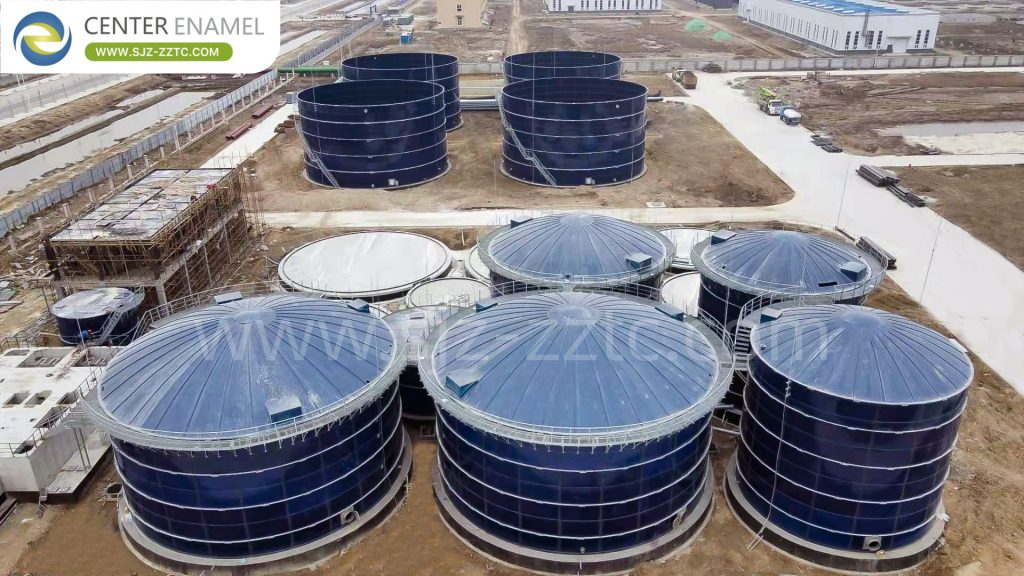
Fruit and vegetable waste is one of the most abundant organic waste streams globally, yet it remains significantly underutilized. Studies show that fruit and vegetable waste has the highest biogas yield potential among common organic feedstocks, reaching up to 0.5814 m³ CH₄ per kg of volatile solids (VS) . This means that the peels, pomace, pulp, and trimmings discarded daily from markets, processing facilities, and kitchens represent not just a waste problem, but a substantial renewable energy opportunity. This guide explores how to use fruit and vegetable waste through anaerobic digestion, transforming environmental burdens into clean energy and valuable fertilizer.
Understanding the Challenge: Sources and Scale of Fruit and Vegetable Waste
Globally, approximately one-third of food produced—about 1.3 billion tons annually—is lost or wasted, with fruit and vegetable wastes accounting for nearly 44% of this total . This waste originates from multiple points along the supply chain. Agricultural harvesting produces bruised, misshapen, or surplus produce that never reaches markets. Wholesale and retail markets discard unsold fruits and vegetables daily due to shelf-life limitations . Food processing facilities generate substantial peel, pomace, and pulp residues during juice, canning, and freezing operations. Households and food service establishments contribute trimmings and leftovers.
The disposal of this waste through landfilling creates serious environmental problems. The high moisture content of fruit and vegetable waste—often exceeding 90%—generates contaminated leachate that can pollute groundwater . Decomposing organic matter releases methane, a greenhouse gas over 25 times more potent than carbon dioxide. Open dumping creates odor issues and attracts pests, posing public health risks. These challenges make finding sustainable ways to use fruit and vegetable waste an urgent priority.
How Fruit and Vegetable Waste Converts to Biogas
The conversion of fruit and vegetable waste into biogas occurs through anaerobic digestion (AD)—a natural biological process that breaks down organic matter in an oxygen-free environment. This process unfolds through four distinct biochemical phases :
Hydrolysis: Microorganisms secrete enzymes that decompose complex organic matter—cellulose, starch, and proteins—into smaller soluble molecules like sugars and amino acids .
Acidogenesis (Acidification): Acid-forming bacteria convert these soluble molecules into volatile fatty acids, alcohols, hydrogen, and carbon dioxide .
Acetogenesis: The intermediate products are further transformed into acetic acid, hydrogen, and carbon dioxide—the primary precursors for methane production .
Methanogenesis: Methanogenic archaea convert these substrates into biogas, which typically contains 55–70% methane (CH₄) and 30–45% carbon dioxide .
The resulting biogas is a clean, renewable energy source suitable for electricity generation, heating, and cooking applications. Studies confirm that fruit and vegetable waste demonstrates excellent biogas yield potential, with one study showing 720 L of biogas and 436 L of methane per kg of volatile solids when co-digested with dairy cattle wastewater .
The CSTR Process: Core Technology for Biogas Production
To effectively use fruit and vegetable waste for biogas production on a commercial scale, the Continuous Stirred-Tank Reactor (CSTR Process) is a proven and efficient technology. In a CSTR system, feedstock and anaerobic microorganisms are continuously or semi-continuously fed into a sealed, heated tank and maintained in a thoroughly mixed state through mechanical stirring .
This constant agitation ensures uniform temperature distribution throughout the digester, prevents the formation of a floating scum or settling crust layer, and maximizes contact between microorganisms and organic matter . Research has demonstrated that the CSTR Process is particularly effective for fruit and vegetable waste, achieving specific methane production rates of 0.459 L CH₄/L·d and COD removal rates of up to 84% . The process's strong resistance to shock loads makes it highly adaptable to the seasonal variations and diverse organic waste compositions common in fruit and vegetable waste streams.
Center Enamel: Your One-Stop Biogas Project Solutions Provider
For organizations and governments seeking to use fruit and vegetable waste for biogas production, Center Enamel stands as a comprehensive partner with over 36 years of experience. As the largest manufacturer of Glass-Fused-to-Steel (GFS) tanks in Asia, Center Enamel delivers complete biogas project solutions from initial concept to full operation .
Premium GFS Tanks for Biogas Applications
At the heart of any biogas project are durable storage and digestion vessels. Center Enamel's GFS Tanks are manufactured using high-temperature glass-fused-to-steel technology, where steel panels are fired at temperatures between 820°C and 930°C, creating a chemically inert and inorganic bond . This process delivers a tank that combines the strength of steel with exceptional corrosion resistance, making it ideal for the highly acidic and corrosive environment of anaerobic digestion.
The enamel coating withstands organic acids and hydrogen sulfide generated during the process, ensuring a service life exceeding 30 years with minimal maintenance . The modular bolted design enables rapid on-site assembly without field welding, significantly shortening construction timelines. GFS Tanks are specifically engineered to withstand diverse climate conditions, including high humidity, tropical heat, and coastal salt exposure .
Double Membrane Roof for Biogas Capture and Storage
The Double Membrane Roof is a state-of-the-art cover solution specifically designed for biogas applications. This system provides optimal air-tightness essential for capturing and storing the produced biogas . It offers significant cost advantages by reducing roof costs and minimizing required floor area. The double-membrane gas cap also serves as an integrated biogas holder, eliminating the need for separate ground-mounted gas holder foundations, further reducing project costs and simplifying system design .
Complete Biogas Solutions Package
Beyond GFS Tanks and Double Membrane Roofs, Center Enamel supplies a comprehensive range of auxiliary equipment to ensure project success:
Gas Holders for efficient biogas storage
Solid-Liquid Separators for digestate processing into fertilizer fractions
Torch Systems for controlled flaring of excess biogas during maintenance
Dehydration and Desulfurization Tanks to upgrade raw biogas by removing moisture and corrosive hydrogen sulfide
Screw Sludge Dewatering Machines for reducing sludge volume and moisture content
Full EPC Services and Customized Design
Center Enamel provides turnkey EPC (Engineering, Procurement, and Construction) services covering project design, equipment production, transportation, installation, system commissioning, operator training, and long-term after-sale support. With over 200 independent enamel patents and strict compliance with international standards including AWWA D103, ISO 28765, and CE/EN 1090, Center Enamel ensures quality and reliability .
Environmental and Economic Benefits of Biogas Conversion
Using fruit and vegetable waste for biogas production delivers comprehensive benefits. Environmentally, it reduces landfill dependency, curbs soil and water pollution, and cuts greenhouse gas emissions by capturing methane that would otherwise escape from decomposing waste . The digestate byproduct can be processed into high-quality organic fertilizer, closing the agricultural loop and reducing reliance on synthetic inputs . Energy generated from biogas reduces dependence on imported fossil fuels and provides decentralized renewable power.
Economically, research confirms that fruit and vegetable waste is the most viable feedstock for anaerobic digestion, with net profits of ₹14,329.54 per batch and discounted payback periods of just 2.33 batches . The low installation costs and rapid construction of GFS Tanks further enhance project economics.
Conclusion
Transforming fruit and vegetable waste into biogas through anaerobic digestion represents one of the most sustainable and economically viable ways to address organic waste challenges. The science is well-established: fruit and vegetable waste delivers superior biogas yields, and proven technologies like the CSTR Process and durable GFS Tanks make commercial-scale implementation both practical and profitable. Center Enamel provides complete biogas solutions—from engineering design and premium GFS Tanks to full EPC services—that help governments and industries convert waste into a valuable renewable energy resource.
Frequently Asked Questions (FAQs)
1. Is fruit and vegetable waste suitable for biogas production without pre-treatment?
While fruit and vegetable waste can be digested directly, some pre-treatment is often beneficial. Size reduction through chopping or shredding increases the surface area for microbial action and improves biogas yields. Research has demonstrated that optimizing particle size can significantly enhance methane production, making pre-treatment a recommended practice for maximizing system efficiency .
2. Can fruit and vegetable waste be co-digested with other organic materials?
Yes, co-digestion is highly recommended. Fruit and vegetable waste typically has low nitrogen content and can be acidic. Co-digesting it with nitrogen-rich substrates like livestock manure or food processing wastewater balances the carbon-to-nitrogen ratio, stabilizes pH, and can increase biogas yields by up to 20% compared to mono-digestion .
3. What happens to the solid residue after biogas production?
The solid residue, known as digestate, is a nutrient-rich byproduct that can be processed into high-quality organic fertilizer. After separation, the solid fraction can be composted or directly applied to agricultural land, while the liquid fraction serves as a liquid fertilizer. This closes the nutrient loop and adds significant economic value to the biogas project .