
How We Solve High-Solids Wastewater Challenges as Your Biogas Project Contractor
The competitive landscape shows divergence, with leading companies building integrated service capabilities through technical integration and capital operations, and industry concentration gradually increasing. Chinese companies continue to consolidate their advantages in mid-tier equipment exports. International giants target high-end customers and complex industrial wastewater markets, while local players occupy the mid- to low-end and industrial park centralized treatment markets with service responsiveness and cost advantages.
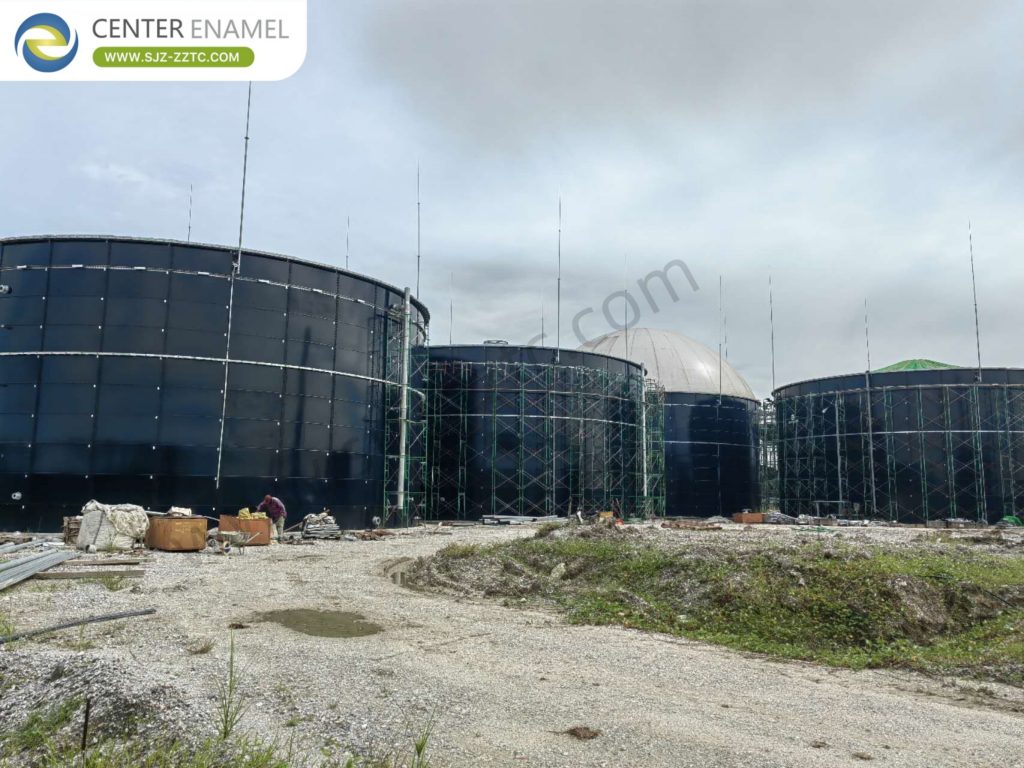
In the anaerobic process segment, UASB, EGSB, and IC anaerobic reactorswith advantages of high loading rates, small footprints, and stable operationare widely used in high-concentration organic wastewater pretreatment in food processing, pharmaceutical fermentation, alcohol brewing, chemical, and other industries. These reactors use steel tank shells, and their corrosion resistance and gas-tightness directly determine long-term operational stability. This is precisely why the role of an experienced Biogas Project Contractor has become criticalthe tank shell is no longer a commodity but a determinant of project lifespan.
Where USR Technology Fits Best
Selecting the right process is the first responsibility of any biogas project contractor. The USR process is a dedicated solution for agricultural high-solids wastewater, primarily suitable for large-scale livestock manure, livestock soaking water, agricultural straw leachate, and livestock slaughterhouse high-solids wastewater.
For high-suspended-solids, high-organics, high-impurity wastewater conditions, it is the core process for rural livestock pollution treatment and agricultural organic waste resource utilization. It suits township decentralized wastewater treatment and small to medium-sized agricultural enterprise wastewater treatment. It can serve as the primary process for large livestock base manure resource recovery, combining wastewater treatment with biogas recovery. Additionally, it is suitable for various high-solids, easily clogged, difficult-to-treat organic wastewater pretreatment, with superior suitability in agricultural environmental applications compared to other anaerobic processes.
Understanding the Economics of Food Waste Treatment
Beyond agriculture, food waste offers a useful lens on project economics. O&M costs are moderate to high, but resource recovery benefits are substantialgood overall economics. Pretreatment oil removal equipment and three-phase separators have high capital investment, but recovered oil can be soldbiodiesel feedstock oil has good market value, providing core revenue for food waste treatment. Stable biogas from anaerobic digestion can be used for power generation or heating, offsetting energy costs. The CSTR process has simple equipment with no precision wear partslow maintenance costs.
High-salt, high-oil conditions require premium corrosion protection such as GFS tanks, with higher initial investment but long service life and low maintenance. Chemical consumption is mainly flocculants and desulfurizersmoderate expenditure. Oil and salt cause pipe fouling and membrane pollution, requiring periodic cleaningmoderate labor requirements. Overall resource recovery revenues from oil sales, biogas energy, and digestate fertilizer generally cover O&M costsgood overall economics. A qualified biogas project contractor should be able to model these returns before construction begins.
Food Waste Treatment Cost and Revenue Profile
| Cost / Revenue Item | Level | Notes |
| Pretreatment Equipment | High CAPEX | Oil removal, three-phase separators |
| GFS Tank Corrosion Protection | Higher CAPEX | Long life, low maintenance |
| Chemical Consumption | Moderate | Flocculants, desulfurizers |
| Cleaning Labor | Moderate | Oil and salt fouling |
| Recovered Oil Sales | Revenue | Biodiesel feedstock value |
| Biogas Energy | Revenue | Power generation or heating |
| Digestate Fertilizer | Revenue | Agricultural reuse |
Bangladesh Poultry Farm Manure Recovery Success
Theory becomes credible when backed by measurable results. In Bangladesh, a large-scale poultry farm manure resource recovery project targets daily treatment of 47 tons. Influent COD, BOD, and SS reach as high as 50,000 mg/L, 25,000 mg/L, and 50,000 mg/L respectively. After CSTR + UASB anaerobic treatment, all three parameters are reduced to below 200 mg/L, 100 mg/L, and 100 mg/Leffluent fully compliant with local environmental discharge standards.
The project produces approximately 4,900 m³ of biogas daily. Each cubic meter of biogas can generate 2 kWh of electricity, yielding daily power generation of 9,800 kWhsimultaneously achieving pollutant reduction and clean energy recovery. This stands as a benchmark project for livestock waste recycling in Southeast Asia.
Bangladesh Poultry Farm Project Performance
| Parameter | Influent | Effluent | Reduction |
| COD | 50,000 mg/L | <200 mg/L | >99.6% |
| BOD | 25,000 mg/L | <100 mg/L | >99.6% |
| SS | 50,000 mg/L | <100 mg/L | >99.8% |
| Biogas Production | 4,900 m³/day | ||
| Power Generation | 9,800 kWh/day |
Overseas Installation Coverage and Delivery Capability
Delivering projects like these across the world requires real field capability. Center Enamel is the pioneer of Chinese GFS equipment exports, with installation service coverage across over 100 countries and regionspossessing full delivery capability across climates, regulations, and geographies.
Overseas coverage includes Southeast Asia (Vietnam, Thailand, Malaysia, Indonesia, Cambodia, Bangladesh, Nepal, etc.), Africa (Ghana, South Africa, Mali, Guinea, Zambia, Kenya, Pakistan, etc.), Europe and the Americas (Sweden, USA, Russia, etc.), the Middle East, and Latin Americaadaptable to tropical rainy high-salt spray, high-altitude mountainous, Nordic severe cold, and high-standard European and American facility conditions.
The company uses a dual-service model of "own cross-border construction teams + overseas local agent coordination"whether clients are in developed countries or remote developing regionsproviding one-stop services including on-site survey, on-site installation, process commissioning, and operator training. Complete coverage spans biogas engineering, municipal wastewater, industrial wastewater, livestock manure, and drinking water storagepossessing the full delivery capability to undertake large-scale tank farm projects in any country worldwide.
24/7 After-Sales and Full-Lifecycle Support
Project delivery is only the beginning of the relationship. The after-sales team adheres to the service principles of rapid response, professional efficiency, and full-cycle supportproviding 24/7 full-lifecycle O&M support to global clients.
Standard remote services include fault diagnosis, process parameter adjustment, and tank anti-corrosion maintenance guidance. For domestic and long-distance overseas clients, overseas technical service personnel can be dispatched for on-site inspection, annual inspection, and equipment refurbishment as needed. The team also maintains long-term client feedback tracking mechanismsregularly collecting tank and anaerobic equipment operational data to continuously optimize product structure and support processes.
Supporting external technical expert teams provide specialized support for anaerobic process commissioning, biogas upgrading O&M, and wastewater upgrade and retrofit projectsensuring long-term stable operation of domestic and overseas projects, continuously improving global client satisfaction and repurchase rates.
Aluminum Alloy Trough Deck Roof for Water Storage
Completing the tank system, the Aluminum Alloy Trough Deck Roof is a cost-effective economical tank cover solution for clean water and wastewater storage scenarios, primarily designed for drinking water, production wastewater, and firewater reserve tanks, balancing practicality and cost advantages.
The main body is integrally formed from anti-corrosion aluminum alloy plates, paired with aluminum support trusses. Its lightweight design imposes less load on the tank foundation, reducing civil construction investment. A naturally formed dense oxide protective layer on the surface resists rain and mild wastewater corrosion, withstands outdoor sun and rain exposure, and effectively blocks wind, rain, insects, fallen leaves, and odor volatilization, protecting water quality by preventing dust and debris from falling in and causing secondary contamination.
The flat roof structure is neat and orderly, allowing installation of maintenance walkways, guardrails, vents, and level monitoring ports on top, facilitating daily inspection and equipment maintenance. The simple sealing structure enables straightforward installation with short construction timelines, and virtually eliminates the need for anti-corrosion painting maintenance, resulting in extremely low operational costs. It is suitable for various small, medium, and large atmospheric pressure water storage tanks, and has been widely implemented in waterworks clear water tanks, industrial circulating water tanks, park firewater tanks, and domestic wastewater temporary storage facilities.
Facing high-solids wastewater that keeps clogging your existing system? Share your project details with us today and our engineers will design a treatment train built around your feedstock.
From first site survey to long-term O&M, get in touch with Center Enamel for a complete biogas project delivered by a contractor with 30,000+ installations worldwide.
FAQ
What does a Biogas Project Contractor handle?
A Biogas Project Contractor manages design, equipment manufacturing, installation, commissioning, and after-sales servicedelivering high-solids wastewater treatment and biogas recovery under single-source accountability.
Which wastewater streams suit USR technology?
USR suits high-solids agricultural wastewater such as livestock manure, slaughterhouse waste, and straw leachate. It resists clogging and operates with flocculent sludgeno granular sludge cultivation needed.
Does Center Enamel serve projects outside China?
Yes. Center Enamel has installed systems in 100+ countries with 30,000+ projects, supported by cross-border construction teams and local agent networks for full on-site delivery.