
IC Anaerobic Reactor for Brewery Wastewater: Advanced Treatment & Energy Recovery Solutions
Breweries generate significant volumes of wastewater characterized by high organic loads, suspended solids, and variable pH levels. Efficient treatment of this wastewater is critical not only for regulatory compliance but also for ensuring sustainable operations. Center Enamel presents its advanced IC anaerobic reactor—a state-of-the-art solution engineered to optimize the treatment of brewery wastewater through enhanced anaerobic digestion processes.
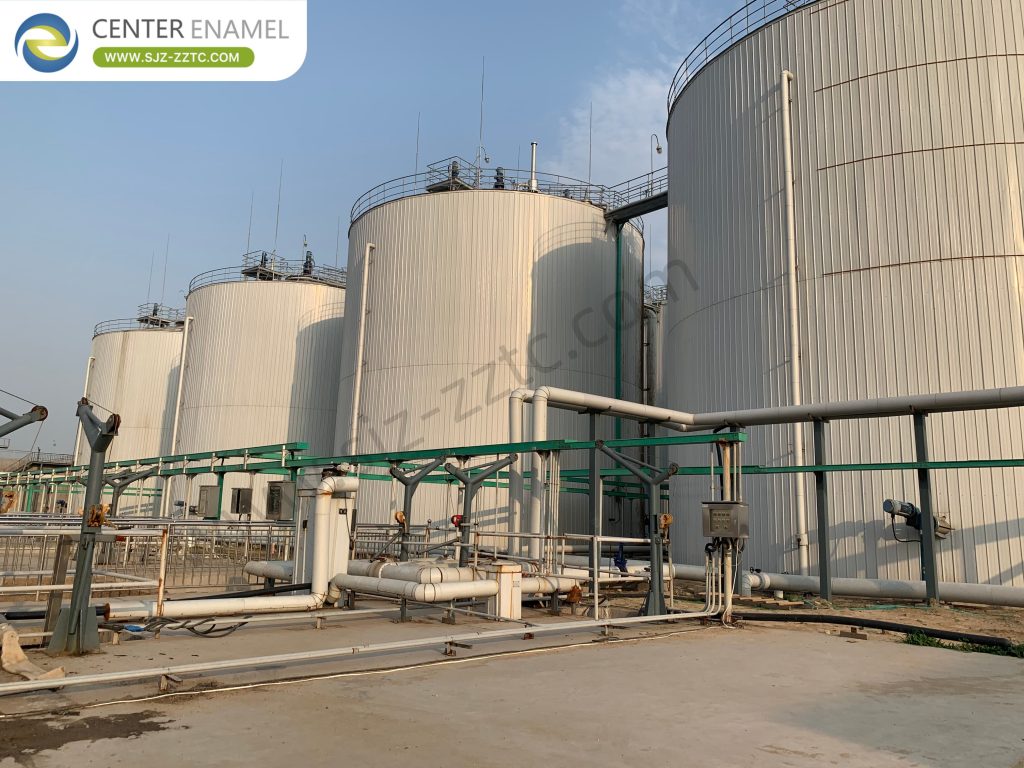
The IC (Internal Circulation) anaerobic reactor is an advanced biological treatment system that employs anaerobic digestion to break down complex organic compounds. In the context of brewery wastewater, the reactor is designed to efficiently reduce high concentrations of Chemical Oxygen Demand (COD) and Biochemical Oxygen Demand (BOD), while simultaneously generating biogas as a renewable energy byproduct. The reactor’s design leverages internal circulation to maintain optimal mixing and microbial activity, ensuring a robust and efficient treatment process.
Key Features and Operational Principles
1. Optimized Microbial Environment
The IC reactor is engineered to create an ideal environment for anaerobic microorganisms. By maintaining a consistent internal circulation, the reactor ensures uniform distribution of nutrients and substrates, which enhances microbial activity. This promotes the effective degradation of organic compounds found in brewery wastewater, resulting in a significant reduction in pollutants.
2. Enhanced Mixing and Retention Time
One of the primary advantages of the IC reactor is its ability to provide enhanced mixing without the need for external mechanical agitators. The design facilitates continuous recirculation, which increases the contact time between the wastewater and the active biomass. This leads to improved degradation efficiency and a higher biogas yield.
3. Energy Recovery Potential
The anaerobic digestion process in the IC reactor generates biogas, predominantly composed of methane, which can be harnessed as a renewable energy source. For breweries, this offers the dual benefit of reducing waste treatment costs and providing a supplementary energy source that can be used on-site or fed back into the grid, contributing to overall energy sustainability.
4. Compact and Modular Design
The modular construction of the IC reactor allows for scalability and flexibility. This makes it an attractive option for breweries of varying sizes—from craft brewers to large industrial operations. Its compact design also minimizes the required footprint, a critical factor for facilities with limited space.
5. Reduced Sludge Production
Compared to conventional aerobic treatment systems, the IC anaerobic reactor typically produces less residual sludge. This reduction not only simplifies sludge handling and disposal but also lowers long-term operational costs associated with waste management.
Performance Comparison: IC Reactor vs. Traditional Treatment
| Parameter | IC Anaerobic Reactor | Conventional Aerobic System | Traditional UASB Reactor |
| COD Removal Efficiency | High (85% - 95%+) | Moderate (80% - 90%) | Moderate to High (75% - 85%) |
| Volumetric Loading Rate | Very High (15–30 kg COD/m³·d) | Low to Moderate (1–5 kg COD/m³·d) | Moderate (5–10 kg COD/m³·d) |
| Energy Footprint | Net Energy Producer (Biogas) | High Energy Consumer (Aeration) | Low to Moderate Energy |
| Footprint Requirements | Compact / Small | Large | Moderate |
| Sludge Production | Minimal | High | Moderate |
Benefits for Brewery Wastewater Treatment
Improved Treatment Efficiency: Breweries produce wastewater with high levels of organic matter due to the use of malt, hops, yeast, and other ingredients. The IC anaerobic reactor’s enhanced mixing and optimized retention time allow for a more complete breakdown of these substances, resulting in lower effluent COD and BOD levels.
Cost-Effective Operation: The reactor’s design minimizes the need for mechanical components and reduces energy consumption compared to traditional treatment methods. The ability to recover energy from biogas generation further offsets operational expenses.
Environmental Compliance and Sustainability: Adopting an IC anaerobic reactor helps breweries meet increasingly stringent environmental regulations, minimizing environmental impact while enhancing corporate sustainability credentials.
Enhanced Operational Reliability: The robust design of the IC reactor ensures consistent performance even in the face of variable wastewater flows and compositions—common challenges in the brewing process.
Project Case Study: Industrial Brewery Implementation
Project Overview
Client: Major Commercial Brewing Facility
Objective: Treat high-strength production wastewater, reduce high COD/BOD levels, and meet local municipal discharge standards while harnessing renewable energy.
Location: International Industrial Park
Scope of Work
Comprehensive wastewater characterization and treatability assessment.
Custom design, engineering, and manufacturing of a high-rate IC Anaerobic Reactor system.
Turnkey delivery including Glass-Fused-to-Steel (GFS) tank structures, internal circulation piping, three-phase separators, and biogas flare systems.
On-site installation supervision, system commissioning, and operator training.
Technologies Used
Center Enamel IC Anaerobic Reactor featuring a two-stage vertical internal circulation layout.
Glass-Fused-to-Steel (GFS) Bolted Tanks providing superior corrosion resistance against organic acids.
Automated biogas collection, desulfurization, and utilization modules.
Project Results & Data
COD Removal Rate: Consistently achieved >90% reduction from an influent COD of 12,000 mg/L.
Biogas Generation: Produced an average of 0.45m³ of biogas per kg of COD removed, utilized directly for plant steam boilers.
Footprint Reduction: Saved over 40% in spatial footprint compared to conventional expansion alternatives.
Client Testimonial:
"Partnering with Center Enamel for our brewery wastewater upgrade has transformed an expensive compliance challenge into a net-energy asset. The IC anaerobic reactor handles our seasonal production spikes effortlessly, and the build quality of their GFS tanks is exceptional."
Integration and Customization by Center Enamel
Center Enamel leverages decades of expertise in advanced storage and treatment solutions to deliver IC anaerobic reactors that are customized to meet the unique needs of each brewery. Our approach includes:
Tailored Engineering Solutions: Every brewery has distinct wastewater characteristics. We conduct thorough assessments to design reactors that match the specific organic load and flow rates of your facility.
Turnkey Installation and Support: Our comprehensive service includes system design, installation, commissioning, and ongoing technical support, ensuring peak operating efficiency from day one.
Future-Proof Scalability: The modular nature of our IC reactors means they can be easily expanded as your production grows, ensuring long-term adaptability.
Commitment to Quality and Innovation: With a focus on sustainability and advanced engineering, Center Enamel continuously refines its technology to deliver high-performing, environmentally responsible solutions.
Contact Center Enamel today to discover how our innovative IC anaerobic reactor solutions can transform your brewery’s wastewater management system and contribute to a greener, more sustainable future.
Frequently Asked Questions (FAQ)
1. What makes brewery wastewater difficult to treat?
Brewery wastewater contains high concentrations of soluble organic matter (measured as high COD and BOD) originating from malt, hops, yeast, and sugars, alongside fluctuating pH levels and variable daily flow rates.
2. How does the Internal Circulation (IC) reactor differ from a standard UASB reactor?
While both are anaerobic systems, an IC reactor operates essentially as two UASB reactors stacked vertically. It utilizes an internal circulation loop driven naturally by biogas lift, allowing it to handle significantly higher volumetric organic loading rates and achieve better biomass-wastewater contact in a much smaller footprint.
3. Can the biogas produced by the IC reactor be used on-site?
Yes. The biogas generated during anaerobic digestion is rich in methane and can be scrubbed and redirected to power plant boilers, run combined heat and power (CHP) generators, or offset thermal energy needs within the brewing process.
4. Why does Center Enamel use Glass-Fused-to-Steel (GFS) for IC reactors?
GFS tanks combine the structural strength of steel with the chemical inertness and corrosion resistance of glass fused at high temperatures. This creates an impermeable barrier against corrosive organic acids produced during anaerobic digestion, ensuring long asset life and minimal maintenance.