
Why Is the IC Process the Smart Choice for Brewing Wastewater Treatment Projects?
Brewery wastewater is deceptively simple: highly biodegradable, yet so concentrated and variable that it taxes conventional treatment plants to their limits. Owners face a three-sided squeeze-stricter discharge rules, rising energy and chemical costs, and pressure to run leaner teams. The way out is not more equipment bolted onto an old layout, but a single partner who designs the whole process, builds it, and keeps it performing. That is the value of a brewing wastewater treatment project EPC contractor like Center Enamel, whose IC process expertise and global delivery network turn brewery effluent from a cost burden into a recoverable resource.
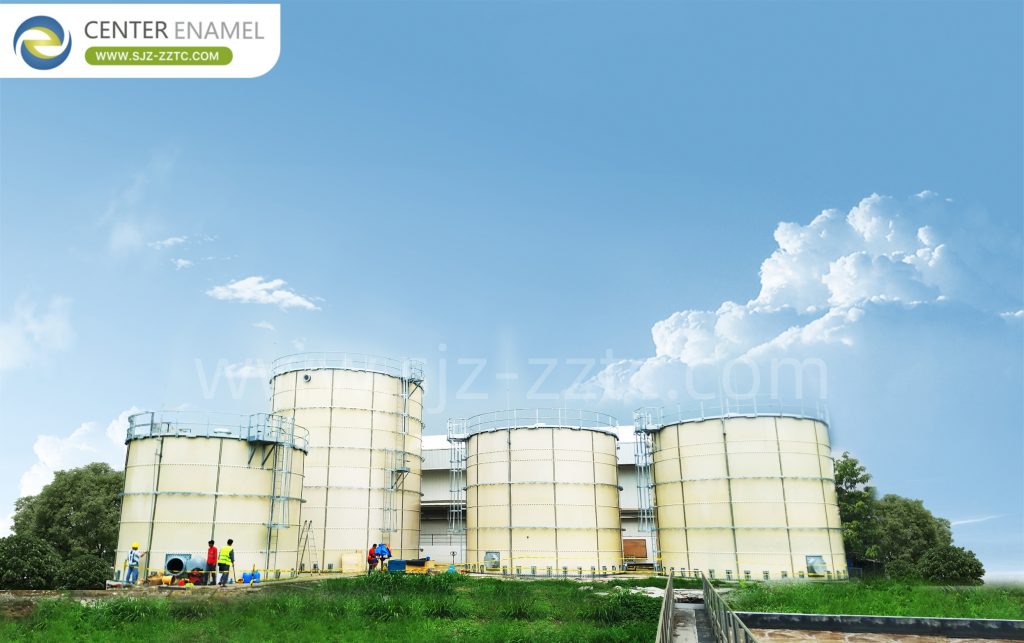
Industrial Wastewater's Three-High Problem
Before choosing a solution, it helps to name the enemy. The core challenges of industrial wastewater treatment center on the "three highs"-high difficulty, high cost, and high energy consumption. Wastewater from new energy, chemical and pharmaceutical industries is complex in composition, loaded with numerous characteristic pollutants that traditional processes struggle to remove. Chinese equipment suppliers hold significant price advantages in the mid-to-low-end segment, which keeps capital costs competitive but does nothing to solve operating economics. On top of that, the industry faces continuous technological upgrade pressure from increasingly stringent emission standards, plus new demands for digitalization and low-carbon transformation that push owners to refine how they manage operations. The message is simple: a treatment plant must now be designed for total cost of ownership, not just first price.
Why the IC Process Leads High-Strength Wastewater Treatment
If the challenge is clear, so is the technology answer. The IC (internal circulation) process is engineered precisely for high-concentration, high-flow soluble industrial organic wastewater, covering brewery, beverage, starch, pharmaceutical, chemical and papermaking streams. It excels where land is scarce and treatment efficiency is paramount-exactly the conditions of large industrial wastewater facilities and centralized industrial park WWTPs. As a primary process, the IC reactor achieves rapid COD/BOD removal even when pollutant concentrations fluctuate sharply, making it the preferred anaerobic process for modern high-efficiency industrial wastewater treatment. One boundary deserves honesty: the IC process suits soluble loads, not high-solids, high-viscosity streams-which is why the best EPC contractors match each wastewater profile to the right reactor rather than forcing a single technology.
Brewing Wastewater Economics: Lower Costs, Recoverable Value
These strengths translate directly into the economics that matter to breweries. Operation and maintenance costs for a well-designed brewing wastewater treatment plant are moderate to low, with stable, controllable processes and resource recovery offsetting expenses. The system relies on simple, durable equipment with no high-end precision wear parts, so failure rates and maintenance costs stay low. Because brewery effluent is highly biodegradable, the plant needs only small amounts of flocculants and pH adjusters-no large quantities of oxidants or detoxification agents-keeping chemical spend minimal. Biogas produced steadily by the anaerobic stage can be used directly for plant heating and equipment insulation, significantly reducing energy costs. Labor requirements are low: process parameters need adjustment mainly during peak season when load fluctuates. Even the "waste" earns money-spent grain, digestate solids and liquid fertilizer can be sold, further improving overall economics.
| Cost Dimension | How the Design Controls It | Economic Benefit |
| Maintenance | Simple, durable equipment with no precision wear parts | Low failure rate and low maintenance cost |
| Chemicals | Highly biodegradable effluent; small flocculant and pH-adjuster doses | Minimal chemical consumption |
| Energy | Stable anaerobic biogas reused for heating and insulation | Significant energy cost reduction |
| Labor | Parameter adjustment only during peak-season load swings | Low labor requirements |
| Byproducts | Spent grain, digestate solids and liquid fertilizer sold | Extra revenue improves overall economics |
Global Reach, Local Delivery: Landmark Projects Around the World
A process solution is only as good as the delivery behind it, and Center Enamel's track record spans more than 100 countries and regions, with over 30,000 successful overseas projects. The company exports to every major region-Europe, the Americas, the Middle East, Africa, Southeast Asia and Latin America-through a "standardized products + localized adaptation" model that adjusts tank corrosion protection, sealing and pressure standards to each nation's water quality and environmental regulations. The portfolio speaks for itself: large-volume GFS tanks in Italy, a 20-meter tower water supply tank project in Colombia, coastal seawater treatment tanks in Costa Rica, and a large municipal wastewater aluminum dome project in Saudi Arabia. These landmark installations, delivered in partnership with long-term strategic clients including several Fortune 500 companies, are the practical evidence that a brewing wastewater treatment project EPC contractor can operate anywhere to the same standard.
| Region | Landmark Project | Delivery Highlight |
| Italy | Large-volume GFS tanks | Localized adaptation to EU quality and regulatory standards |
| Colombia | 20 m tower water supply tanks | High-rise water storage built to local conditions |
| Costa Rica | Coastal seawater treatment tanks | Corrosion-resistant design for marine environments |
| Saudi Arabia | Large municipal wastewater aluminum dome project | Full-scale municipal delivery with aluminum dome roofing |
Installing Anywhere: 100+ Countries, One Standard of Care
Delivery capability matters even more once the equipment leaves the factory. As the pioneer of Chinese GFS equipment exports, Center Enamel provides installation coverage in over 100 countries and regions, with proven performance across Southeast Asia, Africa, Europe, the Americas, the Middle East and Latin America. Its crews adapt to tropical rainy and high-salt-spray climates, high-altitude mountain sites, Nordic severe cold and the demanding facility standards of Europe and the United States. The dual-service model-own cross-border construction teams plus overseas local agent coordination-ensures one-stop services from on-site survey and installation to process commissioning and operator training, whether the client sits in a developed country or a remote developing region. From biogas engineering and municipal wastewater to industrial effluent, livestock manure and drinking water storage, the company holds the full delivery capability to undertake large-scale tank farm projects in any country in the world.
After-Sales That Never Sleeps
The relationship does not end at commissioning. Center Enamel's after-sales and technical support team operates on the principles of rapid response, professional efficiency and full-cycle support, providing 24/7 full-lifecycle operation and maintenance to global clients. Standard remote services cover fault diagnosis, process parameter adjustment and tank anti-corrosion maintenance guidance; for domestic and long-distance overseas clients, technical personnel can be dispatched on site for inspection, annual inspection and equipment refurbishment as needed. Long-term feedback tracking continuously collects operational data from tanks and anaerobic equipment, feeding improvements back into product design. Supporting external expert teams specialize in anaerobic process commissioning, biogas upgrading O&M and wastewater upgrade/retrofit projects, ensuring long-term stable operation and steadily rising client satisfaction and repurchase rates.
Built for Speed, Built to Move
Completing the picture is a delivery system designed for modern project realities. Center Enamel combines its own cross-border construction teams with a global localized agent network, and its modular GFS tank assembly delivers short construction periods with the added benefit of dismantlability and reusability. That flexibility suits overseas short-term projects, phased expansions and even relocation needs, while full-lifecycle after-sales support keeps clients operating reliably long after handover. For a brewing wastewater treatment project EPC contractor, this combination of modular speed and lasting service is what turns a one-time investment into a long-term asset.
From the three-high challenge to the IC process, from brewery operating economics to global delivery and round-the-clock support, the case for choosing a single accountable EPC partner has never been more practical. Center Enamel has built its reputation on doing exactly that for breweries and industrial clients in over 100 countries-engineering compliance, cutting costs and recovering value from every cubic meter of wastewater.
Ready to turn your brewery wastewater into a low-cost, energy-producing asset? Contact Center Enamel today with your water quality data for a free process recommendation, or ask our engineers how the IC process fits your plant-we respond within 24 hours.
FAQ
What does a brewing wastewater treatment project EPC contractor provide?
An EPC contractor takes full responsibility for the project-process design, equipment manufacturing, site installation, commissioning and after-sales support-so the owner deals with one accountable partner. Center Enamel delivers the complete package, from IC process reactors and GFS tanks to operator training and 24/7 service.
Why is the IC process ideal for brewery wastewater?
Brewery effluent is high-strength, soluble and highly variable, and the IC process removes COD and BOD rapidly with a compact footprint, making it perfect for land-constrained plants. It also recovers stable biogas for plant heating, while its internal circulation design tolerates quality fluctuations without external return pumps.
How does Center Enamel support overseas brewery projects?
Center Enamel has delivered over 30,000 projects across 100+ countries through its own cross-border construction teams and local agent networks. Clients receive one-stop installation, commissioning and training, plus 24/7 after-sales support, remote diagnostics and dispatched technicians whenever needed.