
IC Process for Pharmaceutical Wastewater Treatment — Built for the World's Toughest Streams
Pharmaceutical wastewater is widely regarded as the most difficult and most expensive industrial stream to treat. Its toxicity, salinity, and fluctuating composition push conventional treatment systems to their limits—and their budgets. Center Enamel addresses this challenge by pairing the IC Process with corrosion-resistant GFS tanks and full global delivery capability, giving pharmaceutical manufacturers a Pharmaceutical Wastewater Treatment solution that holds up under real-world conditions, not just design specifications.
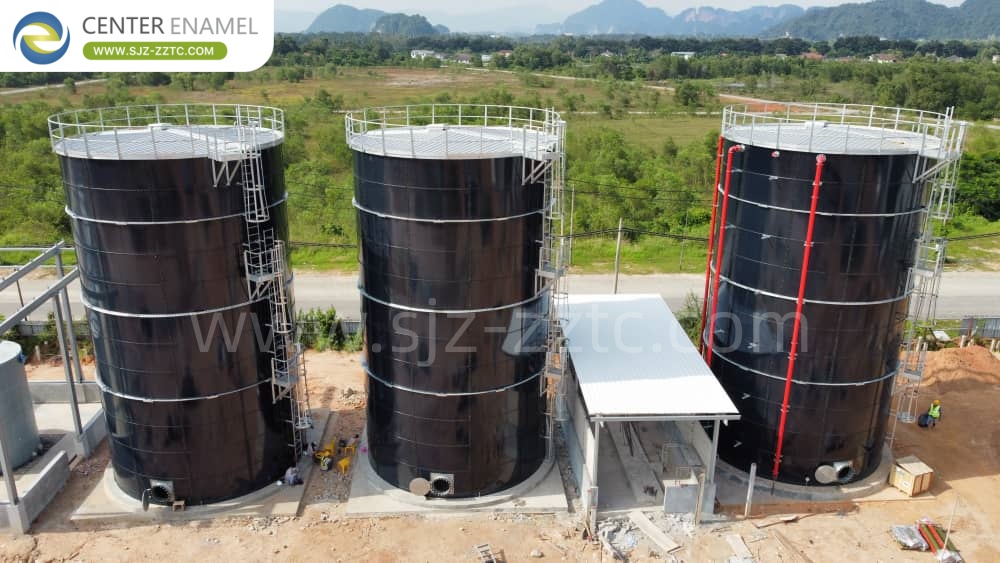
Global Policy Is Raising the Bar for Industrial Wastewater Treatment
Global industrial wastewater treatment policies are escalating from "compliance discharge" to mandatory "resource recovery" and "zero liquid discharge." The EU, through its Circular Economy Action Plan, requires member states to increase industrial wastewater reuse rates and extends carbon footprint accounting to the full life cycle of wastewater treatment. China continuously updates and tightens industrial water pollutant discharge standards, with increasingly stringent limits on total nitrogen, total phosphorus, and characteristic pollutants for industries such as chemicals, pharmaceuticals, and printing and dyeing. Some water-scarce regions and highly polluting industries are mandated to adopt zero or near-zero liquid discharge technologies. Germany has established a differentiated pretreatment technical standard system by industry, requiring industrial wastewater to meet specific quality requirements before discharge into municipal wastewater treatment plants—implementing strict source control.
For pharmaceutical manufacturers, these tightening rules mean one thing: the treatment system must perform reliably at the highest level, every day. This is the environment in which the IC Process proves its value.
Why the IC Process Fits Modern Pharmaceutical Plants
The IC Process is primarily designed for high-concentration, high-flow soluble industrial organic wastewater. It covers brewery, beverage, starch, pharmaceutical, chemical, and papermaking high-strength streams, and is particularly suitable for land-constrained projects with high treatment efficiency requirements in large industrial wastewater treatment facilities.
It can serve as the primary process for high-strength wastewater requiring rapid COD/BOD removal, and is well-suited to centralized industrial park WWTPs and large enterprise proprietary treatment systems—especially where wastewater quality fluctuates significantly and pollutant concentrations run extremely high. It is not suitable for high-solids, high-viscosity wastewater. Applied correctly, the IC Process is the preferred anaerobic solution for modern, high-efficiency Pharmaceutical Wastewater Treatment.
IC Process Fit by Wastewater Type
| Wastewater Type | Suitability | Notes |
| Pharmaceutical | High | High-strength, fluctuating quality |
| Brewery / Beverage | High | Soluble organics, rapid COD removal |
| Starch / Chemical | High | High-concentration organic streams |
| Papermaking | High | High-strength soluble organics |
| High-solids / High-viscosity | Not suitable | Risk of clogging and poor mixing |
GFS Tanks Built for Compact, Intensive Plant Layouts
GFS tanks offer flexible customization of size and appearance, with higher land utilization rates—ideally suited for modern compact plant layouts, with significant advantages over fixed poured concrete tanks.
Concrete tanks cannot alter volume or shape after pouring. Their heavy bases occupy large areas, making placement difficult on narrow or irregular plots, and their rough, uniform appearance cannot match modern facility aesthetic requirements.
By contrast, GFS tank volume can be precisely customized as needed, with capacities ranging from dozens of cubic meters to 50,000 cubic meters freely selectable. Tank height and diameter can be flexibly combined to fit narrow or irregularly shaped plots, effectively saving plant land occupation. Enamel color customization is also supported, achieving visual harmony with plant buildings and environmental facilities. During later plant expansion, GFS tanks can be directly adjusted in layout and expanded; concrete tanks, being monolithic structures, must be demolished and rebuilt—offering far less flexibility in land resource utilization.
GFS Tanks vs. Concrete Tanks
| Parameter | GFS Tanks | Concrete Tanks |
| Volume Flexibility | Customizable after design | Fixed once poured |
| Capacity Range | Dozens to 50,000 m³ | Limited by structure |
| Footprint Efficiency | High, fits irregular plots | Low, heavy base |
| Expansion | Adjustable and expandable | Demolish and rebuild |
| Appearance | Custom enamel colors | Rough, uniform finish |
| Construction Time | Short, modular | Long curing period |
The Cost Reality of Pharmaceutical Wastewater Treatment
Among the five major wastewater types, pharmaceutical wastewater carries the highest O&M costs and the poorest overall economic viability. Strong toxicity and poor biodegradability require continuous addition of large quantities of oxidants, flocculants, and desalination agents during pretreatment—chemical costs far exceed those of conventional wastewater.
High-energy-consuming equipment such as advanced oxidation and reverse osmosis run continuously, with frequent corrosion damage and high repair or replacement costs. Toxic sludge, spent activated carbon, and filter residues are all hazardous waste, with complex compliance disposal procedures and high unit costs—solid waste disposal represents a significant cost proportion. Frequent water quality fluctuations require dedicated personnel for 24/7 monitoring and parameter adjustment, driving labor costs higher. Resource recovery benefits are minimal, with overall investment far exceeding returns.
This cost structure is exactly why equipment durability and process stability matter so much in Pharmaceutical Wastewater Treatment. Every premature tank failure or process upset adds directly to an already strained operating budget.
Case Study: Pakistan Food Waste + Napier Grass Biogas Demonstration Project
Center Enamel served as general contractor for this official local demonstration project, applying CSTR as the core anaerobic process with food waste and Napier grass as mixed fermentation feedstock. The system is equipped with a mechanical mixing system ensuring thorough contact between feedstock and anaerobic microorganisms—achieving efficient organic degradation with stable daily biogas production of 100 m³.
This project validates gas production efficiency and long-term continuous operational stability. Following successful pilot operation, multiple large-scale Napier grass biogas projects are planned locally to promote biomass clean energy and support regional low-carbon development.
Project Data Summary
| Project Parameter | Specification |
| Location | Pakistan |
| Application | Food waste + Napier grass co-digestion |
| Core Process | CSTR anaerobic digestion |
| Daily Biogas Output | 100 m³ |
| Tank Material | Glass-Fused-to-Steel (GFS) |
| Purpose | Official demonstration project |
Global Reach, Localized Delivery
Center Enamel's global business covers over 100 countries and regions, with 30,000+ successful overseas projects. Products are exported to all major regions including Europe, the Americas, the Middle East, Africa, Southeast Asia, and Latin America, supported by a well-established global localized service network.
Domestically, the company is organized into North, South, Central, East, and Southwest marketing regions, covering environmental, water utility, livestock, and petrochemical customers nationwide. Internationally, we adopt a "standardized products + localized adaptation" model—adjusting tank corrosion protection, sealing, and pressure standards for different national water quality and environmental regulations.
Overseas Installation Coverage and Delivery Capability
Center Enamel is the pioneer of Chinese GFS equipment exports, with installation service coverage across over 100 countries and regions—possessing full delivery capability across climates, regulations, and geographies.
Overseas coverage includes Southeast Asia (Vietnam, Thailand, Malaysia, Indonesia, Cambodia, Bangladesh, Nepal), Africa (Ghana, South Africa, Mali, Guinea, Zambia, Kenya, Pakistan), Europe and the Americas (Sweden, USA, Russia), the Middle East, and Latin America. Our teams adapt to tropical rainy high-salt-spray conditions, high-altitude mountainous terrain, Nordic severe cold, and high-standard European and American facility requirements.
Regional Coverage and Adaptation
| Region | Countries | Environmental Adaptation |
| Southeast Asia | Vietnam, Thailand, Malaysia, Indonesia, Cambodia, Bangladesh, Nepal | Tropical, high humidity, salt spray |
| Africa | Ghana, South Africa, Mali, Guinea, Zambia, Kenya, Pakistan | Remote sites, varied foundations |
| Europe & Americas | Sweden, USA, Russia | Nordic cold, strict EU/US standards |
| Middle East & Latin America | Multiple | Water scarcity, high salinity |
The company uses a dual-service model of "own cross-border construction teams + overseas local agent coordination." Whether clients are in developed countries or remote developing regions, we provide one-stop services including on-site survey, on-site installation, process commissioning, and operator training. Complete coverage spans biogas engineering, municipal wastewater, industrial wastewater, livestock manure, and drinking water storage—possessing the full delivery capability to undertake large-scale tank farm projects in any country worldwide.
Frequently Asked Questions
Q1: Why is the IC Process suited to Pharmaceutical Wastewater Treatment?
The IC Process handles high-concentration, high-flow soluble organic wastewater with strong shock-load tolerance—ideal for the fluctuating quality and extreme pollutant levels typical of pharmaceutical streams.
Q2: How do GFS tanks reduce Pharmaceutical Wastewater Treatment costs?
GFS tanks resist pH 1–14, high salinity, and microbial corrosion, with a 30+ year service life. This reduces repair, replacement, and downtime costs that drive up pharmaceutical O&M budgets.
Q3: Can Center Enamel deliver projects in remote or strict-regulation regions?
Yes. We have delivered 30,000+ overseas projects across 100+ countries, adapting tank specifications to local climates, water quality, and EU/US or regional regulatory standards.
Let's Tackle Your Pharmaceutical Wastewater Challenge
Pharmaceutical wastewater is too costly and too risky to treat with anything less than a proven, durable solution. Share your effluent profile with Center Enamel, and our engineers will recommend the right IC Process configuration, tank specification, and delivery scope for your site.
From feasibility study through commissioning and long-term O&M support, we deliver complete Pharmaceutical Wastewater Treatment solutions backed by 30,000+ global projects. Reach out today—and turn your most difficult stream into a manageable, compliant operation.