
What Role Does an IC Reactor Play in a Brewery Wastewater Treatment Project?
Industrial wastewater treatment today is defined by what the industry calls the “three highs”: high difficulty, high cost, and high energy consumption. Wastewater from new energy, chemical, and pharmaceutical sectors contains complex characteristic pollutants that conventional processes struggle to remove effectively.
Meanwhile, increasingly stringent emission standards and the push for digitalization and low-carbon operations place new demands on treatment plant management. Within this landscape, breweries face a particular challenge-and opportunity. Their effluent is organic-rich, warm, and highly biodegradable, making it ideal for anaerobic treatment that recovers energy rather than consuming it. The key lies in selecting the right process and partnering with a provider who understands both the biology and the bottom line.
What Makes Brewery Effluent a Prime Candidate for Anaerobic Treatment?
Brewery wastewater typically carries a COD range of 3,000–10,000 mg/L, sometimes reaching higher depending on production scale and cleaning practices. This organic load is predominantly soluble, warm, and readily digestible-conditions that favor anaerobic microbial conversion. When treated through anaerobic digestion, breweries can offset 40–80% of their brewhouse steam demand using the biogas produced. This energy-positive profile fundamentally changes the economics of wastewater treatment from a cost center to a resource recovery operation. The critical enabler is reactor selection: not all anaerobic systems perform equally when land is limited, loads fluctuate, and operational simplicity matters.
Why Does the IC Reactor Outperform Conventional Anaerobic Systems?
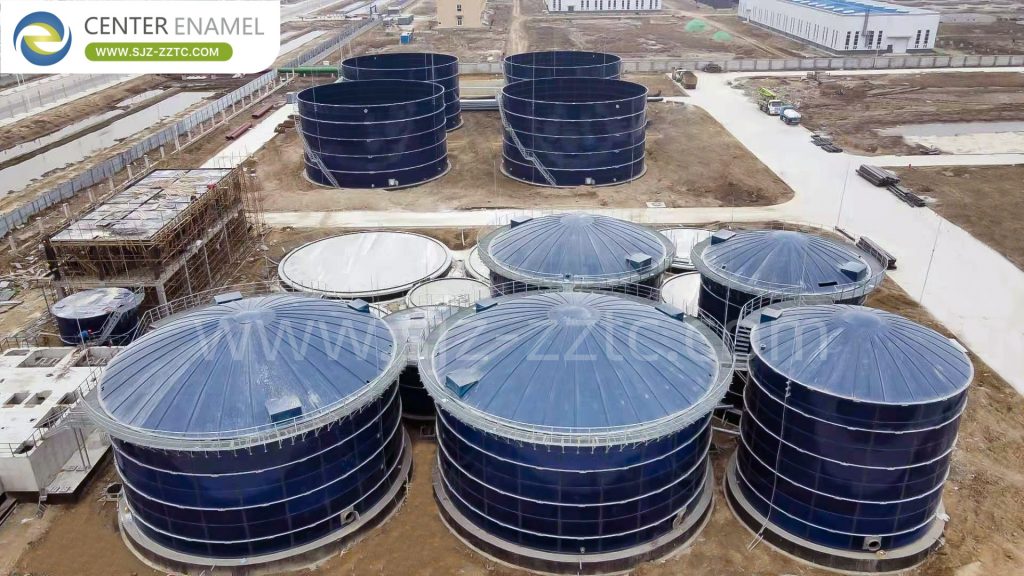
The IC Reactor, or Internal Circulation Anaerobic Bioreactor, represents the highest-efficiency anaerobic configuration available for high-strength organic wastewater. Its design stacks two UASB stages vertically and uses biogas-driven internal circulation to achieve superior mass transfer without external pumping energy. For a Brewery Wastewater Treatment Project, this translates directly into practical advantages: a smaller footprint than conventional UASB systems, stronger resistance to shock loads from seasonal production peaks, shorter hydraulic retention time, and stable effluent quality. The reactor’s three-phase separator ensures reliable biomass retention, while the internal circulation system self-adjusts to varying organic loads. When housed in a Glass-Fused-to-Steel (GFS) tank, the reactor benefits from corrosion resistance across a pH range of 1–14 and a service life exceeding 30 years. For breweries with space constraints in urban or industrial park settings, the IC Reactor delivers maximum treatment capacity within a compact footprint.
What Operational Realities Define a Brewery Wastewater Treatment Project?
Operating a brewery wastewater system is not the same as running a chemical plant’s treatment train. The O&M profile is moderate to low, with stable and controllable processes. Equipment is simple and durable, without high-end precision wear parts, so failure rates and maintenance costs stay low. Because brewery wastewater biodegrades so readily, the system requires no large quantities of oxidants or detoxification agents-only small amounts of flocculants and pH adjusters, keeping chemical expenses minimal. Biogas from anaerobic digestion can be used directly for plant heating and equipment insulation, significantly reducing energy costs. Labor requirements are modest; only during peak season load fluctuations do operators need to adjust process parameters. Spent grain, digestate solids, and liquid fertilizer can be sold, further improving overall economics. The result is a treatment system that pays back through resource recovery rather than draining operating budgets.
How Does Center Enamel Deliver Brewery Wastewater Solutions Globally?
Center Enamel’s global business covers over 100 countries and regions, with 30,000+ successful overseas projects. Products are exported across Europe, the Americas, the Middle East, Africa, Southeast Asia, and Latin America, supported by a well-established localized service network. Internationally, the company adopts a “standardized products + localized adaptation” model-adjusting tank corrosion protection, sealing, and pressure standards for different national water quality and environmental regulations. This approach has produced landmark projects including large-volume GFS tanks in Italy, 20m tower water supply tanks in Colombia, coastal seawater treatment tanks in Costa Rica, and large municipal wastewater aluminum dome projects in Saudi Arabia. For brewery clients specifically, this global footprint means access to proven IC Reactor configurations and GFS tank solutions that have already demonstrated success across diverse climates and regulatory environments.
Table 1: IC Reactor Applicability for Brewery Wastewater
| Parameter | Typical Range / Specification |
| Influent COD | 3,000–10,000 mg/L |
| Suitable wastewater type | High-concentration, high-flow soluble organics |
| Land footprint | Compact; suitable for land-constrained sites |
| Load fluctuation tolerance | High; stable under seasonal peaks |
| Biogas energy offset | 40–80% of brewhouse steam demand |
| Reactor tank material | GFS (Glass-Fused-to-Steel), pH 1–14 resistant |
Table 2: Global Project Delivery Snapshot
| Region | Project Type | Significance |
| Italy | Large-volume GFS tanks | Demonstrates large-scale anaerobic capacity |
| Colombia | 20m tower water supply tanks | High-rise tank engineering capability |
| Costa Rica | Coastal seawater treatment tanks | Corrosion resistance in marine environments |
| Saudi Arabia | Municipal wastewater aluminum dome | Large municipal reference project |
| Pakistan | Food waste + Napier grass biogas demonstration | CSTR process, 100m³/day biogas production |
What Makes Center Enamel a Reliable Partner for Your Project?
Beyond reactor technology, Center Enamel provides a flexible and efficient service delivery system built on cross-border construction teams and a global localized agent network. Modular GFS tank assembly shortens construction periods and allows tanks to be dismantled and reused if operations relocate. For the aluminum alloy trough deck roof option, the lightweight design reduces foundation load and civil construction investment, while the naturally formed oxide protective layer resists rain and mild wastewater corrosion-suitable for clear water and wastewater storage scenarios that do not require biogas collection. Whether your project needs a full IC Reactor system or auxiliary storage with economical covers, the engineering and manufacturing are handled under one roof.
Frequently Asked Questions
Q: What COD level suits an IC Reactor for brewery wastewater?
A: Brewery effluent typically ranges 3,000–10,000 mg/L COD. IC Reactors excel in this high-strength range, achieving rapid COD/BOD removal with a compact footprint.
Q: Can the biogas be used directly in the brewery?
A: Yes. Biogas from anaerobic digestion can fuel boilers or CHP units, offsetting 40–80% of brewhouse steam demand and reducing energy costs.
Q: Is the IC Reactor suitable for seasonal load fluctuations?
A: The IC Reactor’s self-adjusting internal circulation system handles variable loads well. Only peak-season parameter adjustments are needed, keeping labor requirements low.
Ready to evaluate your brewery’s treatment options? Send us your wastewater characteristics and we will return a process recommendation with footprint and energy recovery estimates.
Contact Center Enamel today to discuss how an IC Reactor can transform your Brewery Wastewater Treatment Project from a compliance burden into an energy-saving asset.