
How Can IC Reactor Technology Solve Pharmaceutical Wastewater Treatment Challenges?
The Asia-Pacific region, particularly China, has become the world's largest industrial wastewater treatment market, with the operation and maintenance service segment's contribution continuing to rise—marking a clear shift from project construction toward long-term operational management. The North American market focuses on upgrading existing facilities, while Europe emphasizes high-value-added resource recovery technologies.
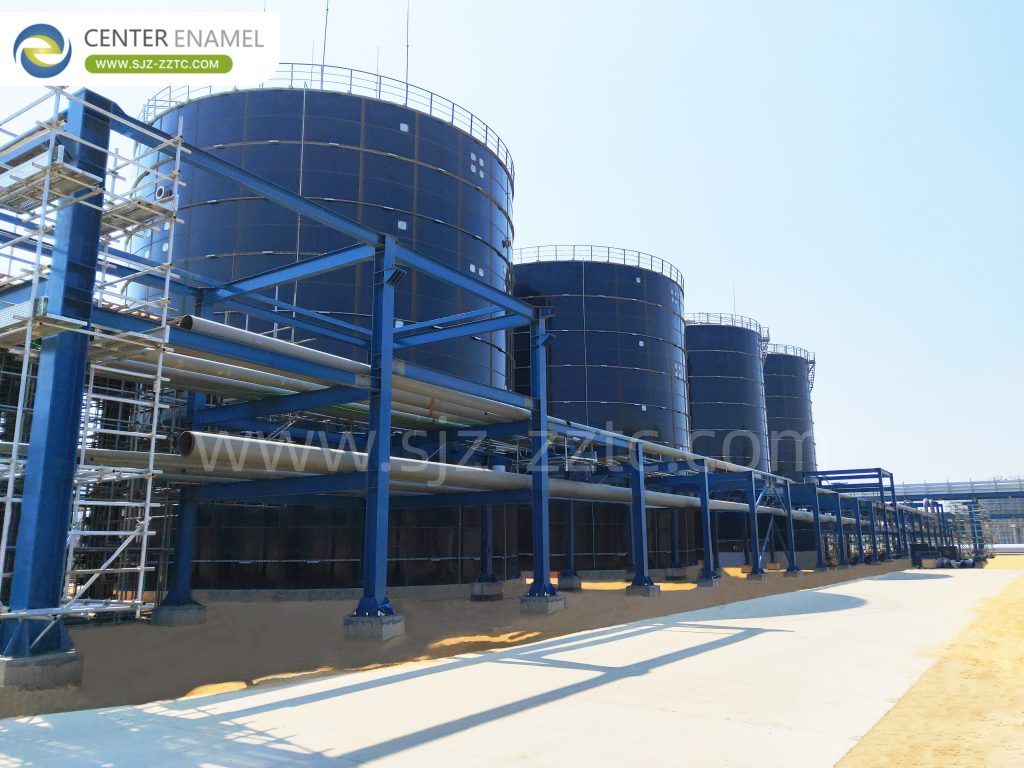
Wastewater from the new energy industry chain (lithium batteries, photovoltaics, hydrogen) has become the most notable emerging growth area due to its complex composition and high treatment difficulty, generating significant demand for customized solutions. The maturity of third-party treatment models in industrial parks continues to improve, driving consolidation in the professional operation market. The Middle East has strong demand for advanced treatment and reuse of industrial wastewater due to water scarcity, while manufacturing transfer in Southeast Asia drives local industrial wastewater treatment facility construction demand.
These regional dynamics create distinct technology requirements across markets. Developed regions demand retrofits and resource recovery, emerging markets need new capacity, and high-difficulty streams like pharmaceutical and new energy wastewater require specialized treatment trains. Understanding where the IC Reactor fits within this landscape helps project developers select the right technology for each application.
Where IC Reactor Technology Delivers the Best Results
The IC Reactor is primarily designed for high-concentration, high-flow soluble industrial organic wastewater, covering brewery, beverage, starch, pharmaceutical, chemical, and papermaking high-strength wastewater. The technology is especially suitable for land-constrained projects with high treatment efficiency requirements in large industrial wastewater treatment facilities. It can serve as the primary process for high-strength wastewater with rapid COD/BOD removal, making it ideal for centralized industrial park WWTPs and large enterprise proprietary treatment systems—particularly for wastewater with significant quality fluctuations and extremely high pollutant concentrations.
However, the IC Reactor is not suitable for high-solids, high-viscosity wastewater, where alternative anaerobic configurations perform better. Within its appropriate application range, it remains the preferred anaerobic process for modern high-efficiency industrial wastewater treatment. For pharmaceutical manufacturers evaluating treatment options, the IC Reactor offers a compelling combination of compact footprint, shock load tolerance, and biogas recovery that aligns with both environmental compliance and energy cost reduction goals.
Pharmaceutical Wastewater Treatment: Cost and Operational Challenges
Pharmaceutical wastewater treatment presents unique economic challenges that distinguish it from other industrial wastewater categories. O&M costs rank highest among the five wastewater types, with poor overall economic viability. Strong toxicity and poor biodegradability require continuous addition of large quantities of oxidants, flocculants, and desalination agents during pretreatment—chemical costs far exceeding conventional wastewater treatment. High-energy-consuming equipment such as advanced oxidation and reverse osmosis run continuously, with frequent corrosion damage and high repair or replacement costs.
Beyond chemical and energy expenses, toxic sludge, spent activated carbon, and filter residues are all classified as hazardous waste, with complex compliance disposal procedures and high unit costs—solid waste disposal represents a significant proportion of total operating expenses. Frequent water quality fluctuations require dedicated personnel for 24/7 monitoring and parameter adjustment, driving high labor costs. Resource recovery benefits are minimal in conventional pharmaceutical wastewater treatment configurations, with overall investment far exceeding returns. These cost pressures are pushing pharmaceutical manufacturers toward anaerobic pretreatment with IC Reactor technology, which can reduce downstream treatment loads and recover energy from high-strength organic streams.
Global Project Showcase: Pakistan Food Waste Biogas Demonstration
Center Enamel's international project portfolio demonstrates the practical application of anaerobic technologies across diverse geographies and feedstock types. The Pakistan Food Waste + Napier Grass Biogas Demonstration Project represents a successful validation of mixed fermentation technology under real-world conditions. As general contractor, Center Enamel deployed CSTR as the core anaerobic process, using food waste and Napier grass as mixed fermentation feedstock. The system is equipped with a mechanical mixing system ensuring thorough contact between feedstock and anaerobic microorganisms, achieving efficient organic degradation with stable daily biogas production of 100 m³. This project serves as the local official demonstration for validating gas production efficiency and long-term continuous operational stability. Following successful pilot operation, multiple large-scale Napier grass biogas projects are now planned locally to promote biomass clean energy and support regional low-carbon development.
| Project Parameter | Specification |
| Location | Pakistan |
| Feedstock | Food Waste + Napier Grass |
| Core Process | CSTR Anaerobic Digestion |
| Mixing System | Mechanical Mixing |
| Daily Biogas Output | 100 m³ |
| Project Status | Official Demonstration, Pilot Complete |
| Future Development | Multiple Large-Scale Projects Planned |
Overseas Installation Coverage and Delivery Capability
Center Enamel is the pioneer of Chinese GFS equipment exports, with installation service coverage across over 100 countries and regions—possessing full delivery capability across climates, regulations, and geographies. Overseas coverage includes Southeast Asia (Vietnam, Thailand, Malaysia, Indonesia, Cambodia, Bangladesh, Nepal), Africa (Ghana, South Africa, Mali, Guinea, Zambia, Kenya, Pakistan), Europe and the Americas (Sweden, USA, Russia), the Middle East, and Latin America—adaptable to tropical rainy high-salt spray, high-altitude mountainous, Nordic severe cold, and high-standard European and American facility conditions.
| Coverage Region | Countries and Capabilities |
| Southeast Asia | Vietnam, Thailand, Malaysia, Indonesia, Cambodia, Bangladesh, Nepal |
| Africa | Ghana, South Africa, Mali, Guinea, Zambia, Kenya, Pakistan |
| Europe / Americas | Sweden, USA, Russia |
| Middle East & Latin America | Full regional coverage |
| Climate Adaptability | Tropical rainy, high-salt spray, high-altitude, Nordic severe cold, EU/US standards |
The company uses a dual-service model of "own cross-border construction teams + overseas local agent coordination"—whether clients are in developed countries or remote developing regions—providing one-stop services including on-site survey, on-site installation, process commissioning, and operator training. Complete coverage spans biogas engineering, municipal wastewater, industrial wastewater, livestock manure, drinking water storage, and other global mainstream environmental engineering projects, possessing the full delivery capability to undertake large-scale tank farm projects in any country worldwide.
The after-sales team adheres to service principles of rapid response, professional efficiency, and full-cycle support—providing 24/7 full-lifecycle O&M support to global clients. Standard remote services include fault diagnosis, process parameter adjustment, and tank anti-corrosion maintenance guidance. For domestic and long-distance overseas clients, overseas technical service personnel can be dispatched for on-site inspection, annual inspection, and equipment refurbishment as needed. The team also maintains long-term client feedback tracking mechanisms—regularly collecting tank and anaerobic equipment operational data to continuously optimize product structure and support processes. Supporting external technical expert teams provide specialized support for anaerobic process commissioning, biogas upgrading O&M, and wastewater upgrade/retrofit projects—ensuring long-term stable operation of domestic and overseas projects, continuously improving global client satisfaction and repurchase rates.
Aluminum Geodesic Dome Roof for Tank Protection
The Aluminum Geodesic Dome Roof independently developed by Center Enamel is manufactured using high-strength aluminum alloy plates through integral stamping. It features a triangular grid spherical self-supporting structure, enabling large-span full coverage without internal support columns. Made of aluminum alloy, the roof offers excellent weather resistance and corrosion resistance, capable of long-term protection against acid rain, salt spray, and UV radiation, suitable for various extreme outdoor climate conditions. The structural design complies with international AWWA D108 standards, with aluminum plate thickness, rib cross-sections, and joint connections all verified by finite element stress analysis, ensuring wind and snow load resistance that meets building code requirements across different global regions.
The weight of the Aluminum Geodesic Dome Roof is only one-third to one-half of a steel roof with the same span, significantly reducing the load on the tank top and allowing direct installation without tank wall reinforcement. The roof provides superior overall sealing performance, with double sealing between panels using specialized sealant strips and mechanical interlocking, enabling both airtight gas storage and enclosed odor control. This makes it suitable for biogas collection and storage, wastewater tank odor control, and drinking water contamination prevention. The support-column-free design does not interfere with the installation and operation of internal equipment such as mixers and water distributors. The aluminum material does not support microbial growth, requiring no anti-corrosion maintenance over long-term use, resulting in low total life-cycle costs.
Frequently Asked Questions
What is an IC Reactor and which industries benefit most?
An IC Reactor is an advanced anaerobic treatment system for high-strength soluble organic wastewater. It excels in brewery, beverage, starch, chemical, papermaking, and pharmaceutical applications where land is limited and treatment efficiency demands are high.
Why are pharmaceutical wastewater treatment costs so high?
Pharmaceutical wastewater requires continuous chemical dosing, energy-intensive oxidation and RO systems, hazardous waste disposal, and 24/7 monitoring. These combined factors make O&M costs the highest among all industrial wastewater categories.
How does Center Enamel support overseas wastewater projects?
Center Enamel provides full delivery capability across 100+ countries, combining cross-border construction teams with local agent coordination for survey, installation, commissioning, training, and 24/7 after-sales support.
Partner with Center Enamel for Your Pharmaceutical Wastewater Treatment Project
Our engineers can evaluate your effluent profile and determine whether an IC Reactor or hybrid anaerobic configuration best fits your treatment objectives and site constraints. Reach out today to discuss your project requirements with our technical team.
Contact us now to request a feasibility assessment and preliminary tank specification for your pharmaceutical wastewater treatment or biogas recovery project.