
India Pig Manure Biogas Solutions: Efficient GFS Tanks and CSTR Process Solution
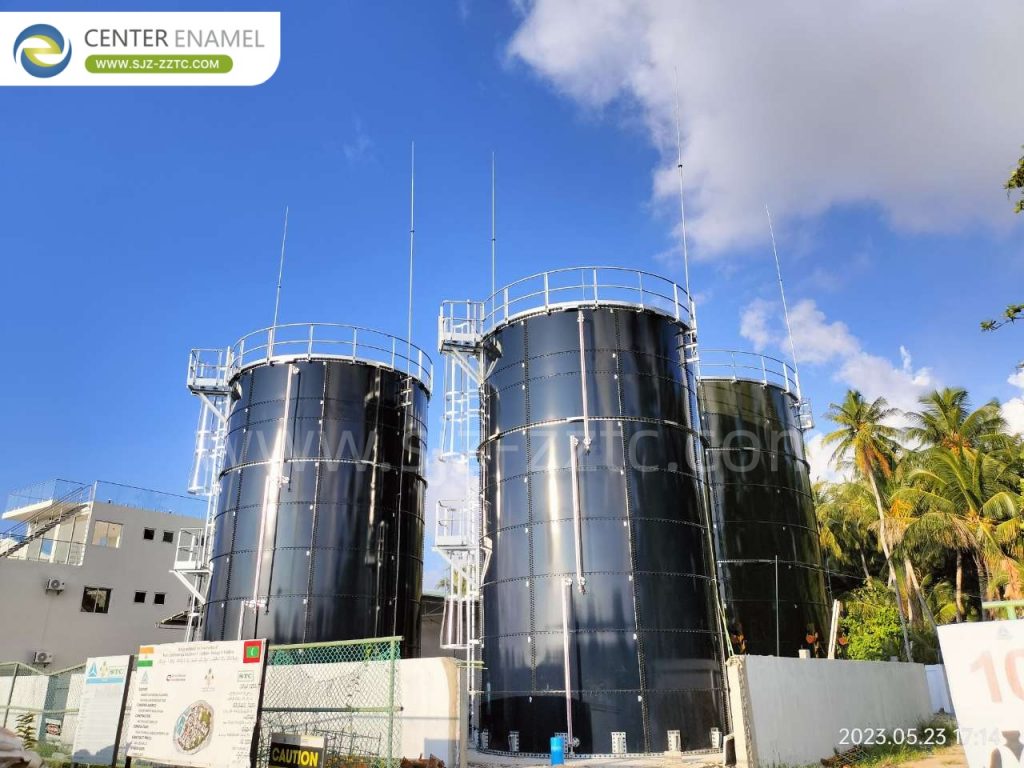
India's rapidly expanding pig farming sector faces a critical environmental challenge: managing millions of tons of pig manure sustainably. By implementing advanced Biogas Solutions that combine the CSTR Process with durable GFS Tanks, Indian farms can transform waste into a valuable renewable energy resource while addressing pollution concerns.
The Growth of India's Pig Farming Industry and Waste Management Challenges
India's swine industry has experienced significant growth, particularly in Northeastern states, Kerala, Goa, and Punjab, where commercial farming operations are expanding to meet rising protein demand. This intensification has led to massive concentrations of pig manure that, if untreated, poses severe environmental risks. Pig manure is characterized by high concentrations of organic matter, ammonia, and pathogens, making it a complex waste stream that requires specialized treatment. The Central Pollution Control Board has implemented strict effluent discharge standards for the livestock industry, and initiatives like GOBAR-dhan actively promote waste-to-energy conversion.
How Pig Manure Transforms into Biogas
The conversion of pig manure to biogas occurs through anaerobic digestion, a biological process where microorganisms break down organic matter in an oxygen-free environment. The process follows four essential stages: hydrolysis, acidogenesis, acetogenesis, and methanogenesis, ultimately producing biogas composed primarily of methane (55–70%) and carbon dioxide. Pig waste generates approximately 70 cubic meters of biogas per ton, making it a highly productive feedstock. The captured biogas can power generators for electricity, heat farm facilities, or be upgraded to biomethane for vehicle fuel. The remaining digestate serves as nutrient-rich organic fertilizer, reducing dependence on chemical alternatives and supporting India's circular economy goals.
The CSTR Process: Core Technology for Biogas Production
The CSTR Process (Continuous Stirred-Tank Reactor) is a proven anaerobic digestion technology ideally suited for India's pig manure treatment. Within a sealed tank, mechanical stirring continuously mixes the manure and anaerobic microorganisms, preventing solids from settling and eliminating scum formation. Operating at mesophilic temperatures, the CSTR maintains optimal conditions for microbial activity, ensuring stable and high-yield biogas production even with high-suspended-solids feedstocks. The process begins with pre-treatment—screening removes large impurities, crushing reduces particle size, and sand settling eliminates heavy grit before homogenization ensures consistent influent flow.
Professional Biogas Project Design by Center Enamel
Center Enamel provides professional Biogas Project design as a comprehensive EPC (Engineering, Procurement, and Construction) service provider for the Indian livestock industry. Their expert team oversees the entire project lifecycle—from comprehensive site assessments and feasibility analysis to precise process package design and final system commissioning. With international certifications including ISO 28765, AWWA D103, and NSF61, Center Enamel ensures every custom solution is engineered to maximize biogas yield and maintain long-term operational stability for India's diverse farming environments. The company's rich experience across South Asia enables tailored solutions that account for India's tropical climate and local operational conditions.
GFS Tanks and Double Membrane Roof for Biogas Projects
GFS Tanks and the Double Membrane Roof are the preferred infrastructure solutions for India's biogas projects. GFS Tanks are manufactured by fusing glass to steel at extreme temperatures, creating a smooth, inert, and corrosion-resistant surface that withstands the aggressive acidic environment inside digesters. This durability ensures a service life exceeding 30 years with minimal maintenance—critical for India's varied climatic conditions. The Double Membrane Roof provides excellent airtightness for safe biogas collection and storage while optimizing costs by integrating gas storage directly above the digester, eliminating the need for a separate ground-mounted gas holder and saving valuable land.
Diverse Storage Tank and Cover Solutions
Center Enamel offers a variety of storage tanks and roof solutions:
Glass-Fused-to-Steel (GFS) Tanks: The premier choice for biogas applications, offering superior corrosion resistance with pH 1–14 tolerance and over 30 years of service life.
Fusion Bonded Epoxy (FBE) Tanks: Engineered with advanced epoxy coating technology for effective corrosion protection.
Roof Solutions:
Double Membrane Roof: Preferred for biogas storage with cost optimization and space efficiency
Glass-Fused-to-Steel Roof: Airtight option suitable for pressurized structures and odor control
Aluminum Geodesic Dome: Advanced corrosion resistance and expansive clear span capability
Aluminum Alloy Trough Deck: Economical option for odor control without airtightness
FRP Roof: Suitable for applications where airtightness is not required
Comprehensive Biogas Supporting Equipment
A complete biogas plant requires specialized auxiliary systems:
Gas Holders: For variable-volume biogas storage
Solid-Liquid Separators: For processing digestate into fertilizer fractions
Torch Systems: Critical safety equipment for burning excess biogas
Dehydration and Desulfurization Tanks: For biogas purification by removing moisture and corrosive hydrogen sulfide
Screw Sludge Dewatering Machines: For efficient sludge volume reduction
Lifting Pumps: For consistent wastewater transfer
Efficient Installation of GFS Tanks in India
Center Enamel's GFS Tanks are engineered for rapid on-site assembly suitable for India's rural farm locations:
No large cranes required: Hydraulic jacking method allows installation without scaffolding or heavy lifting equipment
Zero on-site welding: Factory-prefabricated bolted components avoid welding failures common in humid tropical climates
Rapid commissioning: The bolted system eliminates long curing periods, significantly shortening construction cycles
Experienced South Asian engineering teams: Provide professional supervision and systematic operational training to local staff
Why Choose Center Enamel as Your Biogas Solutions Provider
Center Enamel is a leading one-stop solution supplier for biogas projects in India:
Asia's Largest GFS Tank Manufacturer: With a 150,000 m² production base and annual production capacity exceeding 250,000 panels
Proven Global Expertise: Successful projects in over 100 countries with deep understanding of tropical agricultural conditions
Strict Quality Standards: All products meet international certifications including ISO 28765, AWWA D103, OSHA, and CE/EN1090
Full EPC Service: Complete turnkey solutions from design and manufacturing to installation and after-sales support
Localized Support: Dedicated South Asia team providing timely maintenance and technical optimization
Successful Project Case Studies
France Biogas Project
Process: CSTR
Tank dimensions: φ18.33m x 8.4m (H) (1 unit)
Total volume: 2,215 m³ (1 unit)
Completion year: 2021
Canada Biogas Project
Tank dimensions: φ8.4m x 7.2m (H) (2 units)
Total volume: 798 m³
Completion year: 2024
Conclusion
India's pig farming sector stands at a pivotal moment where sustainable waste management can unlock significant economic and environmental benefits. By implementing proven Biogas Solutions powered by the CSTR Process and durable GFS Tanks, Indian farms can transform manure from an environmental liability into a valuable renewable energy asset. With world-class manufacturing, international certifications, and comprehensive EPC services, Center Enamel is a reliable partner for India's sustainable agricultural future.
FAQs
1. How does the CSTR Process handle the high solids content of pig manure in India?
The CSTR Process uses mechanical stirring to keep high-solids slurries in suspension, preventing settling and ensuring uniform digestion. This makes it ideal for pig manure with high suspended solids, maintaining stable biogas production even when feedstock composition varies.
2. What makes GFS Tanks suitable for India's diverse climate conditions?
GFS Tanks are fused at over 820°C, creating a corrosion-resistant coating that withstands high temperatures, monsoon rainfall, and humidity without degradation. Their bolted assembly eliminates welding failures common in tropical climates.
3. What is the typical biogas yield from pig manure?
Pig waste generates approximately 70 cubic meters of biogas per ton of feedstock, making it one of the most productive organic wastes for biogas production. The captured methane can be used for electricity generation, heating, or vehicle fuel.