
Indonesia Biogas Power Solutions: GFS Tanks + Double Membrane Roof for Animal Waste
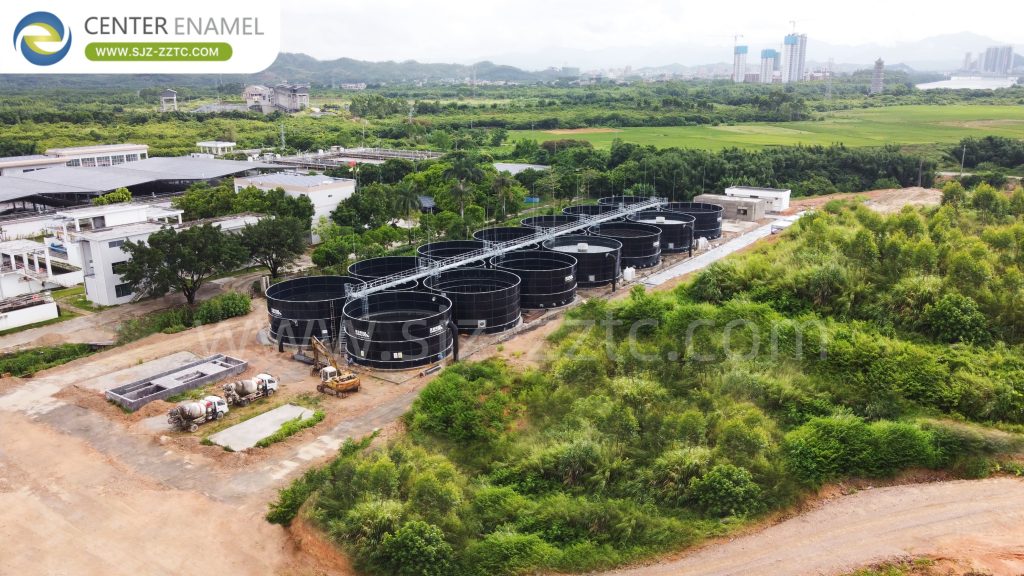
Indonesia is an archipelagic nation with rapidly growing energy demand. Despite having abundant fossil fuel resources, many rural areas-especially across Sumatra, Java, Sulawesi, and Kalimantan-still face unreliable electricity supply. Remote farms often rely on diesel generators, which are expensive and logistically difficult to refuel. At the same time, Indonesia has committed to reducing greenhouse gas emissions and increasing the share of renewable energy. For livestock farmers, this presents a clear opportunity. Animal manure, which is often left to decompose openly, can be converted into Biogas Power-a reliable, on-site energy source that operates day and night, independent of weather or grid stability.
Advantages of Converting Animal Manure to Biogas Power on Indonesian Farms
Indonesia has millions of cattle, pigs, and poultry across smallholder and commercial farms. Without proper management, manure releases methane-a potent greenhouse gas-and contaminates water sources. By installing an anaerobic digestion system, farmers can capture this waste and turn it into valuable Biogas Power. Key benefits include:
24/7 renewable energy: Biogas can fuel generators to produce electricity for lighting, water pumps, cooling, and feed mills.
Reduced diesel dependence: Farms can replace imported diesel with locally produced biogas, cutting fuel costs significantly.
Lower operational expenses: Once installed, the fuel source (manure) is free and continuously available.
Odor control and public health: Closed digestion systems reduce flies, odors, and pathogen spread.
Organic fertilizer production: The residual digestate is rich in nutrients and can be sold or applied to crops.
For Indonesian pig farms in North Sumatra or dairy cooperatives in East Java, Biogas Power is not just an environmental measure-it is a pathway to energy independence and higher profitability.
Center Enamel: Professional Biogas Project Design and EPC Services
With over 36 years of experience, Center Enamel has grown into Asia’s largest manufacturer of Glass-Fused-to-Steel (GFS) tanks and a full-service provider of Biogas Power systems. The company began with enamel frit production and now delivers complete EPC (Engineering, Procurement, and Construction) solutions, process packages, and equipment supply. Center Enamel holds international certifications including CE/EN1090, ISO9001, NSF61, WARS, and EN28765, and follows AWWA D103, OSHA, and EuroCode design standards. Their services cover feasibility studies, process engineering, equipment fabrication, installation supervision, and operator training. For Indonesia’s diverse geography-from lowland farms to highland plantations-Center Enamel provides robust, site-adapted biogas solutions.
Pretreatment Stage + CSTR Process: Core of Anaerobic Digestion
Every successful Biogas Power system starts with proper feedstock preparation. Center Enamel’s pretreatment stage is designed to handle typical Indonesian farm waste:
Screening: Removes large debris such as plastic bags, stones, and rope that could clog pipes or damage pumps.
Crushing: Reduces organic particle size, increasing the surface area available for anaerobic bacteria.
Sand settling: Eliminates heavy grit and sand that could cause abrasion inside the digester.
Homogenization tank: Collects and mixes incoming waste to balance flow rates and organic concentration, ensuring stable digester feeding.
Following pretreatment, the core technology is the CSTR Process. CSTR stands for Continuous Stirred-Tank Reactor, an anaerobic digestion method that keeps fermenting material and microorganisms in a constantly mixed state inside a sealed tank. A mechanical stirring system runs continuously or intermittently while maintaining a stable temperature (typically 35–37°C for mesophilic operation). This complete mixing achieves three critical goals: it prevents solids from settling at the bottom, stops scum from forming on top, and maximizes contact between bacteria and fresh organic matter. The result is consistent Biogas Power output and high organic removal efficiency-even with challenging feedstocks like pig slurry or chicken manure.
Biogas rises to the top of the reactor and is collected through the roof system. The remaining digestate exits the tank for solid-liquid separation and subsequent use as fertilizer.
GFS Tanks and Double Membrane Roof: Two Major Products for Biogas Power Systems
Center Enamel supplies two primary products for Biogas Power infrastructure: GFS Tanks and two roof configurations-Glass-Fused-to-Steel (GFS) roof and double membrane roof.
GFS Tanks (Glass-Fused-to-Steel) are widely adopted for anaerobic digesters and biogas storage. The glass coating is fused to steel at high temperature, forming a hard, smooth, and chemically inert surface. This coating resists the corrosive effects of hydrogen sulfide, organic acids, and fluctuating pH levels commonly found inside digesters. With a production capacity of 250,000 sheets per year, Center Enamel manufactures bolted GFS tanks that can be shipped in containers and assembled on site-ideal for Indonesian islands where transport logistics are challenging.
Roof selection depends on local environmental conditions and project economics:
GFS roof is recommended for locations exposed to extreme weather, such as high rainfall, strong winds, or volcanic ash fall. It is also suitable when a ground-mounted gas holder is preferred for maintenance access. This roof type is practical for tank diameters under 23 meters.
Double membrane roof is the standard choice for normal tropical conditions. Its advantages include lower material cost and significant space savings-the roof integrates gas storage directly above the digester, eliminating the need for a separate ground-mounted gas holder. This reduces land use and foundation expenses, which is especially valuable on Indonesian farms with limited space.
Both roof options work seamlessly with the CSTR Process, maintaining an airtight seal while enabling efficient biogas capture and storage.
Supporting Equipment for a Complete Biogas Power System
A fully functional Biogas Power plant requires more than just a digester. Center Enamel provides a complete range of auxiliary equipment:
Gas Holder: Stores biogas to balance production with generator demand.
Black Membrane: Used for lined lagoons, secondary containment, or emergency storage.
Solid-liquid Separator: Divides digestate into solid fiber (for bedding or compost) and liquid fertilizer.
Torch System: Safely combusts excess biogas when not needed for power generation.
Lifting Pump: Transfers raw waste, slurry, or digestate between process stages.
Dehydration and Desulfurization Tank: Removes moisture and hydrogen sulfide from raw biogas to protect generators and piping.
Screw Sludge Dewatering Machine: Reduces the volume of sludge from pretreatment or digestate handling.
This comprehensive equipment package ensures that Biogas Power systems operate reliably, safely, and with minimal daily labor.
Efficient Installation Capabilities of Center Enamel
Speed of deployment is critical for Indonesian projects, especially on remote islands with limited construction windows. Center Enamel’s bolted GFS Tanks are prefabricated in a 150,000 m² production base and shipped in standardized containers. On-site assembly requires no welding-only bolting and sealing-which dramatically reduces installation time. A complete digestion system can typically be erected in weeks rather than months. All components are designed for straightforward assembly by local teams under the guidance of Center Enamel’s experienced supervisors. The company also provides startup assistance and hands-on training for farm operators. For projects in North Sumatra, South Sulawesi, or West Nusa Tenggara, this efficient installation method minimizes weather-related delays and keeps capital costs predictable.
Center Enamel: A One-Stop Biogas Power Solution Provider for Indonesia
Center Enamel is not simply a tank manufacturer-it is a one-stop solution provider for complete Biogas Power systems. From initial concept and engineering design to equipment supply, on-site installation, and commissioning, Center Enamel delivers turnkey solutions tailored to Indonesia’s agricultural and industrial landscape. Their business scope includes EPC services, process packages, and equipment supply-all backed by international certifications and decades of field experience.
For an Indonesian pig farm in Bali with 3,000 head, Center Enamel can engineer a CSTR Process system using GFS Tanks with a double membrane roof, plus all auxiliary equipment (pumps, desulfurization, torch, solid-liquid separator). The generated Biogas Power can run a generator that supplies electricity for water aeration, lighting, feed preparation, and staff housing-replacing expensive diesel. The digestate can be sold to nearby vegetable farmers, creating an additional revenue stream. Center Enamel manages the entire process: site assessment, permit guidance, civil works coordination, tank erection, piping, generator integration, and startup. This holistic approach reduces project risk, shortens delivery timelines, and ensures that the final system meets local safety and performance standards.
With exports to over 100 countries and more than 500 employees dedicated to water, wastewater, and biogas projects, Center Enamel has the scale and experience to support Indonesia’s renewable energy goals. Whether for a small village cooperative or a large industrial farm, Center Enamel delivers durable, efficient, and long-lasting Biogas Power solutions.
Conclusion
Indonesia’s combination of rising energy demand, diesel dependence, and abundant livestock waste makes Biogas Power an ideal renewable energy source. By converting manure into biogas using the CSTR Process inside durable GFS Tanks with efficient double membrane roofs, farms can achieve energy independence, reduce operating costs, and manage waste responsibly. Center Enamel provides everything from pretreatment to power generation-as a single, accountable partner. For Indonesian farmers, cooperatives, and project developers, choosing Center Enamel means choosing a certified, proven, and reliable biogas partner.
FAQ
Q1: Can the CSTR Process operate reliably with the tropical temperatures found in Indonesia?
A1: Yes. The CSTR Process is designed to maintain stable mesophilic temperatures (35–37°C). In Indonesia’s tropical climate, less heating energy is required compared to colder regions. Center Enamel’s systems include insulation and optional heating to ensure consistent year-round Biogas Power production, even during rainy seasons.
Q2: How does the double membrane roof perform under heavy tropical rainfall?
A2: The double membrane roof is engineered for durability in wet conditions. Its outer membrane is weather-resistant, and the system includes automatic overpressure protection and condensate drainage. For areas with extreme rainfall, Center Enamel can recommend the GFS roof option. Both designs keep the digester sealed and biogas safely contained.
Q3: Can Center Enamel handle logistics and installation on remote Indonesian islands?
A3: Absolutely. Center Enamel has extensive experience shipping bolted GFS Tanks to island locations worldwide. All components are containerized for sea freight. The bolted design requires no heavy lifting equipment beyond basic cranes or winches. Center Enamel provides remote installation supervision or on-site engineers, ensuring successful commissioning even in remote areas like East Nusa Tenggara or Papua.