
Industrial Wastewater Treatment: Global Trends and Engineered Solutions from Center Enamel
The global Industrial Wastewater Treatment landscape is shifting decisively from isolated project construction toward long-term operational performance and regional specialization. In the Asia-Pacific region, particularly China, the operation and maintenance service segment continues to rise in prominence, while North America prioritizes facility upgrades and Europe emphasizes high-value resource recovery. Wastewater from the new energy chain-lithium batteries, photovoltaics, and hydrogen-has emerged as a demanding growth area due to its complex composition, generating significant demand for customized Wastewater Treatment Solutions. Meanwhile, the maturity of third-party treatment models in industrial parks drives consolidation in the professional operation market, and water-scarce regions such as the Middle East exhibit strong demand for advanced reuse technologies.
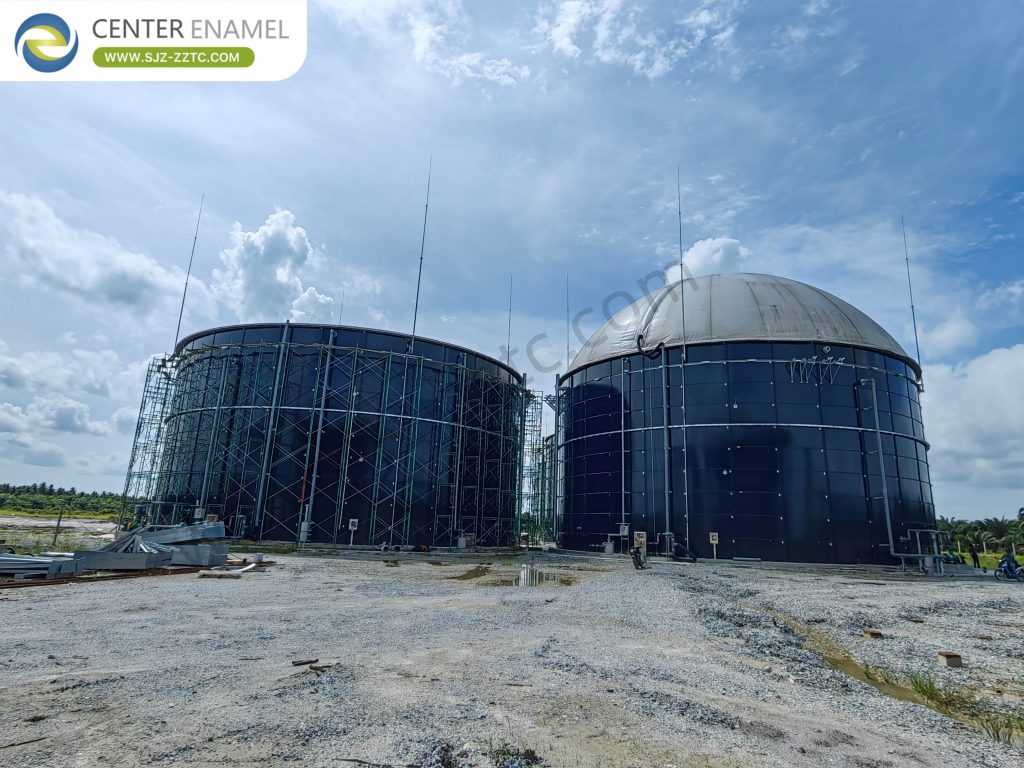
Within this evolving landscape, anaerobic biological treatment remains a cornerstone of high-strength Industrial Wastewater Treatment. The Internal Circulation (IC) reactor exemplifies how process innovation addresses the dual challenges of efficiency and footprint. Pretreated high-strength organic wastewater enters the lower main reaction zone from the bottom, mixing with recirculated sludge-water mixture and rising rapidly. Anaerobic microorganisms efficiently degrade organic matter, producing large volumes of biogas. The gas-lift action of biogas carries the mixed liquor upward to the top gas-liquid separator where biogas is collected. Degassed sludge-water mixture returns by gravity through downcomers to the reactor bottom, creating autonomous internal circulation that repeatedly enhances pollutant degradation. After multiple circulation cycles, the wastewater enters the upper polishing zone for further reaction and sludge-water separation. Remaining trace organics are fully degraded, sludge settles back to the lower reaction zone, treated effluent overflows from the top, and aged sludge is periodically discharged-fully autonomous circulation, efficient continuous operation.
Understanding the Challenge: Papermaking Wastewater Characteristics
Among the many industrial streams requiring specialized Wastewater Treatment Solutions, papermaking effluent stands out for its complexity and treatment difficulty. The key water quality characteristics include high suspended solids, high COD, high alkalinity, and large discharge volume-with suspended solids (fibers and fillers) being the most distinctive feature. Very high suspended solids, typically 1,000-5,000 mg/L, primarily consist of fiber fines, fillers such as calcium carbonate and talc, and colloidal substances. COD ranges widely: cooking black liquor can exceed 100,000 mg/L, while combined wastewater COD is approximately 1,500-5,000 mg/L. Cooking black liquor pH can reach 13 (strongly alkaline). BOD/COD is approximately 0.3-0.45, indicating moderate biodegradability, with lignin and cellulose being refractory. The wastewater is rich in lignin, hemicellulose, resin acids, tannins, and other plant extracts, contributing to moderate to high color (brown). Cooking and papermaking discharges occur at moderate to high temperatures of 40-60°C. Large mills discharge tens of thousands of tons daily, with relatively stable water quality despite production process variations.
Proven Performance: Brewery Wastewater Treatment in South Africa
The principles of anaerobic digestion and corrosion-resistant tankage translate effectively across industries. In South Africa’s brewing sector, Center Enamel delivered a high-strength wastewater treatment project featuring both Glass-Fused-to-Steel (GFS) tanks and stainless steel tanks as core equipment. GFS tanks serve as the primary anaerobic digestion system, suited to brewery wastewater’s high-COD, high-sugar, readily decomposable characteristics for efficient organic pollutant degradation. Stainless steel tanks are used for wastewater transfer and chemical storage supporting processes. The complete equipment package offers excellent corrosion resistance and flexible assembly, providing long-term stable treatment of brewery production and cleaning wastewater-solving local brewing industry pollution challenges. This represents a mature brewery wastewater treatment case in Africa, demonstrating the adaptability of Center Enamel’s Industrial Wastewater Treatment approach across diverse climatic and industrial contexts.
Table 1: Selected Center Enamel Industrial Wastewater Treatment Case Studies
| Project | Location | Industry | Core Equipment/Process | Key Challenge Addressed |
| South Africa Brewery Project | South Africa | Brewing | GFS tanks (anaerobic digestion) + stainless steel tanks | High-COD, high-sugar effluent; corrosion resistance |
| Provincial Paper Wastewater Projects (5 installations) | Guangdong, Hebei, Chongqing, Jiangsu, Sichuan (China) | Papermaking | Glass-Fused-to-Steel (GFS) tanks | Abrasive fibers, bleaching agents, pH fluctuations, strict discharge standards |
Manufacturing Excellence: The Foundation for Reliable Wastewater Treatment Solutions
Delivering dependable Wastewater Treatment Solutions at global scale requires manufacturing infrastructure that matches the demands of the industries served. Center Enamel’s core intelligent manufacturing base is located in Hebei Province, China, covering a total area of over 150,000 m², with a mature Phase I manufacturing facility and a Phase II high-end environmental equipment industrial park operating in dual-base synergy. The base includes dedicated R&D office buildings, proprietary material laboratories, and finished product testing centers, with full-process quality control systems meeting ISO, NSF, CE, and other international standards. The facility operates to green manufacturing standards, certified as a Provincial Green Factory, balancing efficient production with energy conservation and emission reduction. The company maintains 6 marketing service centers across China, establishing a nationwide production-sales network that ensures stable global order delivery. The base is adjacent to expressway networks and major logistics hubs, with complete container shipping capabilities-supporting simultaneous large-scale tank projects globally.
Integrated Delivery: From Design to Operation
What distinguishes Center Enamel in the Industrial Wastewater Treatment market is not merely equipment supply but a fully integrated delivery model. The company is the only globally integrated provider combining proprietary enamel frit R&D, self-manufactured tanks, and EPC general contracting-full-process self-control from solution design, equipment production, cross-border logistics, and overseas construction through to post-construction operation and maintenance. This integration significantly reduces client coordination burden and time costs, a critical advantage for projects spanning multiple suppliers and geographies.
Engineered Containment: Aluminum Geodesic Dome Roof Technology
Complementing its tank solutions, Center Enamel independently developed the Aluminum Geodesic Dome Roof for enhanced containment performance. Manufactured using high-strength aluminum alloy plates through integral stamping, the roof features a triangular grid spherical self-supporting structure, enabling large-span full coverage without internal support columns. Made of aluminum alloy, the roof offers excellent weather resistance and corrosion resistance, capable of long-term protection against acid rain, salt spray, and UV radiation-suitable for various extreme outdoor climate conditions. The structural design complies with international AWWA D108 standards, with aluminum plate thickness, rib cross-sections, and joint connections all verified by finite element stress analysis, ensuring wind and snow load resistance that meets building code requirements across different global regions. The weight of the Aluminum Geodesic Dome Roof is only one-third to one-half of a steel roof with the same span, significantly reducing the load on the tank top and allowing direct installation without tank wall reinforcement. The roof provides superior overall sealing performance, with double sealing between panels using specialized sealant strips and mechanical interlocking, enabling both airtight gas storage and enclosed odor control-suitable for biogas collection and storage, wastewater tank odor control, and drinking water contamination prevention. The support-column-free design does not interfere with the installation and operation of internal equipment such as mixers and water distributors. The aluminum material does not support microbial growth, requiring no anti-corrosion maintenance over long-term use, resulting in low total life-cycle costs.
Table 2: Key Performance Parameters
| Parameter | Specification/Value | Significance |
| Manufacturing Base Area | >150,000 m² (dual-base) | Capacity for simultaneous global projects |
| GFS Tank Capacity Range | 200 – 60,000 m³ | Scalable for diverse Industrial Wastewater Treatment needs |
| Aluminum Dome Roof Weight | 1/3 – 1/2 of equivalent steel roof | Reduced structural load; no wall reinforcement required |
| Anaerobic COD Removal | 80–90% (rising to 90–98% with aerobic polishing) | Core efficiency metric for high-strength streams |
Frequently Asked Questions
What makes papermaking wastewater difficult to treat?
Papermaking effluent contains high COD from lignin and cellulose, abrasive suspended solids (1,000-5,000 mg/L), and residual chemicals. It requires corrosion-resistant containment and robust anaerobic treatment to meet strict discharge standards.
How do GFS tanks benefit Industrial Wastewater Treatment?
Glass-Fused-to-Steel tanks fuse the strength of steel with inert glass, resisting acidic and H₂S-bearing liquors common in anaerobic digestion. They assemble rapidly, scale from 200 to 60,000 m³, and avoid the cracking and curing delays of concrete.
What is the advantage of Center Enamel’s integrated delivery model?
Center Enamel controls enamel frit R&D, tank manufacturing, and EPC contracting in-house. This eliminates coordination gaps between suppliers, shortens project timelines, and ensures a single point of accountability from design through commissioning.
Ready to discuss your project’s specific flow, load, and discharge requirements? Share your wastewater profile with our engineering team, and we will configure a treatment solution built for your site’s exact conditions.
Contact Center Enamel today to receive a tailored proposal for your next Industrial Wastewater Treatment project.