
Industrial Wastewater Treatment in Guinea | Anaerobic Technologies & EPC Contractor Solutions
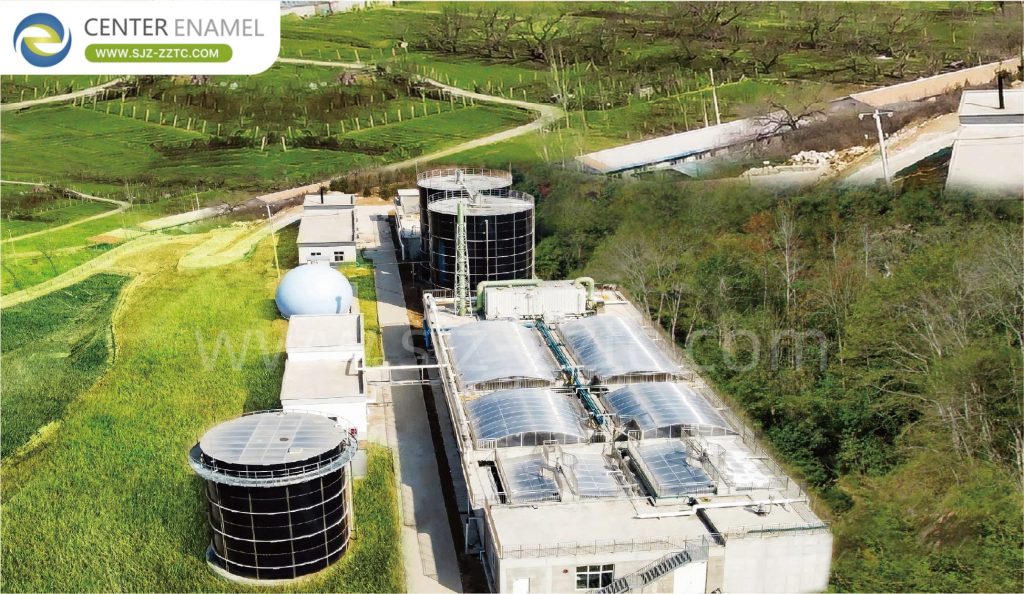
Guinea's industrial sector is expanding, particularly in food and beverage processing. While this growth brings economic benefits, it also generates significant volumes of high-strength industrial wastewater. Without proper treatment, this effluent can contaminate local rivers, harm aquatic life, and create public health risks for downstream communities.
A modern Biogas Project in Guinea addresses this challenge directly. Designed for a beverage production facility, the plant treats 100m³ of industrial wastewater per day using a multi-stage treatment train: Dissolved Air Flotation (DAF), hydrolysis acidification, bio-contact oxidation, sedimentation, and final ozone oxidation. The project was completed in 2024 and is now fully operational. An experienced EPC Contractor delivered full turnkey services from preliminary planning to site management and project realization.
This article details the technical design, treatment performance, and operational benefits of this industrial wastewater treatment facility.
Why Industrial Wastewater Treatment Matters for Guinea
Guinea's industrial base is growing, particularly in the beverage and food processing sectors. These industries produce wastewater characterized by:
High organic load – COD and BOD levels significantly above typical domestic sewage.
Variable flow rates – Batch discharges from cleaning cycles, production shifts, and equipment washing.
Suspended solids – Particles, fibers, and residues from production processes.
Variable pH – Acidic or alkaline discharges depending on cleaning chemicals used.
Fats, oils, and grease (FOG) – From equipment lubrication and processing residues.
Without effective treatment, such wastewater would violate environmental regulations, harm receiving waters, and create public health risks. This Biogas Project demonstrates how a compact, multi-stage treatment train can transform industrial wastewater into a compliant discharge.
Project Overview: 100m³/day Beverage Factory Wastewater Treatment
| Parameter | Detail |
| Application Field | Industrial wastewater |
| Location | Guinea |
| Treatment Process | DAF + Hydrolysis Acidification + Bio-Contact Oxidation + Sedimentation + Ozone Oxidation |
| Flow Rate | 100 m³/day |
| Tank Dimensions | Φ6.11 × 4.8m (H) – 1 unit |
| Completion Date | 2024 |
| Operating Status | Fully operational since commissioning |
| Scope by EPC Contractor | Preliminary planning, implementation planning, site management, project realization |
The plant operates on a daily cycle, handling production wastewater from bottling, equipment cleaning, and floor washing. The compact design – a single tank of 6.11 meters in diameter and 4.8 meters in height – integrates multiple treatment zones, minimizing land use while maximizing treatment efficiency.
Treatment Process Overview
The five-stage treatment train is specifically designed for beverage industry wastewater, which typically contains sugars, starches, cleaning chemicals, and suspended solids.
Stage 1: Dissolved Air Flotation (DAF)
DAF is the first physical-chemical treatment step. It removes fats, oils, grease, and fine suspended solids that would otherwise clog downstream biological reactors.
How DAF works:
A portion of the treated effluent is recycled, pressurized with air, then released into the flotation tank.
As pressure drops, microscopic air bubbles form and attach to suspended particles and oil droplets.
The attached bubbles lift the particles to the water surface, forming a float layer.
A mechanical skimmer removes the float layer (sludge) for separate disposal or dewatering.
Clarified water flows to the next treatment stage.
Performance for this project:
Removes 80–90% of suspended solids.
Removes 70–85% of fats, oils, and grease.
Reduces COD load on downstream biological stages.
Stage 2: Hydrolysis Acidification (Anaerobic Technologies)
The second stage uses Anaerobic Technologies – specifically hydrolysis acidification – to break down complex organic molecules into simpler compounds. This is a critical step for beverage wastewater, which contains sugars, starches, and other easily fermentable materials.
How hydrolysis acidification works:
The tank operates under anaerobic (no oxygen) conditions.
Hydrolytic bacteria break down complex organic polymers (carbohydrates, proteins, fats) into soluble monomers (sugars, amino acids, fatty acids).
Acidogenic bacteria convert these monomers into volatile fatty acids (VFAs), alcohols, hydrogen, and carbon dioxide.
Unlike full methanogenic anaerobic digestion, this stage stops at VFAs – producing no methane but significantly improving wastewater biodegradability.
Why hydrolysis acidification is ideal for beverage wastewater:
| Benefit | Explanation |
| Increases BOD/COD ratio | Makes the wastewater more suitable for aerobic treatment |
| Reduces pH fluctuations | Stabilizes incoming acidic or alkaline discharges |
| Partial COD removal | Reduces load on the bio-contact oxidation stage |
| Low energy input | No aeration required |
| Handles shock loads | Buffers against sudden changes in flow or concentration |
This Anaerobic Technology stage typically removes 30–50% of COD while converting the remaining organic matter into forms that are easily consumed by aerobic bacteria.
Stage 3: Bio-Contact Oxidation (Aerobic)
The third stage is an aerobic biological treatment process known as bio-contact oxidation. It is a fixed-film system that combines the advantages of activated sludge and trickling filters.
How bio-contact oxidation works:
The tank contains submerged fixed media (plastic bio-carriers) that provide large surface areas for biofilm growth.
Air is introduced through fine bubble diffusers at the tank bottom.
Aerobic bacteria grow as a biofilm on the media surfaces.
Wastewater flows through the media, and organic pollutants diffuse into the biofilm.
Bacteria consume the organic matter, converting it into carbon dioxide, water, and new bacterial cells.
Excess biofilm naturally sloughs off and is carried to the sedimentation stage.
Advantages of bio-contact oxidation for this Biogas Project:
High biomass concentration – The fixed media retains more bacteria than conventional activated sludge.
Shock load tolerance – The biofilm protects bacteria from sudden changes in wastewater strength.
Low sludge production – Less excess sludge compared to suspended growth systems.
Simple operation – No sludge return line required (unlike activated sludge).
Compact footprint – Fits within the single 6.11m diameter tank.
Performance:
Removes 80–90% of remaining BOD and COD.
Converts ammonia to nitrate (partial nitrification).
Stage 4: Sedimentation
The fourth stage is a sedimentation (settling) tank, also called a secondary clarifier. It separates biological solids from the treated water before final polishing.
How sedimentation works:
Flow enters the center of the tank and moves slowly outward.
Sloughed biofilm and suspended solids settle to the bottom by gravity.
A sludge hopper collects the settled solids.
Clear supernatant flows over an outlet weir to the ozone stage.
Settled sludge is periodically removed for disposal or dewatering.
Performance:
Removes 90–95% of suspended solids.
Achieves effluent SS below 50 mg/L (prior to ozone polishing).
Stage 5: Ozone Oxidation (Final Polishing)
The fifth and final stage uses ozone (O₃) – a powerful oxidant – to provide tertiary treatment. This step ensures that the final effluent meets the most stringent discharge standards.
How ozone oxidation works:
Ozone gas is generated on-site from dry air or oxygen using corona discharge technology.
Ozone is injected into the wastewater through a venturi injector or diffuser.
Ozone reacts directly with organic molecules, breaking them down.
Ozone also decomposes into hydroxyl radicals (•OH), which are even more reactive.
The process oxidizes residual COD, destroys color, removes odors, and disinfects pathogens.
Benefits of ozone for this Biogas Project:
| Benefit | Application |
| COD polishing | Reduces COD to <100 mg/L |
| Decolorization | Removes color from beverage wastewater (sugar browning, dyes) |
| Odor removal | Oxidizes sulfur compounds and other odorous molecules |
| Disinfection | Destroys bacteria and viruses without chemical residues |
| No chemical storage | Ozone is generated on-site; no need for chlorine or bleach |
Performance:
Removes 50–70% of residual COD after sedimentation.
Achieves final COD <100 mg/L.
Complete disinfection (no detectable fecal coliforms).
Effluent is clear and odorless.
Single Tank Design: Compact and Efficient
All five treatment stages are integrated into a single glass-fused-to-steel tank measuring Φ6.11 meters in diameter × 4.8 meters in height. This compact configuration offers several advantages:
| Advantage | Benefit for Guinea |
| Small footprint | Ideal for industrial sites with limited space |
| Lower civil costs | One foundation, one tank assembly |
| Faster installation | Bolted GFS panels assemble in days, not weeks |
| Easy future expansion | Additional tanks can be added in parallel |
| Reduced piping | Internal weirs and baffles eliminate external connections |
| Simplified operation | Single tank, single control panel, one point of access |
The tank is constructed from Glass-Fused-to-Steel (GFS), which provides exceptional corrosion resistance against beverage wastewater (pH fluctuations, cleaning chemicals) and Guinea's tropical humidity.
The Role of an EPC Contractor in Industrial Wastewater Projects
Delivering a 100m³/day industrial treatment plant in Guinea requires expertise across multiple disciplines. The EPC Contractor (Engineering, Procurement, Construction) provides single-point responsibility from concept through commissioning.
Scope Delivered by the EPC Contractor
For this Biogas Project, the EPC Contractor performed:
Preliminary Planning
Site assessment and topographical survey.
Wastewater characterization (sampling and analysis of beverage plant effluent).
Technology selection (DAF + hydrolysis acidification + bio-contact oxidation + sedimentation + ozone).
Hydraulic profile and mass balance calculations.
Regulatory permit assistance (Guinea environmental authorities).
Implementation Planning
Detailed engineering of the integrated tank (zone separation, inlet/outlet positioning).
DAF system design (recycle pump, air saturation vessel, skimmer mechanism).
Hydrolysis acidification zone design (mixer selection, baffle placement).
Bio-contact oxidation design (media type, volume, diffuser layout, blower sizing).
Sedimentation zone design (hopper angle, weir leveling).
Ozone generation system (generator sizing, injection method, off-gas destruction).
Control system (PLC-based with local HMI).
Civil drawings for tank foundation.
Site Management
On-site supervision of foundation construction.
Tank assembly supervision (GFS bolted panels).
Equipment installation (DAF skimmer, blower, ozone generator, piping).
Quality control and safety compliance.
Coordination with local contractors.
Progress reporting to the client.
Project Realization & Handover (2024)
Equipment installation and system integration.
System startup: filling, calibration of DAF, blower startup, ozone generator tuning.
Biological activation: seeding the hydrolysis acidification and bio-contact oxidation zones.
Performance testing to guarantee final effluent quality.
Operator training for daily rounds, chemical handling (if any), and troubleshooting.
As-built documentation and warranty support.
By engaging a single EPC Contractor, the beverage factory owner avoided coordination risks between multiple vendors and ensured the plant was completed on schedule (2024) and within budget.
Environmental and Operational Benefits
Pollution Reduction
The plant removes from the industrial wastewater stream daily:
COD removal: >90% (to <100 mg/L).
BOD removal: >95% (to <30 mg/L).
Suspended solids removal: >95% (to <30 mg/L).
FOG removal: >90% via DAF.
Bacterial disinfection: Complete via ozone.
Water Reuse Potential
The final effluent – clear, odorless, and disinfected – can be used for:
Irrigation of landscaping or non-edible plants.
Cooling tower makeup water (with minimal additional treatment).
Facility washing (floors, vehicles, equipment).
Dust suppression on site roads.
Regulatory Compliance
The plant ensures the beverage facility meets Guinea's industrial discharge standards, avoiding fines, shutdown orders, and reputational damage.
Odor Control
Unlike open lagoons, the sealed tank design contains odors. The ozone stage also oxidizes any remaining odorous compounds, producing a neutral final effluent.
Technical Durability: GFS Tank for Guinea's Climate
Guinea's tropical climate – high humidity, heavy rainfall, and warm temperatures – demands corrosion-resistant materials. The EPC Contractor selected a Glass-Fused-to-Steel (GFS) tank for this project.
Why GFS Tanks Are Ideal
| Feature | Benefit |
| Glass-fused-to-steel coating | Impervious to H₂S, organic acids, and cleaning chemicals |
| Bolted assembly | No on-site welding; installation in days |
| Factory-coated | Consistent quality; no field coating errors |
| UV-resistant | Withstands intense tropical sun without degradation |
| Low maintenance | No repainting or recoating required for decades |
The single GFS tank houses all five treatment zones, with internal baffles and weirs directing flow between stages.
Scaling Up: From 100m³/day to Larger Capacities
The DAF + hydrolysis acidification + bio-contact oxidation + sedimentation + ozone design is highly scalable:
| Plant Capacity | Typical Configuration |
| 50–200 m³/day | Single integrated GFS tank (as in this project) |
| 200–500 m³/day | Multiple tanks in parallel or larger diameter tank |
| >500 m³/day | Concrete basins or multiple GFS tank trains |
The same Anaerobic Technologies (hydrolysis acidification) and EPC Contractor model applies directly to larger industrial plants. Only the number and size of tanks, blower capacity, and ozone generator size change.
A Compact Solution for Guinea's Beverage Industry
This Biogas Project in Guinea demonstrates that beverage factory wastewater can be treated reliably, economically, and in a small footprint using a multi-stage process: DAF, hydrolysis acidification (an Anaerobic Technology), bio-contact oxidation, sedimentation, and ozone oxidation. The plant treats 100m³/day, achieves >90% COD removal, and produces a clear, disinfected effluent suitable for reuse or safe discharge. Completed in 2024, the facility is fully operational.
The turnkey delivery by an experienced EPC Contractor – from preliminary planning through site management to project realization – removed technical risk and ensured the plant was completed on schedule. For beverage and food processing facilities across Guinea and West Africa, this project serves as a practical, replicable benchmark.
By investing in this compact treatment train, industrial facilities can achieve environmental compliance, reduce water consumption through reuse, and demonstrate genuine commitment to sustainable operations.
Frequently Asked Questions (FAQs)
Q1: Why is hydrolysis acidification (an Anaerobic Technology) necessary for beverage wastewater treatment?
Beverage wastewater contains complex sugars, starches, and cleaning chemicals. Hydrolysis acidification breaks these complex molecules into simple volatile fatty acids (VFAs). This step increases the BOD/COD ratio, making the wastewater much easier for the aerobic bio-contact oxidation stage to treat. Without this Anaerobic Technology stage, the aerobic system would require longer retention times and produce more sludge.
Q2: Can Center Enamel deliver a similar industrial wastewater Biogas Project for my factory as the EPC Contractor?
Yes. As an EPC Contractor, Center Enamel provides complete turnkey solutions including preliminary planning, implementation planning, site management, and project realization. Center Enamel's glass-fused-to-steel tanks are ideal for integrating multiple treatment stages (DAF, hydrolysis acidification, bio-contact oxidation, sedimentation, ozone) into a single compact footprint. Their bolted tank design allows rapid installation even in remote locations in Guinea. Contact their team with your flow rate and influent characteristics for a customized proposal.
Q3: How quickly can a GFS tank-based treatment plant like this be installed in Guinea?
Very quickly. The Glass-Fused-to-Steel (GFS) tank uses factory-coated, bolted panels that assemble on-site in days, not months – no welding or concrete curing required. For this 100m³/day Biogas Project, the EPC Contractor completed tank erection in under two weeks.