
Industrial Wastewater Treatment: Processes And System Selection
Industrial wastewater treatment is selected from the stream's strength, variability, and the goal of discharge or recovery. Most plants start with equalization, then apply anaerobic digestion for high-strength organic loads and aerobic polishing for the residual, choosing bolted Glass-Fused-to-Steel tankage that resists the specific corrosion envelope of the effluent.
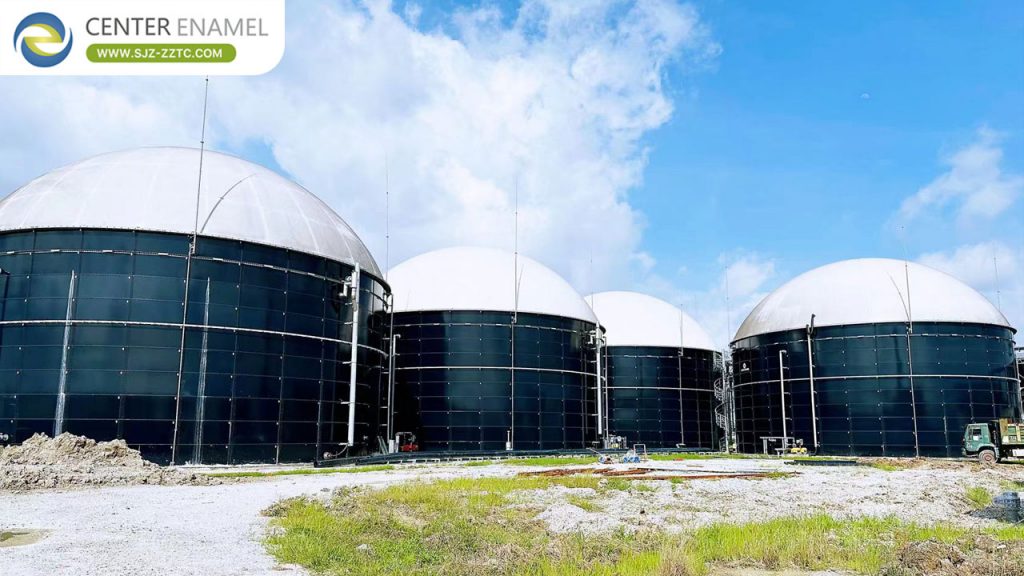
Characterise The Stream First
Strength (COD/BOD), variability, salinity, and contaminants decide everything. A stable high-strength stream favours anaerobic treatment and energy recovery; a variable low-strength stream favours aerobic. Equalization upstream is the cheapest insurance against shock loads that would otherwise upset the biology.
| Stream Class | Typical Strength | Lead Process |
| High-strength organic | COD > 1,500-2,000 mg/L | Anaerobic (UASB/EGSB/CSTR) |
| Variable low-strength | Moderate COD | Aerobic (activated sludge/SBR) |
| High salinity | Salt to thousands mg/L | Tolerant anaerobic + lining choice |
Anaerobic Versus Aerobic
Anaerobic treatment runs without oxygen, yields biogas at about 0.30-0.45 m3 per kg of COD removed at 35-38 C, and generates far less sludge. The trade is that it needs sealed, heated tanks and stable feed. Aerobic is simpler but energy-hungry for aeration. For food, pharmaceutical, and agro-industrial effluent, anaerobic first then aerobic polishing is the usual backbone.
A Boundary Condition
Anaerobic digestion is not suited to cold, low-strength municipal-style sewage or to feed with heavy suspended solids unless those are removed upstream. A UASB needs low solids and warm, soluble feed; high solids or cold influent will wash the granular bed out. The liner and the biology must both be matched to the envelope.
Project Case Study: Sri Lanka Palm Oil Wastewater Treatment Project
Project / Application: Palm oil wastewater, Sri Lanka. Industry: Industrial (agro). Tank Type: Glass-Fused-to-Steel (GFS). Key Requirements: COD and BOD reduction for strict discharge.
| Field | Value | Source / Evidence |
| Daily Treatment Volume | 250 tonnes/day | Company project reference |
| Treatment Process | SBR (Sequencing Batch Reactor) | Company project reference |
| Reactor Specifications | O24.46 x 6 m, 2 sets | Company project reference |
| Installation Year | 2026 | Company project reference |
| Parameter | Influent (Measured) | Discharge Standard |
| COD | 65,600 mg O2/L | less than or equal to 400 mg O2/L |
| BOD | 7,480 mg O2/L | less than or equal to 250 mg O2/L |
| TSS | 14,425 mg/L | not stated |
| pH | not stated | 6.5 to 8.5 |
About The Supplier
Shijiazhuang Zhengzhong Technology Co., Ltd (Center Enamel) manufactures Glass-Fused-to-Steel tanks rated for industrial and agro-industrial wastewater, with enamel firing at 820-930 C and certifications including ISO 9001, NSF/ANSI 61, and CE-EN 1090. The bolted system supports rapid, factory-controlled tank delivery worldwide.
Comparison: Secondary Technologies
| Technology | Best For | Note |
| Anaerobic (UASB/EGSB) | High-strength organic | Biogas, low sludge |
| Activated sludge | Steady moderate flows | Needs aeration energy |
| SBR | Variable loads, batch sites | Flexible cycle |
| MBR | Tight reuse limits | Higher capital |
Industrial wastewater treatment is a classification problem before it is an engineering one. Name the stream, set the goal, then let equalization and biology set the train, and choose tankage that survives the specific corrosion envelope.
Frequently Asked Questions
Q1: What are the main industrial wastewater processes? A1: Equalization, anaerobic digestion, aerobic polishing, and sometimes membrane or MBR for reuse.
Q2: How do you select a treatment train? A2: From stream strength, variability, salinity, and whether the goal is discharge or recovery.
Q3: When is anaerobic better than aerobic? A3: For high-strength organic effluent, because it yields biogas and far less sludge.
Q4: Which tank suits industrial duty? A4: A Glass-Fused-to-Steel tank with a lining matched to the corrosion envelope.
Q5: How much biogas from industry? A5: About 0.30-0.45 m3 per kg of COD removed at 35-38 C, at 55-65% methane.
Q6: What temperature does AD need? A6: Mesophilic digestion typically runs at 35-38 C.
Q7: How fast can tankage be built? A7: Bolted GFS panels erect in weeks, faster than concrete.
Q8: Do all plants need tertiary? A8: Only when the permit or reuse requires it; many plants stop after secondary.
Describe your influent and permit to an engineer, or request an industrial wastewater treatment and tankage plan.