
How Can an Industrial Wastewater Treatment Project EPC Contractor Solve Global Regional Challenges?
The global landscape of industrial wastewater management is undergoing a distinct shift. The Asia-Pacific region, particularly China, has become the world's largest industrial wastewater treatment market, with the operation and maintenance service segment's contribution continuing to rise-marking a clear transition from project construction to long-term operational management. North America focuses on upgrading existing facilities, while Europe emphasizes high-value-added resource recovery technologies.
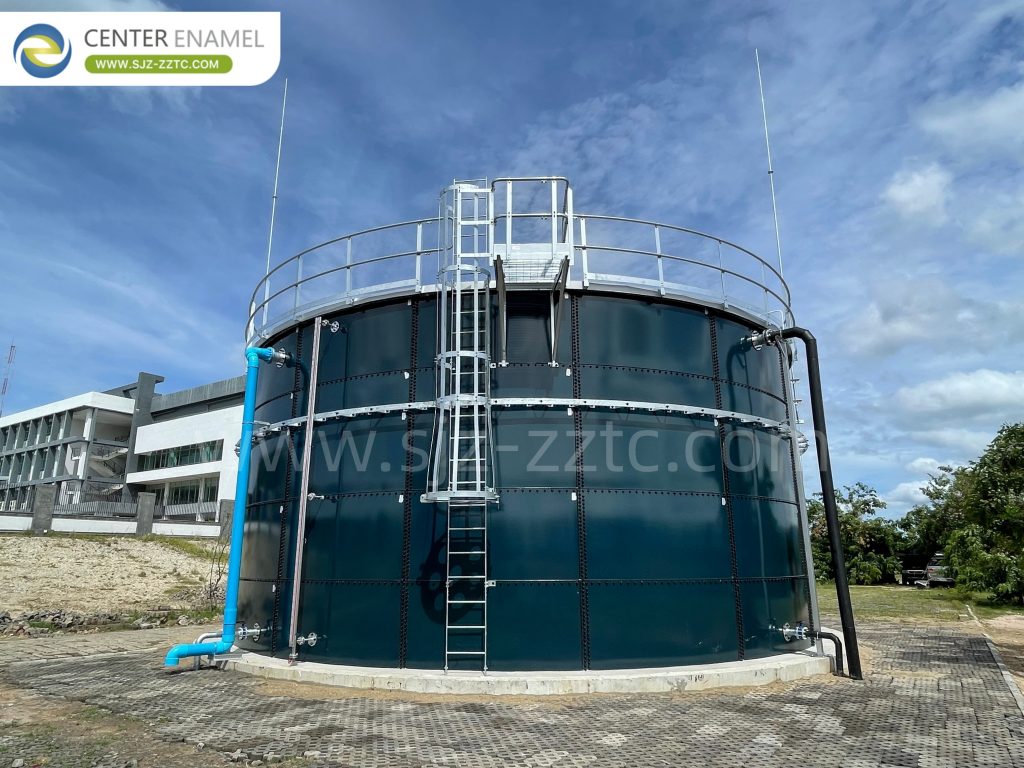
Wastewater from the new energy industry chain-lithium batteries, photovoltaics, and hydrogen-has emerged as the most notable growth area due to its complex composition and high treatment difficulty, generating significant demand for customized solutions. Meanwhile, the maturity of third-party treatment models in industrial parks drives consolidation in the professional operation market. The Middle East shows strong demand for advanced treatment and reuse due to water scarcity, and manufacturing transfer in Southeast Asia fuels local facility construction. Navigating this diverse landscape requires a capable Industrial Wastewater Treatment Project EPC Contractor with globally adaptable solutions, which is exactly where GFS Tanks and integrated engineering expertise come into play.
How Do GFS Tanks Adapt to Complex Operating Conditions Across Industries?
Center Enamel has independently developed over 200 specialized enamel frit formulations and supporting patents, capable of customizing anti-corrosion enamel based on customer storage media, with adaptability comprehensively superior to concrete tanks. Concrete tanks use a single material and are only suitable for neutral clean water storage. When storing corrosive materials such as livestock manure, palm oil mill effluent, chemical wastewater, food waste digestate, or high-salinity wastewater, additional anti-corrosion linings must be applied. These linings are prone to failure, preventing long-term stable operation, and cannot adapt to alternating high/low concentration storage conditions. GFS Tanks, by contrast, can be specifically formulated with specialized enamels resistant to strong acids, strong alkalis, high organic content, and high salinity. A single tank can switch between multiple wastewater and fermentation feedstock storage requirements. They are universally applicable across biogas anaerobic digestion, municipal wastewater, livestock farming, food processing, and industrial water treatment scenarios, eliminating the need to rebuild tanks for media changes and perfectly meeting the needs of diversified, multi-condition environmental protection projects.
What Supporting Equipment Is Required for an Integrated IC System?
The core equipment is the GFS tank with a built-in gas-lift internal circulation system and upper/lower three-phase separators-key components for autonomous circulation and sludge-water separation. A bottom precision distribution system and pressure-regulating feed device ensure uniform, stable influent. Supporting equipment includes influent lift pumps, equalization tanks, and flow meters for precise influent control, alongside top high-efficiency biogas collection, desulfurization, dehydration, and storage integrated equipment. High-precision online monitoring equipment provides real-time temperature, pH, COD, and level monitoring. Bottom and mid-section dedicated sludge discharge pipes and recirculation control devices mean no external return pumps are needed for internal circulation. The complete system is highly integrated, with no excess external equipment, a compact structure, and high automation.
Table 1: Core Components of the Integrated IC System
| System Component | Function | Key Advantage |
| GFS Tank with Gas-Lift | Autonomous internal circulation & separation | No external return pumps |
| Precision Distribution System | Uniform, stable influent | Pressure-regulated feed |
| Online Monitoring Equipment | Real-time temperature, pH, COD, level | High automation |
| Biogas Integrated Equipment | Collection, desulfurization, storage | High efficiency |
| Sludge Discharge & Recirculation | Sludge management | Compact, integrated design |
How Are Standardized Treatment Solutions Designed for Chemical Wastewater?
Chemical wastewater demands a long combined treatment train of "segregated pretreatment + advanced oxidation + anaerobic digestion + aerobic treatment + advanced treatment." Pretreatment involves segregated collection based on wastewater type: oily wastewater is first treated by oil separation and DAF; phenolic wastewater by solvent extraction; high-salinity by evaporation crystallization; high-cyanide by cyanide destruction; and heavy metal-containing by chemical precipitation. After pretreatment, wastewater enters advanced oxidation (Fenton, ozone catalytic oxidation, electrochemical oxidation) to break down macromolecular toxic organics and improve biodegradability.
The main biochemical stage uses IC/UASB anaerobic + A/O or SBR aerobic coupled processes for organic pollutant degradation. High-salinity wastewater requires halophilic bacteria acclimation. Final advanced treatment uses activated carbon adsorption, reverse osmosis membrane separation, and evaporation crystallization to ensure effluent compliance or reuse. Because the train is lengthy with multiple equipment and complex controls, tanks preferentially use Center Enamel GFS Tanks resistant to high salinity, strong acids/bases, and strong oxidant corrosion-a critical advantage for any Industrial Wastewater Treatment Project EPC Contractor.
How Does a Global Service System Support Overseas Project Delivery?
Leveraging regional sales centers in China and overseas local agent networks, Center Enamel has established a complete after-sales service loop covering all markets. The system provides four core service pillars: a 24/7 rapid response mechanism, on-site domestic/overseas installation services, full-project-cycle after-sales support, and long-term warranty protection-forming a complete service chain from preliminary site survey, mid-term construction management, to long-term inspection and maintenance. The entire system is uniformly adapted to both domestic and international project service standards, coordinating personnel scheduling, material support, and on-site coordination for simultaneous projects across multiple regions-significantly reducing customer multi-party coordination costs.
What Certifications and Roof Solutions Complete the EPC Package?
Center Enamel holds CE, NSF, WRAS, ISO9001, BSCI, ASME, and other global certifications-fully clearing EU, North American, Southeast Asian, and African project tendering barriers and providing critical hard credential advantages for large overseas project bidding. Complementing this, the Aluminum Alloy Trough Deck Roof is a cost-effective economical tank cover solution for clean water and wastewater storage, primarily designed for drinking water, production wastewater, and firewater reserve tanks. The main body is integrally formed from anti-corrosion aluminum alloy plates paired with aluminum support trusses. Its lightweight design imposes less load on the tank foundation, reducing civil construction investment. A naturally formed dense oxide protective layer resists rain and mild wastewater corrosion, effectively blocking wind, rain, insects, fallen leaves, and odor volatilization to prevent secondary contamination. The flat roof structure allows installation of maintenance walkways, guardrails, vents, and level monitoring ports, facilitating daily inspection. The simple sealing structure enables straightforward installation with short construction timelines and virtually eliminates anti-corrosion painting maintenance, resulting in extremely low operational costs. It is widely implemented in waterworks clear water tanks, industrial circulating water tanks, park firewater tanks, and domestic wastewater temporary storage facilities.
Table 2: Global Certifications and Their Market Impact
| Certification | Region Cleared | Project Benefit |
| CE | EU | European tendering eligibility |
| NSF / WRAS | North America / UK | Drinking water compliance |
| ISO9001 | Global | Quality management assurance |
| ASME | North America | Pressure equipment standards |
| BSCI | Global | Social compliance credibility |
Frequently Asked Questions
Q1: Why choose an EPC contractor with in-house GFS tank capability?
An Industrial Wastewater Treatment Project EPC Contractor with in-house GFS Tanks controls tank quality, corrosion resistance, and installation schedules-reducing coordination risk and ensuring long-term stability.
Q2: Can GFS tanks handle high-salinity and strong oxidant chemical wastewater?
Yes. Customized enamel formulations resist high salinity, strong acids/bases, and oxidants, outperforming concrete tanks that require failure-prone linings.
Q3: How does the global service system support overseas projects?
Through 24/7 response, on-site international installation, full-cycle after-sales support, and long-term warranty-backed by CE, NSF, WRAS, and ASME certifications.
Seeking a reliable Industrial Wastewater Treatment Project EPC Contractor for your next development? Connect with Center Enamel to discuss your project scope and let our specialists propose the right GFS Tanks and treatment configuration. Send us your requirements today, and our team will deliver a tailored plan engineered for compliance, durability, and cost efficiency.