
How Can an Industrial Wastewater Treatment Project EPC Contractor Solve High-Strength Effluent Challenges?
Industrial wastewater treatment has become one of the most pressing challenges facing manufacturers worldwide. As environmental regulations tighten and discharge standards grow increasingly stringent, industries ranging from new energy to chemicals and pharmaceuticals are under pressure to adopt more efficient, cost-effective, and sustainable treatment technologies.
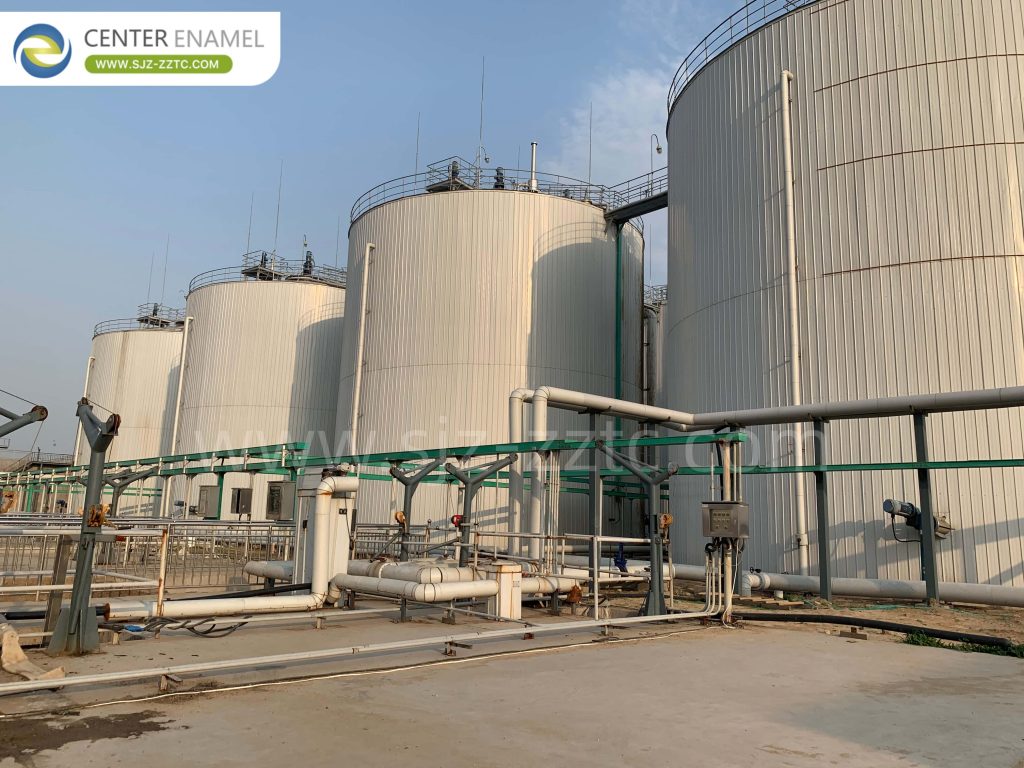
At the heart of this transformation lies anaerobic digestion-a proven biological process that converts organic pollutants into clean biogas while dramatically reducing sludge production and energy consumption. For organizations seeking a reliable partner to deliver these complex systems, selecting an experienced Industrial Wastewater Treatment Project EPC Contractor is the critical first step toward compliance and long-term operational success.
Core Industry Challenges Driving Technological Innovation
The core challenges of industrial wastewater treatment center on the "three highs"-high difficulty, high cost, and high energy consumption. Wastewater from new energy, chemical, and pharmaceutical industries is complex in composition with numerous characteristic pollutants, and traditional treatment processes struggle to remove them effectively. While Chinese companies have established significant price advantages in the mid- to low-end equipment segment, the industry as a whole faces continuous technological upgrade pressure from increasingly stringent emission standards. These pressures are compounded by new requirements for digitalization and low-carbon transformation, demanding operational refinement management capabilities that many conventional treatment systems cannot deliver.
These converging challenges have accelerated the adoption of advanced anaerobic digestion technologies. Unlike aerobic treatment, which consumes substantial energy for aeration, anaerobic digestion generates energy in the form of biogas while achieving superior removal rates for high-strength organic pollutants. This dual benefit-pollution reduction coupled with energy recovery-has positioned anaerobic digestion as the cornerstone of modern industrial wastewater treatment strategies.
Understanding the IC Process: The Engine of Modern Anaerobic Digestion
IC, or Internal Circulation Anaerobic Reactor, represents the third-generation high-efficiency anaerobic treatment technology built upon the foundation of UASB (Upflow Anaerobic Sludge Blanket). Its core innovation is the built-in gas-lift internal circulation system, which enables autonomous wastewater recirculation without external return pumps. This elegant engineering solution dramatically reduces mechanical complexity while improving process reliability.
The reactor features a distinctive dual-zone configuration: a lower main reaction zone where the bulk of organic degradation occurs, and an upper polishing zone that ensures final effluent quality. Biogas produced in the lower zone creates a gas-lift effect that drives hydraulic internal circulation, significantly increasing upflow velocity and enhancing contact between sludge and wastewater. The result is exceptionally high treatment efficiency in a compact footprint.
With extremely high compactness, the IC reactor is specifically designed for high-concentration, high-flow industrial organic wastewater, combining high efficiency, energy savings, and minimal footprint. It has become the core process for modern industrial high-strength wastewater treatment and a key technology offering from any qualified Industrial Wastewater Treatment Project EPC Contractor.
Pharmaceutical Wastewater: Sources and Characteristics
Pharmaceutical wastewater originates from the entire production process of chemical synthesis, fermentation antibiotics, traditional Chinese medicine, and biopharmaceuticals, representing a typical high-difficulty industrial wastewater. Key pollution-generating stages include raw material washing, reaction synthesis, fermentation culture, extraction crystallization, and filtration separation. Auxiliary wastewater includes equipment washing, workshop floor cleaning, laboratory testing, and exhaust gas scrubbing.
The composition of pharmaceutical wastewater varies significantly by production type. Fermentation wastewater mainly consists of bacterial cell residues and spent culture media, contributing high organic loads and complex nitrogen compounds. Chemical synthesis wastewater is rich in reaction byproducts and organic solvent residues, often containing toxic and recalcitrant compounds that inhibit biological treatment. Traditional Chinese medicine wastewater is concentrated in herb decoction and alcohol precipitation/concentration stages, presenting high COD and color intensity.
Wastewater generation is continuous, with significant variations due to drug type and production batch changes. Small and medium-sized pharmaceutical companies often lack stable production conditions, causing extreme fluctuations in water quality and quantity-creating the highest industry-wide pollution control difficulty. These characteristics make anaerobic digestion both essential and challenging, requiring robust reactor design and experienced operational oversight.
Proven Anaerobic Digestion: The Pakistan Biogas Demonstration Project
The effectiveness of anaerobic digestion is best demonstrated through real-world implementation. Center Enamel served as the general contractor for the Pakistan Food Waste + Napier Grass Biogas Demonstration Project, a landmark initiative showcasing the viability of mixed-feedstock anaerobic digestion.
| Project Parameter | Specification |
| Location | Pakistan |
| Feedstock | Food waste + Napier grass |
| Core Process | CSTR (Continuous Stirred Tank Reactor) |
| Biogas Production | 100 m³/day |
| Project Type | Official demonstration project |
| Future Plan | Multiple large-scale biogas projects |
The project utilizes CSTR as the core anaerobic process, using food waste and Napier grass as mixed fermentation feedstock. The system is equipped with a mechanical mixing system that ensures thorough mixing of feedstock and anaerobic microorganisms, achieving efficient organic degradation with stable daily biogas production of 100 m³. This installation serves as the local official demonstration project for validating gas production efficiency and long-term continuous operational stability. Following successful pilot operation, multiple large-scale Napier grass biogas projects are planned locally to promote biomass clean energy and support regional low-carbon development-a clear endorsement of the anaerobic digestion approach.
Building Excellence: Construction Team Manpower Reserve
Delivering complex anaerobic digestion systems across diverse geographies requires more than technology-it demands execution capability. Center Enamel has established its own domestic and international certified construction teams, with regular practical training on GFS tank installation and overseas construction standards for various countries.
| Capability | Details |
| Domestic Teams | Regional teams covering multiple zones |
| Large Projects | Simultaneous deployment for large tank farm projects |
| International Teams | Cross-border professional installation teams |
| Standards Compliance | Equipped for various country construction standards |
| Remote Deployment | Uninterrupted delivery for remote African sites |
| High-Standard Markets | Experienced with European/American facility requirements |
This manpower reserve ensures uninterrupted construction delivery regardless of project location or complexity. From remote African sites to high-standard European and American facilities, Center Enamel's construction teams bring proven expertise and consistent quality to every installation.
Innovation Through Research: Center Enamel's R&D Team
Behind every successful anaerobic digestion project lies substantial research and development. Center Enamel has built a full-chain professional team covering R&D, design, marketing, installation, and after-sales. The R&D team is led by national-level materials technology experts, specializing in enamel frit and tank anti-corrosion core technologies.
External senior environmental engineering and mechanical structure engineers are retained to strengthen R&D capabilities, focusing on anti-corrosion coating formulations, specialty corrosion-resistant tanks, and anaerobic supporting integrated equipment-continuously breaking through industry technological barriers. The team operates through proprietary laboratories with external university partnerships, ensuring that innovations move rapidly from concept to commercial application.
FRP Roof Cover Solution: Economical Protection for Water Storage
Complementing its anaerobic digestion and tank offerings, Center Enamel provides the FRP Roof Cover Solution-a general-purpose economical roof for atmospheric pressure storage tanks without air-tightness requirements. It is suitable for drinking water storage, agricultural irrigation water, firewater reserve, and general production wastewater temporary storage.
The roof is available in two styles: flat and dome, allowing flexible selection based on tank specifications and site aesthetic requirements. The roof is integrally molded from resin and fiberglass, lightweight, with natural water resistance and mild acid/alkali corrosion resistance. It will not rust or rot in long-term humid environments, eliminating the frequent anti-corrosion maintenance required for metal roofs.
The dome style features excellent drainage performance due to its curved structure, resisting water accumulation, dust buildup, snow load, and strong winds. The flat style facilitates the installation of maintenance walkways, level gauges, and vents on top, making inspection and operation convenient. The product is fully insulated with no risk of galvanic corrosion, will not contaminate drinking water quality, and meets environmental standards for domestic water storage.
The modular design with low individual component weight allows for simple on-site hoisting and assembly, offering high construction efficiency and affordable procurement and installation costs. It is important to note that FRP roofs are only suitable for atmospheric pressure water storage tanks without biogas collection or pressurization requirements, and are not recommended for anaerobic fermentation gas-producing conditions. Typical applications include rural agricultural water storage tanks, industrial park firewater tanks, waterworks buffer tanks, and small to medium-sized domestic wastewater temporary storage facilities-making it a cost-effective general-purpose roof choice for conventional water storage applications.
FAQ
Q1: What makes anaerobic digestion suitable for industrial wastewater treatment? Anaerobic digestion efficiently treats high-strength organic wastewater while generating biogas, reducing sludge production and energy costs compared to aerobic processes.
Q2: How does the IC process differ from conventional UASB reactors? The IC reactor uses a gas-lift internal circulation system, eliminating external pumps while achieving higher loading rates and a smaller footprint than UASB systems.
Q3: Can Center Enamel handle projects in remote or international locations? Yes. Center Enamel maintains certified domestic and cross-border construction teams trained for various national standards, ensuring delivery even at remote sites.
Ready to optimize your industrial wastewater treatment with proven anaerobic digestion technology? Contact Center Enamel today for a customized EPC solution designed around your specific effluent profile and compliance goals.
Let our engineers show you how the IC process and GFS tank systems can reduce costs while maximizing biogas recovery. Reach out to Center Enamel for a project consultation and discover why leading manufacturers worldwide trust our anaerobic digestion expertise.