
Industrial Wastewater Treatment Project EPC Contractor Use Anaerobic Technologies to Meet Global Discharge Rules
Global discharge limits are tightening, reuse requirements are rising, and plant owners are under mounting pressure to prove their environmental performance. Meeting these demands calls for more than a single piece of equipment-it calls for a partner who takes responsibility for the whole treatment chain.
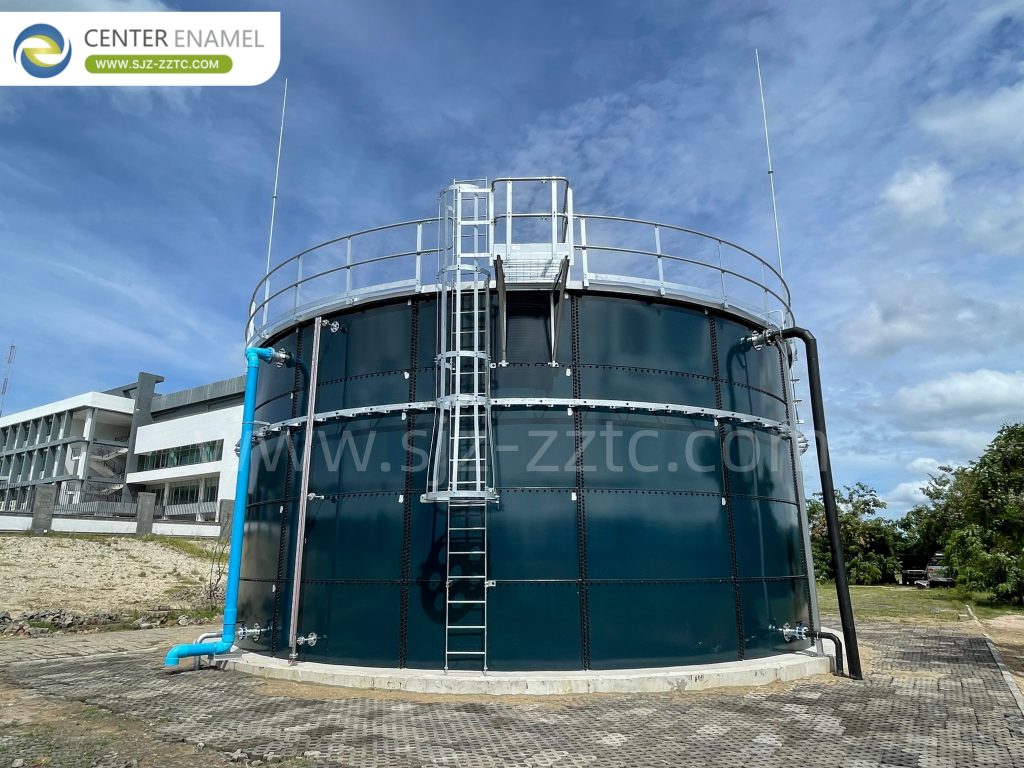
That is the role of an industrial wastewater treatment project EPC contractor: one accountable team that designs the process, manufactures the equipment, installs it on site and commissions the plant until it runs to specification. Center Enamel (Shijiazhuang Zhengzhong Technology Co., Ltd) has completed more than 10,000 projects worldwide, including over 2,000 wastewater and 1,000+ biogas installations, and its portfolio shows how anaerobic technologies turn regulatory pressure into energy recovery and operating savings.
Global Rules Are Rewriting Industrial Wastewater Management
Policy momentum is the first reason plant owners are rethinking their treatment strategy. In the European Union, the Circular Economy Action Plan pushes member states to raise industrial wastewater reuse rates and extends carbon footprint accounting across the full life cycle of treatment. China continuously tightens discharge standards for sectors such as chemicals, pharmaceuticals and printing and dyeing, with increasingly stringent limits on total nitrogen, total phosphorus and characteristic pollutants.
Water-scarce regions and highly polluting industries are now required to move toward zero or near-zero liquid discharge, while Germany has built a differentiated pretreatment standard system that enforces strict source control before industrial effluent can enter municipal plants. The direction is unmistakable: compliance alone is no longer enough, and resource recovery is becoming the new baseline. These rules are exactly why forward-looking operators are replacing fragmented equipment purchases with single-source EPC contracting-and why the technologies they choose must deliver both compliance and recoverable value.
Anaerobic Technologies-The Workhorse of High-Strength Treatment
Among the options available today, anaerobic technologies stand out as the most efficient response to high-concentration organic wastewater. Take the IC (internal circulation) reactor as an example: at its core sits a glass-fused-to-steel (GFS) tank with a built-in gas-lift internal circulation system and upper and lower three-phase separators, which sustain autonomous circulation and efficient sludge–water separation without external return pumps. A precision bottom distribution system and pressure-regulating feed device keep the influent uniform and stable, while supporting equipment-influent lift pumps, equalization tanks and flow meters-ensures precise feed control. On top, integrated equipment handles biogas collection, desulfurization, dehydration and storage, and high-precision online instruments monitor temperature, pH, COD and level in real time. The result is a highly integrated, compact and automated system with no excess external equipment, simplifying both installation and daily operation.
The same anaerobic-first logic runs through the UASB, EGSB and CSTR configurations that dominate modern industrial projects. The table below summarizes how these reactor families compare.
| Reactor | Typical Application | Key Feature | Proven In |
| UASB | High-strength organic wastewater | Upflow sludge bed with biogas recovery, compact footprint | Brewery wastewater process train |
| EGSB | Very high pollution loads | Expanded granular bed, faster upflow velocity, high-rate treatment | Brewery wastewater process train |
| CSTR | Food waste and agricultural feedstock | Continuous stirring, robust solids handling, stable gas output | Pakistan biogas demonstration project |
| IC | High-COD industrial streams | Gas-lift internal circulation plus three-phase separators, no external return pumps | Anaerobic reactor supporting equipment |
Brewery Wastewater: A Standardized Route from Spent Grain to Compliant Effluent
Nowhere is the anaerobic-first strategy more visible than in brewery wastewater, one of the most challenging organic streams in food processing. Center Enamel's standardized solution follows a mature "solid-liquid separation + anaerobic digestion + aerobic polishing" train. Pretreatment with screens, sedimentation tanks and microfiltration removes spent grain residues and colloidal suspended solids, preventing equipment clogging and cutting biochemical load.
The main stage then applies UASB or EGSB high-efficiency anaerobic processes, which rapidly degrade the high-concentration organic load while recovering biogas as an energy source. A subsequent A/O or contact oxidation aerobic stage deep-polishes residual pollutants, and final sedimentation and disinfection guarantee stable, compliant effluent. Because the anaerobic digesters are built with Center Enamel GFS tanks, they resist organic acid corrosion and serve for decades. The whole train tolerates shock loads, keeps the process simple, and fits the intermittent, seasonal discharge patterns typical of breweries-proof that compliance and operational convenience can coexist.
Food Waste and Napier Grass Biogas in Pakistan
The same principles scale from industry to agriculture. In Pakistan, Center Enamel acted as the general contractor for a food waste and Napier grass biogas demonstration project, using CSTR as the core anaerobic process and co-fermenting both feedstocks. A mechanical mixing system keeps the substrate and anaerobic microorganisms in thorough contact, achieving efficient organic degradation with a stable daily biogas output of 100 m³. As the local official demonstration project, it validates gas production efficiency and long-term continuous operation-and its success has already paved the way for multiple large-scale Napier grass biogas plants planned in the region to promote biomass clean energy and low-carbon development.
| Project Parameter | Detail |
| Project | Food Waste + Napier Grass Biogas Demonstration Project, Pakistan |
| Contracting Model | EPC general contracting by Center Enamel |
| Core Anaerobic Technology | CSTR (continuous stirred tank reactor) |
| Feedstock | Food waste and Napier grass, co-fermented |
| Mixing System | Mechanical mixing for thorough feedstock–microbe contact |
| Stable Biogas Output | 100 m³ per day |
| Project Role | Official local demonstration project validating gas efficiency and operational stability |
| Expansion Outlook | Multiple large-scale Napier grass biogas plants planned locally |
One EPC Contractor, a Complete Product Matrix
Reliable outcomes depend on a supply chain that never compromises. Center Enamel is the only company globally to combine enamel frit R&D, self-manufacturing and GFS tank application under one roof, supported by a full-category product matrix:
Core-proprietary GFS tanks using double-sided hot-rolled double-layer enamel anti-corrosion technology, resistant to strong acids, alkalis, high salinity and microbial corrosion, with modular quick assembly for wastewater, biogas and chemical duty.
Supporting-fusion bonded epoxy tanks, produced on China's first intelligent standardized production line, mainly for drinking water, fire water and neutral media storage.
Sealing-aluminum dome covers with a high-strength self-supporting structure that meets international waterproof and load-bearing standards for tank sealing and biogas collection.
Other tanks-carbon steel tanks, stainless steel tanks, composting tanks and non-standard pressure vessels.
Engineering services-environmental EPC general contracting and anaerobic process subcontracting across food waste, leachate, municipal wastewater, livestock biogas, petrochemical/metallurgical and seawater desalination sectors, with customizable tank volume, corrosion protection grade and complete process solutions that integrate equipment manufacturing with construction.
With this matrix, a client can commission an entire plant from a single industrial wastewater treatment project EPC contractor instead of reconciling dozens of suppliers.
Credentials That Open the World's Tender Gates
Global projects are won on evidence, and certification is the language tenders understand. Center Enamel holds CE, NSF, WRAS, ISO9001, BSCI and ASME certifications, covering the quality, safety, hygiene and social-compliance expectations of buyers across Europe, North America, Southeast Asia and Africa. For an industrial wastewater treatment project EPC contractor bidding on large overseas contracts, these credentials clear technical barriers in advance and provide a hard competitive advantage at the qualification stage-giving clients confidence before a single drawing is reviewed.
The Roof That Seals Performance and Cuts Lifetime Costs
No treatment plant is complete without a reliable cover, and Center Enamel's independently developed aluminum geodesic dome roof closes the loop. Manufactured from high-strength aluminum alloy plates through integral stamping, it forms a triangular-grid spherical self-supporting structure that covers large spans without internal support columns. The design complies with AWWA D108, with plate thickness, rib cross-sections and joints verified by finite element stress analysis, so wind and snow loads meet building codes in every region. Weighing only one-third to one-half of an equivalent steel roof, it reduces tank-top load and installs directly without tank wall reinforcement. Double sealing between panels-sealant strips plus mechanical interlocking-delivers airtight gas storage and enclosed odor control for biogas collection, wastewater odor management and drinking water protection. The column-free interior leaves room for mixers and water distributors, while aluminum's natural resistance to microbial growth removes anti-corrosion maintenance, keeping total lifecycle costs low.
From tightening regulations and energy recovery to turnkey delivery and internationally recognized credentials, the case for working with a single industrial wastewater treatment project EPC contractor has never been stronger. When anaerobic technologies, proven equipment and end-to-end accountability are combined, a wastewater project stops being a cost center and becomes a compliance asset that pays back in biogas and peace of mind.
Ready to put your next wastewater project on solid ground? Contact Center Enamel today for a tailored EPC proposal, or ask our engineers to recommend the right anaerobic technologies for your wastewater profile-we respond within 24 hours.
FAQ
What does an industrial wastewater treatment project EPC contractor do?
An EPC contractor owns the entire delivery chain-process design, equipment manufacturing, site installation and commissioning-so the client works with one accountable partner instead of juggling many suppliers. At Center Enamel, this covers everything from GFS tanks, covers and anaerobic treatment systems to complete plant construction, startup and operator training, ensuring stable effluent from day one.
Why choose anaerobic technologies for high-strength industrial wastewater?
Anaerobic technologies such as UASB, EGSB, IC and CSTR break down concentrated organic loads without intensive aeration, producing biogas that offsets energy costs while cutting sludge and operating expenses. They absorb shock loads well, require less footprint than aerobic-only designs, and pair naturally with aerobic polishing for final compliance. For breweries, food processors and biogas plants, this translates directly into lower energy bills and faster payback.
Which certifications does Center Enamel hold for overseas tenders?
Center Enamel holds CE, NSF, WRAS, ISO9001, BSCI and ASME certifications, easing qualification for projects in Europe, North America, Southeast Asia and Africa. These credentials give owners verified confidence in quality, product safety and social compliance during bidding and audits, and all certificates are maintained and audited on a regular basis.