
Professional Industrial Wastewater Treatment Project EPC Contractor with UASB Process Solutions
Global industrial wastewater treatment policies are escalating from "compliance discharge" to mandatory "resource recovery" and "zero liquid discharge." This fundamental shift directly impacts the requirements placed on any Industrial Wastewater Treatment Project EPC Contractor, demanding higher performance standards and integrated solutions. The EU, through its Circular Economy Action Plan, requires member states to increase industrial wastewater reuse rates and extends carbon footprint accounting to the full life cycle of wastewater treatment. In parallel, China continuously updates and tightens industrial water pollutant discharge standards, with increasingly stringent limits on total nitrogen, total phosphorus, and characteristic pollutants for industries such as chemicals, pharmaceuticals, and printing and dyeing.
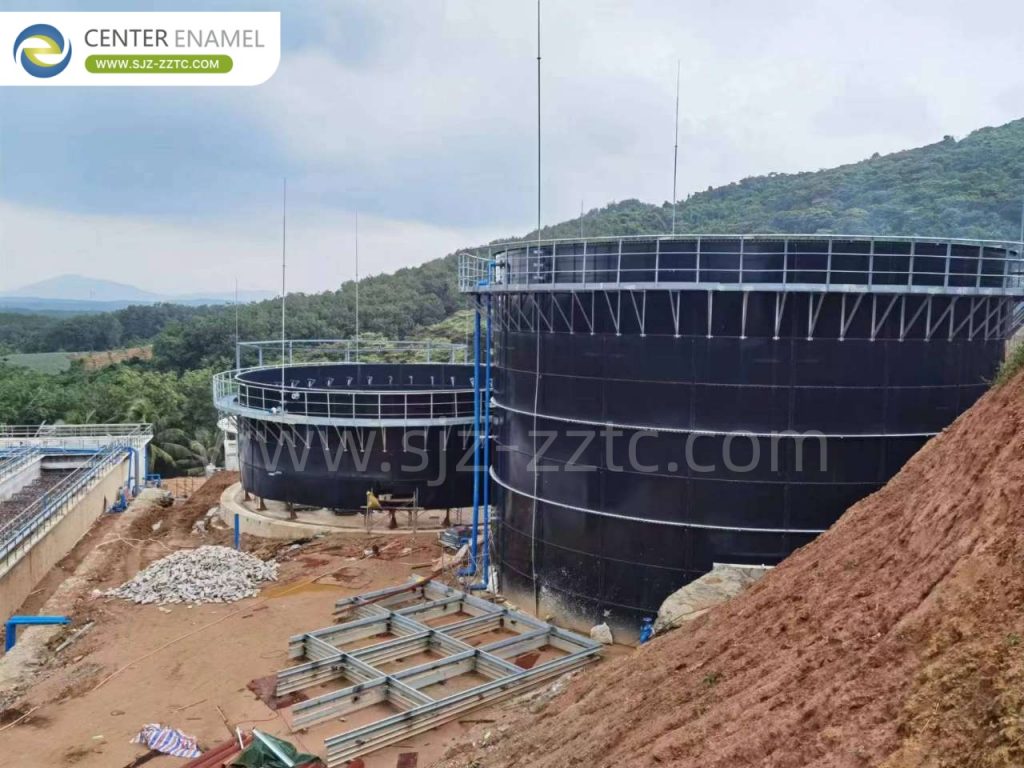
Some water-scarce regions and highly polluting industries are mandated to adopt zero or near-zero liquid discharge technologies, creating a growing market for advanced treatment solutions. Germany has established a differentiated pretreatment technical standard system by industry, requiring industrial wastewater to meet specific quality requirements before discharge into municipal wastewater treatment plants, implementing strict source control. These comprehensive regulations underscore the need for expert EPC contractors who can deliver reliable, adaptable, and compliant treatment systems incorporating proven technologies like the UASB Process.
UASB Reaction Process and Its Role in Industrial Treatment
At the heart of many successful projects delivered by an experienced Industrial Wastewater Treatment Project EPC Contractor is the UASB Process, a highly efficient anaerobic biological treatment. After pretreatment through screens and equalization tanks to remove impurities and balance water quality and flow, wastewater is uniformly fed into the reactor through the bottom distribution system. The wastewater rises at a constant rate through the high-concentration granular sludge bed at the bottom, where anaerobic microorganisms rapidly degrade most organic matter, converting it into biogas, clean water, and a small amount of sludge.
Gentle hydraulic mixing maintains sludge suspension, expanding microbial contact area for optimal treatment. Remaining pollutants continue to degrade in the mid-section suspended sludge layer, with the mixed liquor finally entering the top three-phase separator for gas, solid, and liquid separation. Biogas is collected upward for utilization, sludge settles back to the reaction zone, treated effluent overflows from the top, and aged sludge is periodically discharged. This fully automated continuous operation makes the UASB Process a reliable and cost-effective choice for high-strength industrial wastewater, a key capability for any leading EPC contractor.
Key Water Quality Characteristics of Textile Wastewater
Understanding the specific challenges posed by textile wastewater is essential for an Industrial Wastewater Treatment Project EPC Contractor to design an effective treatment train. The key characteristics include high color, high alkalinity, high COD, high suspended solids, and large water quality fluctuations, making it the most prominent color pollution category in industrial wastewater. COD typically ranges from 1,000 to 10,000 mg/L, with desizing and scouring wastewater exceeding 10,000 mg/L. The extremely high color, with dyeing wastewater color reaching hundreds to thousands of dilution multiples, contains various dyes (reactive, disperse, acid) that are deep and difficult to decolorize.
The high pH from mercerizing and scouring wastewater can exceed 12, indicating strong alkalinity, while high temperature from dyeing process discharge can reach 50-70°C. The BOD/COD ratio is approximately 0.25-0.4, indicating moderate to poor biodegradability, with dyes and sizing agents being recalcitrant organics. The wastewater also contains surfactants, sizing agents (PVA, starch), fiber impurities, dye auxiliaries, and inorganic salts (sodium sulfate, sodium chloride). Water quality varies dramatically with dye type and process changes, exhibiting distinct intermittent discharge characteristics. These complex characteristics necessitate the robust and flexible UASB Process, which can effectively handle high organic loads and improve biodegradability.
Proven Global Impact: Indonesia Palm Oil Biogas Upgrade Project
The effectiveness of the technologies and EPC capabilities offered by Center Enamel is best demonstrated through real-world applications. In Indonesia, a landmark palm oil biogas upgrade project commissioned in 2013 serves as a benchmark for biomass energy and environmental sustainability. The project utilized three GFS tanks as the core anaerobic digestion reactors specifically for high-organic palm oil production wastewater, where anaerobic digestion degrades pollutants and recovers valuable biogas. The tanks are adapted to local palm industry wastewater needs, and their convenient assembly and superior corrosion resistance make them ideally suited for Southeast Asia's hot, humid, and highly corrosive environment.
This project exemplifies the maturity and reliability of GFS-based anaerobic treatment systems in challenging industrial sectors, mirroring the demands of complex industrial wastewater treatment projects. The successful delivery of such a project underscores the capabilities of Center Enamel as a trusted Industrial Wastewater Treatment Project EPC Contractor, capable of managing projects in diverse and demanding environments.
Smart Manufacturing Base Scale for Global Delivery
To support its global EPC contracting activities and ensure reliable delivery of UASB Process systems, Center Enamel operates a world-class smart manufacturing base. The core intelligent manufacturing base is located in Hebei Province, China, covering a total area of over 150,000 m², with Phase I mature manufacturing facility and Phase II high-end environmental equipment industrial park. This dual-base synergy ensures stable production capacity to meet the demands of multiple large-scale projects. The base includes dedicated R&D office buildings, proprietary material laboratories, and finished product testing centers, with full-process quality control systems meeting ISO, NSF, CE, and other international standards.
The facility operates to green manufacturing standards and is certified as a Provincial Green Factory, balancing efficient production with energy conservation and emission reduction. The company has 6 marketing service centers across China, establishing a nationwide production-sales network ensuring stable global order delivery. The base is adjacent to expressway networks and major logistics hubs, with complete container shipping capabilities, supporting simultaneous large-scale tank projects globally. The base employs over 500 staff, with multiple parallel automated production lines, and its facility scale and production capacity firmly place it among the global top tier of GFS tank equipment manufacturers. This robust infrastructure is fundamental to the company's role as a leading EPC contractor.
Full-Industry-Chain Integrated Delivery Capability
A key differentiator for an Industrial Wastewater Treatment Project EPC Contractor is the ability to manage the entire project lifecycle. Center Enamel is the only company globally integrating proprietary enamel frit R&D, self-manufactured tanks, and EPC general contracting. This unique position enables full-process self-control from solution design, equipment production, cross-border logistics, overseas construction, to post-construction O&M, significantly reducing client coordination and time costs. This integrated approach ensures quality, efficiency, and single-point accountability for clients undertaking complex industrial wastewater treatment projects.
Aluminum Geodesic Dome Roof for Sealed Storage and Biogas Collection
Complementing the core GFS tanks and UASB Process reactors, advanced roof solutions like the Aluminum Geodesic Dome Roof play a crucial role in the overall functionality and safety of a treatment plant. Independently developed by Center Enamel, this roof is manufactured using high-strength aluminum alloy plates through integral stamping. It features a triangular grid spherical self-supporting structure, enabling large-span full coverage without internal support columns, which is ideal for covering large anaerobic reactors. Made of aluminum alloy, the roof offers excellent weather resistance and corrosion resistance, capable of long-term protection against acid rain, salt spray, and UV radiation, making it suitable for various extreme outdoor climate conditions.
The structural design complies with international AWWA D108 standards, with aluminum plate thickness, rib cross-sections, and joint connections all verified by finite element stress analysis, ensuring wind and snow load resistance that meets building code requirements across different global regions. The weight of the Aluminum Geodesic Dome Roof is only one-third to one-half of a steel roof with the same span, significantly reducing the load on the tank top and allowing direct installation without tank wall reinforcement. The roof provides superior overall sealing performance, with double sealing between panels using specialized sealant strips and mechanical interlocking, enabling both airtight gas storage and enclosed odor control. This makes it suitable for biogas collection and storage, wastewater tank odor control, and drinking water contamination prevention. The support-column-free design does not interfere with the installation and operation of internal equipment such as mixers and water distributors. The aluminum material does not support microbial growth, requiring no anti-corrosion maintenance over long-term use, resulting in low total life-cycle costs. This roof is an integral part of the comprehensive solutions offered by a leading EPC contractor.
Frequently Asked Questions (FAQs)
1. What is the role of an Industrial Wastewater Treatment Project EPC Contractor?
An EPC (Engineering, Procurement, and Construction) contractor provides a single-point responsibility for the entire project, from initial design and engineering to procuring all equipment and materials, constructing the facility, and commissioning it for operation. This integrated approach simplifies project management, reduces risks, and ensures seamless coordination.
2. Why is the UASB Process a preferred choice for high-strength industrial wastewater?
The UASB (Upflow Anaerobic Sludge Blanket) Process is highly efficient for treating soluble medium-to-high concentration organic wastewater. It operates with low energy consumption, produces valuable biogas, generates less sludge than aerobic systems, and offers high loading rates and good shock load resistance, making it ideal for industries like food processing, pharmaceuticals, and textiles.
3. How does the Aluminum Geodesic Dome Roof benefit an industrial wastewater treatment facility?
This roof provides excellent corrosion resistance, long-term durability, and superior sealing for tanks. Its lightweight, self-supporting structure eliminates the need for internal columns, and its airtight design is perfect for biogas collection or odor control. It requires minimal maintenance, thereby reducing the total life-cycle cost of the treatment facility.