
Advanced Industrial Wastewater Treatment Project Solutions with GFS Tanks
The competitive landscape of the wastewater treatment industry shows significant divergence, with leading companies building integrated service capabilities through technical integration and capital operations while industry concentration gradually increases. Chinese companies continue to consolidate their advantages in mid-tier equipment exports. International giants target high-end customers and complex industrial wastewater treatment project markets, while local players occupy the mid-to-low-end and industrial park centralized treatment markets with service responsiveness and cost advantages.
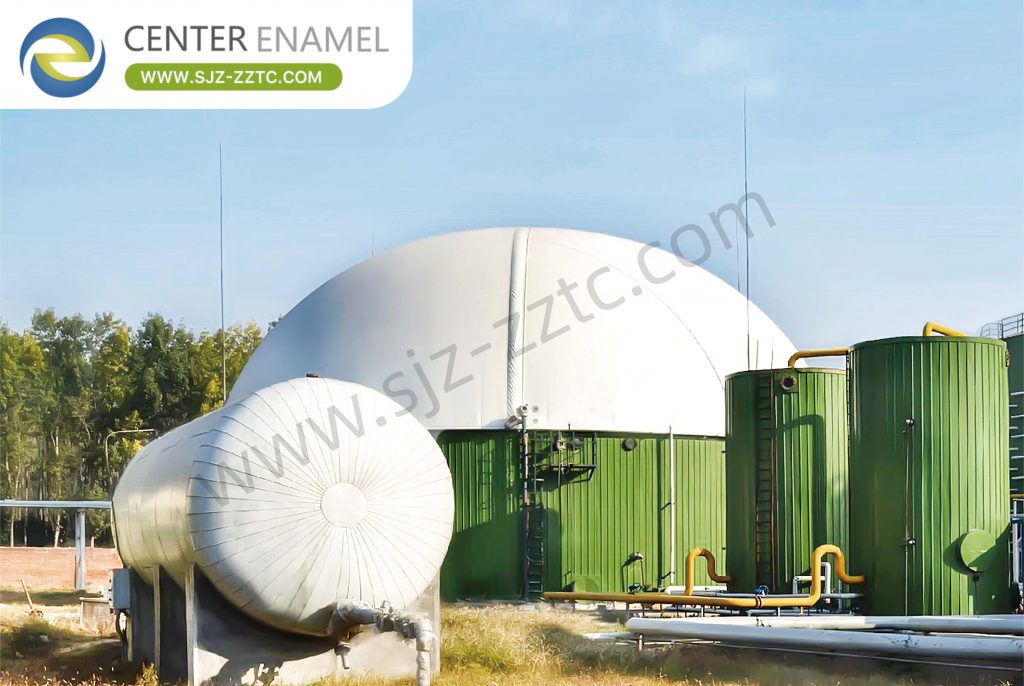
In the anaerobic process segment, UASB, EGSB, and IC anaerobic reactors-with advantages of high loading rates, small footprints, and stable operation-are widely used in high-concentration organic wastewater pretreatment across food processing, pharmaceutical fermentation, alcohol brewing, chemical, and other industries. These reactors use steel tank shells, and their corrosion resistance and gas-tightness directly determine long-term operational stability. The application value of Glass-Fused-to-Steel (GFS) tanks in such scenarios is increasingly prominent, making them the preferred choice for any Industrial Wastewater Treatment Project requiring durable containment solutions.
Given the demanding nature of industrial environments, selecting the right storage infrastructure is critical for project success. GFS tanks manufactured by Center Enamel offer superior protection against the corrosive conditions inherent in anaerobic digestion processes , and they have been deployed successfully across numerous global installations .
GFS Tanks Adaptable to Extreme Climates
Building on the advantages of GFS technology for corrosive environments, these tanks also demonstrate exceptional adaptability to challenging geographic and climatic conditions. GFS tanks can undergo customized wind and seismic design based on project site climate and geological conditions, with environmental adaptability far superior to concrete tanks. Concrete tanks are cast-in-place monolithic structures, with seismic and wind resistance entirely dependent on on-site construction quality. In remote areas, typhoon-prone zones, and earthquake belts, construction quality is difficult to control. Under strong earthquakes or typhoons, concrete tanks are prone to cracking and base settlement damage, with subsequent reinforcement costs equivalent to rebuilding.
GFS tanks undergo collection of local seismic intensity, maximum wind pressure, and foundation bearing capacity data before construction, with customized thickened steel panels, stiffening ribs, and anchored base components-all factory-prefabricated to standardized specifications. For any Industrial Wastewater Treatment Project in regions with extreme weather patterns, GFS tanks provide a reliability that concrete alternatives cannot match. The bolted panel structure has excellent stress distribution capability, making it less prone to overall fracture under seismic and typhoon impacts, and minor foundation settlement will not cause through-cracking. Structural parameters can be flexibly adjusted for mountainous, coastal typhoon-zone, and high-seismic-zone projects, providing long-term protection against extreme natural climate damage.
The proven durability of GFS tanks against harsh climates complements their performance as core anaerobic digestion equipment . This combination of structural resilience and process efficiency makes them the ideal choice for comprehensive wastewater solutions.
UASB Supporting Equipment
Within the anaerobic treatment framework, the integration of GFS tanks with specialized equipment ensures optimal performance. Core equipment includes the GFS anaerobic reactor tank, with the internal three-phase separator being the key component for gas-liquid-solid separation and sludge retention. The bottom high-precision distribution system (distribution pipes, distributors, pressure regulators) ensures uniform influent distribution, preventing short-circuiting and sludge accumulation. Supporting equipment includes influent lift pumps, equalization tanks, and flow meters to stabilize influent conditions .
The top biogas collection system includes gas collection hoods, gas piping, desulfurization/dehydration equipment, and gas storage. Online temperature, pH, and COD monitoring instruments are integrated. Bottom sludge discharge pipes and pumps periodically remove excess sludge. When combined with Center Enamel's GFS tanks, this complete equipment package delivers compact, reliable performance with no rotating wear parts, low equipment loss, and high operational stability-essential attributes for any successful Industrial Wastewater Treatment Project.
This integrated equipment approach supports the standardized treatment solutions that have proven effective across diverse industrial applications .
Standardized Treatment Solutions of Brewery Wastewater
The integrated equipment approach enables the deployment of mature treatment trains that consistently deliver compliance. Mature "solid-liquid separation + anaerobic digestion + aerobic polishing" process trains are perfectly suited for high-concentration, easily biodegradable organic wastewater. Pretreatment uses screens, sedimentation tanks, and microfiltration to remove spent grain residues and colloidal suspended solids, preventing equipment clogging and reducing biochemical load. The main stage uses UASB/EGSB high-efficiency anaerobic processes for rapid high-concentration organic degradation with simultaneous biogas energy recovery-suitable for high pollution loads.
Subsequent A/O or contact oxidation aerobic processes deeply degrade residual pollutants, with final sedimentation and disinfection ensuring stable effluent compliance. Anaerobic digesters using Center Enamel GFS tanks resist organic acid corrosion with long service life, making them the cornerstone of any durable Industrial Wastewater Treatment Project. The entire process has strong shock load resistance, simple process flow, convenient O&M, and is suitable for brewery industry's intermittent and seasonal discharge patterns .
This proven treatment framework has been successfully demonstrated in real-world applications, including the landmark palm oil biogas upgrade project in Indonesia .
Indonesia Palm Oil Biogas Upgrade Project
Commissioned in 2013 as the core anaerobic digestion reactor for the POME treatment station, this project features 3 GFS tanks in two sizes: 17.58 m dia. × 8.4 m height and 16.82 m dia. × 7.2 m height. The tanks serve as the core anaerobic reaction equipment specifically for high-organic palm oil production wastewater-anaerobic digestion degrades pollutants and recovers biogas. Tanks are adapted to local palm industry wastewater needs. GFS tank assembly is convenient with corrosion resistance for Southeast Asia's hot humid high-corrosion environment-a mature biomass energy environmental benchmark project.
The Indonesia project is just one example of how comprehensive product matrices enable tailored solutions for diverse applications.
Center Enamel's Full-Category Complete Product Matrix
Center Enamel has built a complete product matrix of "core storage tanks + supporting covers + specialty pressure vessels + complete environmental engineering services"-the only company globally to achieve integrated enamel frit R&D, self-manufacturing, and GFS tank application.
① Core: Proprietary GFS Tanks
Using proprietary double-sided hot-rolled double-layer enamel anti-corrosion technology-resistant to strong acids/alkalis, high salinity, and microbial corrosion-modular quick assembly makes these tanks suitable for all strong-corrosion conditions in wastewater, biogas, and chemical applications within any Industrial Wastewater Treatment Project .
② Supporting: Fusion Bonded Epoxy Tanks
Produced on China's first intelligent standardized production line-primarily for drinking water, fire water, and neutral medium storage .
③ Sealing: Aluminum Dome Covers
Proprietary high-strength aluminum alloy self-supporting structure-meeting international waterproof and load-bearing standards-suitable for tank sealing and biogas collection .
④ Other Tanks: Carbon Steel Tanks, Stainless Steel Tanks, Composting Tanks, Various Non-Standard Pressure Vessels.
⑤ Engineering Services: Environmental EPC General Contracting, Anaerobic Process Section Subcontracting-one-stop coverage across food waste, leachate, municipal wastewater, livestock biogas, petrochemical/metallurgical, and seawater desalination industries-customizable tank volume, corrosion protection grade, and complete process solutions with integrated equipment manufacturing and engineering construction.
Delivering such a broad product range requires a service infrastructure capable of supporting global projects from design through long-term maintenance.
Global Integrated Standardized Service System
Leveraging regional sales centers in China and overseas local agent networks, Center Enamel has established a complete after-sales service loop covering all markets. The system provides four core service pillars: 24/7 rapid response mechanism, on-site domestic/overseas installation services, full-project-cycle after-sales support, and long-term warranty protection-forming a complete service chain from preliminary site survey, mid-term construction management, to long-term inspection and maintenance. The entire system is uniformly adapted to both domestic and international project service standards, coordinating personnel scheduling, material support, and on-site coordination for simultaneous projects across multiple regions-significantly reducing customer multi-party coordination costs and ensuring efficient domestic and overseas project delivery .
Frequently Asked Questions (FAQ)
Q1: Why are GFS tanks preferred over concrete tanks for Industrial Wastewater Treatment Projects?
GFS tanks offer superior corrosion resistance, faster installation, and better adaptability to extreme climates compared to concrete tanks. The glass-fused-to-steel coating withstands acidic and alkaline conditions common in industrial wastewater, while the modular bolted design eliminates curing time and allows for easy future expansion or relocation .
Q2: How do GFS tanks integrate with anaerobic processes like UASB reactors?
GFS tanks serve as the containment vessel for UASB and other anaerobic reactors, providing the gas-tight, corrosion-resistant environment essential for stable biological treatment. The smooth enamel surface prevents sludge adhesion and biofilm buildup, reducing maintenance requirements while the structural integrity ensures safe biogas collection and containment .
Q3: What global standards do Center Enamel's GFS tanks comply with?
Center Enamel's GFS tanks are manufactured in accordance with international standards including AWWA D103-09, ISO 28765, NSF/ANSI 61, and comply with OSHA safety requirements. This ensures they meet regulatory requirements across different countries and regions for industrial wastewater treatment applications .