
Comprehensive Guide to Industrial Wastewater Treatment Project Execution and GFS Tanks Implementation
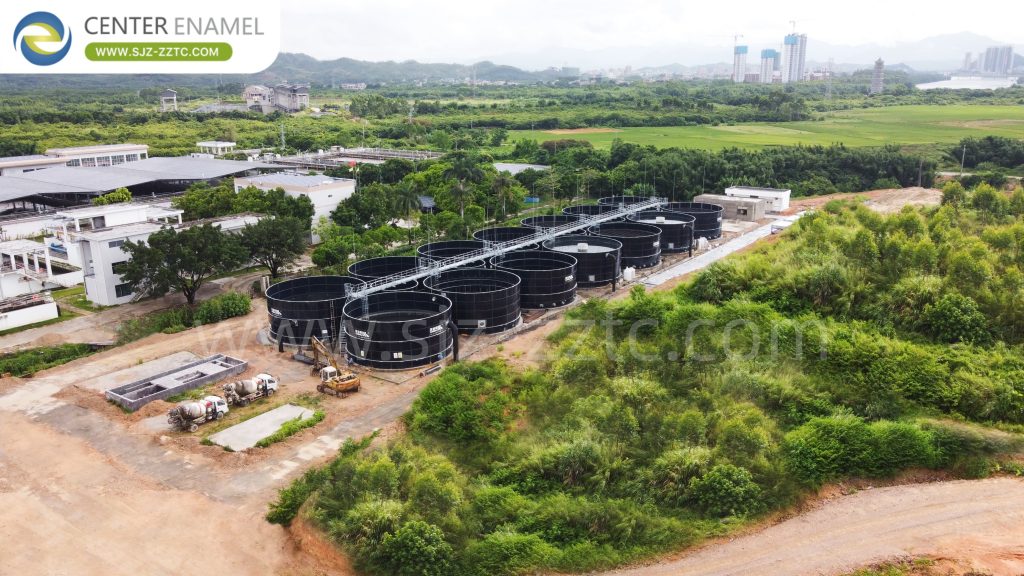
The core challenges of industrial wastewater treatment center on the "three highs"-high difficulty, high cost, and high energy consumption. Wastewater from new energy, chemical, and pharmaceutical industries is complex in composition with numerous characteristic pollutants, and traditional treatment processes are difficult to remove effectively. Chinese companies have significant price advantages in the mid-to-low-end equipment segment. The industry also faces continuous technological upgrade pressure from increasingly stringent emission standards, as well as new requirements for digitalization and low-carbon transformation on operational refinement management capabilities.
Addressing the complex demands of modern environmental engineering requires overcoming critical operational hurdles. Every successful Industrial Wastewater Treatment Project must carefully balance stringent regulatory standards with cost-effective engineering methodologies. Deploying advanced structural solutions is essential to mitigate long-term operational risks and ensure compliance across diverse sectors.
GFS tanks Corrosion Resistance Far Superior to Traditional Concrete Tanks
Center Enamel's independently developed double-sided double-layer enameling technology is the industry's leading coating anti-corrosion technology, with corrosion resistance completely surpassing concrete tanks. Concrete tank interiors are riddled with pores, allowing wastewater and acid/alkaline media to easily penetrate and corrode the structural layer. Long-term use leads to irreversible problems such as internal wall spalling, water seepage, and rebar corrosion, which are difficult to repair and cannot be fundamentally resolved.
GFS tanks feature high-temperature enameling on both the interior and exterior surfaces of steel panels, with a dense, non-porous enamel finish that completely blocks corrosive liquids and biogas permeation. The enamel layer has extremely strong chemical stability, resisting acids, alkalis, salts, and microbial corrosion. Concrete tanks will develop extensive corrosion and leakage after 5-8 years of use, while GFS tank anti-corrosion service life can exceed 30 years, with no need for frequent internal lining repairs throughout the service life, significantly reducing long-term anti-corrosion maintenance investment and fundamentally eliminating environmental risks of medium leakage contaminating sites and groundwater. Compared to traditional concrete and FRP tanks, GFS tank coatings have no risk of peeling or blistering, and are adaptable to highly corrosive conditions such as palm oil mill effluent, livestock manure, and chemical high-salinity wastewater, with outstanding long-term comprehensive cost advantages.
Selecting high-performance containment infrastructure is critical for the longevity of any facility handling aggressive media. The integration of durable GFS Tanks safeguards structural integrity against severe chemical and biological degradation. By eliminating common failure points associated with traditional materials, plants achieve maximum operational reliability and asset protection.
CSTR Applicable Scenarios
Primarily for high-solids organic pollutant treatment, widely used in food waste leachate, large-scale livestock manure, slaughterhouse wastewater, and food processing high-strength wastewater. Also suitable for municipal sludge and industrial organic sludge anaerobic digestion. In the agricultural and environmental sector, it is used for large-scale farm manure resource recovery, achieving wastewater reduction, harmless treatment, and energy recovery. In the food and brewing industry, it is suitable for high-oil, high-protein, high-suspended-solids wastewater. It is also suitable for small to medium-sized wastewater treatment projects, township decentralized wastewater treatment, and as a pretreatment process for high-strength organic wastewater in large industrial parks to reduce downstream load. It is particularly suitable for difficult-to-treat organic wastewater with complex composition, high solids content, and easy crusting.
Optimizing biological treatment stages requires adaptable reactor configurations tailored to specific influent characteristics. Incorporating robust reactor technology streamlines organic waste stabilization and enhances overall energy recovery efficiency. These versatile treatment scenarios provide scalable frameworks for tackling diverse environmental challenges.
Food Waste Operation and Maintenance Cost Analysis
O&M costs are moderate to high, but resource recovery benefits are substantial-good overall economics. Pretreatment oil removal equipment and three-phase separators have high capital investment, but recovered oil can be sold-biodiesel feedstock oil has good market value, providing core revenue for food waste treatment. Stable biogas from anaerobic digestion can be used for power generation or heating, offsetting energy costs. CSTR process has simple equipment with no precision wear parts-low maintenance costs. High-salt, high-oil conditions require premium corrosion protection (GFS tanks), with higher initial investment but long service life and low maintenance. Chemical consumption is mainly flocculants and desulfurizers-moderate expenditure. Oil and salt cause pipe fouling and membrane pollution, requiring periodic cleaning-moderate labor requirements. Overall resource recovery revenues (oil sales + biogas energy + digestate fertilizer) generally cover O&M costs-good overall economics.
Evaluating the financial lifecycle of environmental assets involves balancing initial capital expenditures against long-term resource recovery gains. Comprehensive cost-benefit analyses often highlight how resilient infrastructure significantly lowers ongoing maintenance overhead. Strategic budgeting ensures that treatment facilities remain economically viable throughout their operational lifespan.
Indonesia Palm Oil Biogas Project
Specifically designed for high-concentration palm oil wastewater treatment with 3 GFS fermentation tanks, each 19.86 m diameter × 8.4 m height. Installation began November 2009 with only 7 construction personnel, completing all tank assembly in 40 days-highly efficient and time-saving. Tanks are fitted with dual-membrane gas storage covers for POME anaerobic digestion-degrading organics and recovering biogas energy while eliminating palm industry pollution. This is an early benchmark POME biogas treatment project in Southeast Asia.
Real-world implementations offer valuable insights into the practical execution of complex engineering ventures. Executing a large-scale Industrial Wastewater Treatment Project demands meticulous planning, rapid assembly capabilities, and proven technology. Landmark installations showcase how modular containment systems successfully resolve severe agro-industrial pollution issues.
After-Sales and Technical Support Team
The after-sales team adheres to the service principles of rapid response, professional efficiency, and full-cycle support-providing 24/7 full-lifecycle O&M support to global clients. Standard remote services include fault diagnosis, process parameter adjustment, and tank anti-corrosion maintenance guidance. For domestic and long-distance overseas clients, overseas technical service personnel can be dispatched for on-site inspection, annual inspection, and equipment refurbishment as needed. The team also maintains long-term client feedback tracking mechanisms-regularly collecting tank and anaerobic equipment operational data to continuously optimize product structure and support processes. Supporting external technical expert teams provide specialized support for anaerobic process commissioning, biogas upgrading O&M, and wastewater upgrade/retrofit projects-ensuring long-term stable operation of domestic and overseas projects, continuously improving global client satisfaction and repurchase rates.
Maintaining uninterrupted facility performance relies heavily on proactive engineering support and responsive client services. Comprehensive post-installation oversight ensures that any operational anomalies are resolved swiftly before escalating. Continuous expert assistance guarantees sustained efficiency and peace of mind for international project owners.
Flexible and Efficient Service Delivery System
Center Enamel's own cross-border construction teams + global localized agent network-modular GFS tank assembly with short construction periods and dismantlable/reusable capability-suitable for overseas short-term projects, phased expansions, and relocation needs-full-lifecycle after-sales O&M support ensuring long-term stable client operations.
Streamlining supply chains and deployment frameworks is essential for meeting aggressive project timelines across international territories. Implementing flexible delivery models allows engineering firms to adapt swiftly to unique site constraints and regional requirements. Ultimately, combining modular equipment with expert local support ensures seamless project execution from conception to completion.